Jehallelel, Levite of the Divided Monarchy
A Merarite Levite during the reign of King Hezekiah whose son, Azariah, participated in the historic purification of the Temple in Jerusalem.
Jehallelel was a member of the tribe of Levi belonging to the Merarite clan during the 8th century BC. He lived during the Divided Monarchy, specifically during the pivotal transition between the idolatrous reign of King Ahaz and the religious reformation initiated by King Hezekiah of Judah. While Jehallelel’s personal biography is not detailed in the biblical narrative, his lineage is recorded within the context of the restoration of Yahwistic worship.
His primary significance in the chronicler's record is as the father of Azariah, one of the prominent Levites who answered King Hezekiah’s call to sanctify the House of the Lord. As a Merarite, Jehallelel was part of one of the three major divisions of the Levites, traditionally responsible for the structural components of the Tabernacle and later the maintenance and service of the Temple in Jerusalem.
Background and Family
Jehallelel is identified in the genealogical records of 2 Chronicles as a descendant of Merari, the third son of Levi. The Merarites were one of the three primary Levitical families, alongside the Kohathites and the Gershonites, who were set apart for the service of the sanctuary. By the time of the Divided Monarchy in the late 8th century BC, these families maintained their distinct identities and traditional roles within the religious infrastructure of the Kingdom of Judah.
The biblical text specifically identifies Jehallelel through his son, Azariah. This placement in the record suggests that Jehallelel was a man of sufficient standing within the Merarite line to be cited as the patriarchal head of his specific household during the reforms of King Hezekiah.
Major Life Events
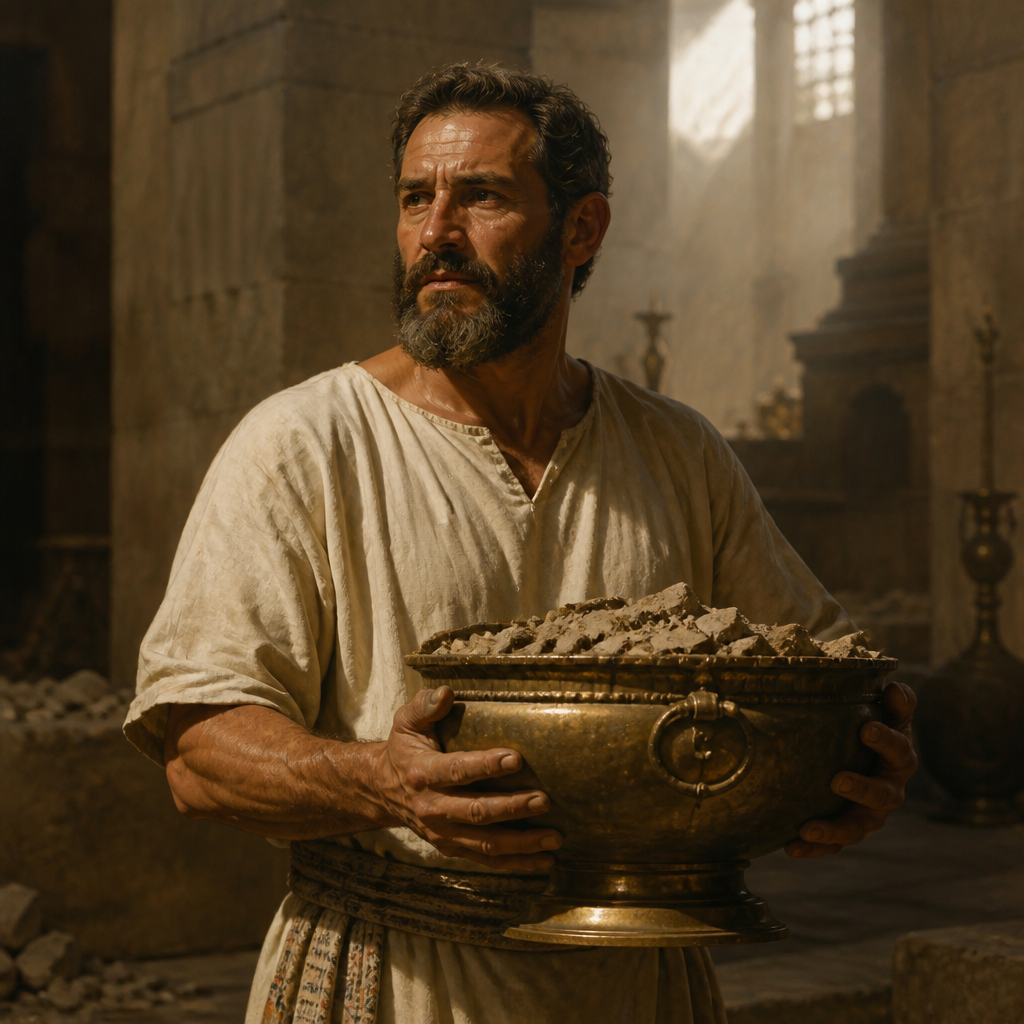
The life of Jehallelel coincided with a period of intense spiritual decline followed by sudden renewal. During the reign of King Ahaz, the Temple in Jerusalem had been closed, and its lamps extinguished, leading to a cessation of the daily sacrifices and rituals mandated by the Mosaic Law. When Hezekiah ascended the throne in approximately 715 BC, he immediately sought to reopen and purify the sanctuary.
Jehallelel is mentioned at the precise moment this purification began (2 Chronicles 29:12). Although the text focuses on the actions of his son, Azariah, the inclusion of Jehallelel’s name serves to validate Azariah's authority and priestly pedigree. As a father during this era, Jehallelel would have witnessed the restoration of the Davidic order of worship and the gathering of the Levites to cleanse the Temple of the ritual impurities accumulated during the previous administration.
Relationship to Other Biblical Figures
Jehallelel’s primary relationship in the biblical text is to his son, Azariah. Azariah is listed alongside Kish, the son of Abdi, as the two representatives of the Merarites who stepped forward to lead the cleansing process. This connection places Jehallelel in a circle of prominent Levitical families, including the Kohathite leaders Mahath and Joel, and the Gershonite leaders Joah and Eden.
While Jehallelel himself is not recorded as performing the physical labor of the cleansing, his son’s leadership reflects the status of Jehallelel’s household. The text emphasizes that these men "gathered their brothers and sanctified themselves" (2 Chronicles 29:15), indicating that Jehallelel’s progeny played a critical role in mobilizing the wider Levitical community.
Spiritual Significance
The mention of Jehallelel, though brief, serves the Chronicler’s broader theological purpose: demonstrating the continuity of the Levitical priesthood despite national apostasy. By recording names like Jehallelel, the text asserts that God preserved the holy lineages even during the dark years of King Ahaz.
Jehallelel represents the quiet link in a chain of faithfulness. His significance lies in his contribution to the legacy of the Merarites, ensuring that when a righteous king like Hezekiah called for a return to God, there were prepared men—like his son Azariah—ready to restore the sanctity of the Temple. In the context of the Divided Monarchy, his presence in the record underscores the theme that the restoration of the nation began with the restoration of the priesthood and the purification of the heart of worship.
Spiritual Significance
Jehallelel’s significance is primarily genealogical and functional within the context of Hezekiah’s reforms. He represents the Merarite branch of the Levites, ensuring that all three traditional divisions of the tribe of Levi were represented in the historic cleansing of the Temple in Jerusalem. His name serves as a marker of legitimate priestly descent during a time of national religious renewal.
Theologically, Jehallelel illustrates the biblical theme of legacy. Although he is mentioned only once, he is credited as the father of a son who took active leadership in a time of crisis. This highlights the importance of the household in the spiritual economy of Israel, where the faithfulness of one generation enables the service of the next.
Frequently Asked Questions
Who was Jehallelel's son?
Jehallelel's son was Azariah, a Merarite Levite who helped lead the purification of the Temple under King Hezekiah.
What tribe did Jehallelel belong to?
Jehallelel belonged to the tribe of Levi, specifically the clan of Merari.
In which book of the Bible is this Jehallelel mentioned?
This Jehallelel is mentioned in the Book of 2 Chronicles, specifically in chapter 29, verse 12.
What era of biblical history did Jehallelel live in?
He lived during the Divided Monarchy, during the late 8th century BC, coinciding with the reigns of King Ahaz and King Hezekiah.
What was the role of Jehallelel's family in the Temple?
As Merarites, his family was traditionally responsible for the maintenance and structural integrity of the sanctuary and assisted in the ritual worship led by the priests.
Connected Figures
Azariah, Son of Jehallelel
Son
Hezekiah
King of Judah during his lifetime
Kish, Son of Abdi
Fellow Merarite Levite
Categories
Mentions by Book
- 2 Chronicles1
Family & Relationships
Child
2 Chronicles 29:12
Others Named Jehallelel
Jehallelel, Father of Ziph1 Chronicles 4:16
A descendant of Judah through the line of Caleb who fathered four sons recorded in the genealogical registers of the Divided Monarchy.