Hagri
Who was Hagri in the Bible?
Hagri was a notable figure during the Divided Monarchy period, primarily identified as the father of Mibhar, one of King David’s elite Mighty Men.
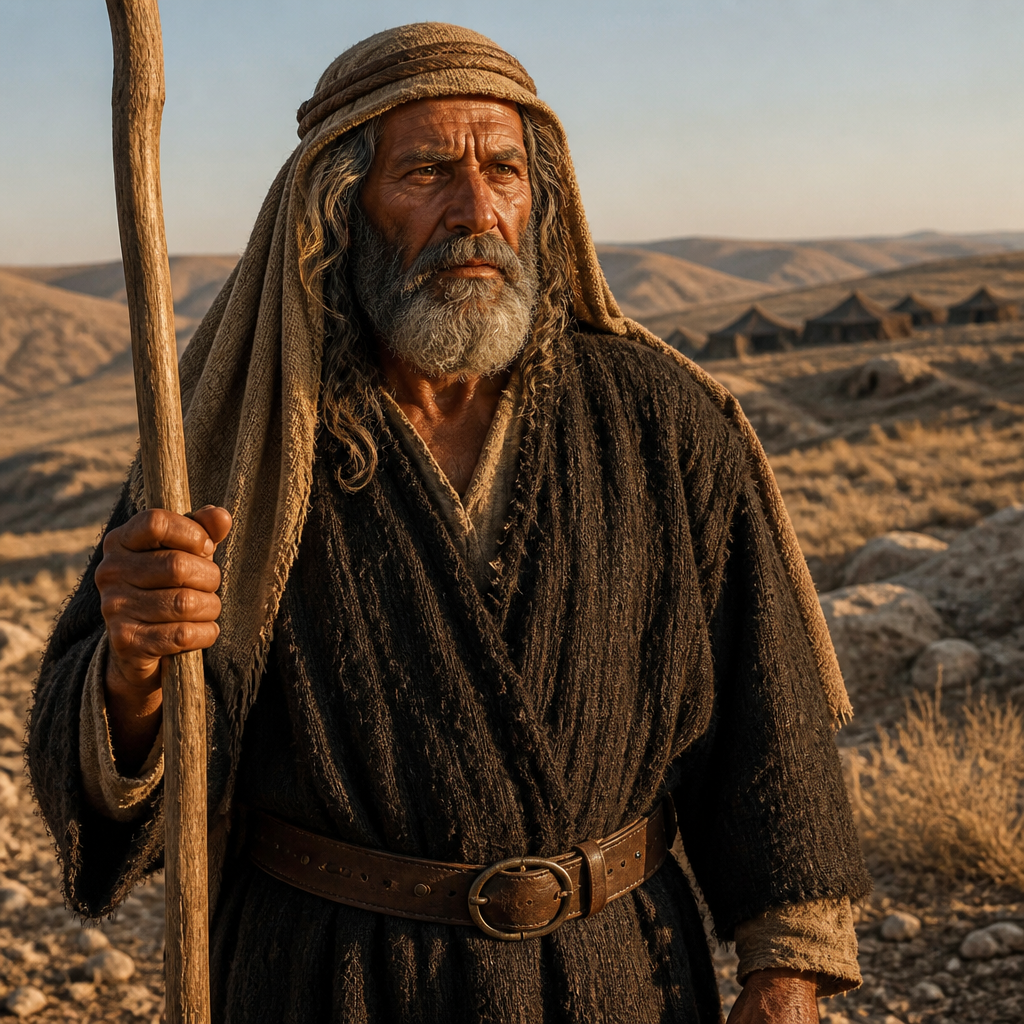
Hagri is a figure identified within the historical and genealogical records of the Old Testament, specifically within the books of 1 Chronicles and the Psalms. While the biblical text provides limited personal details regarding his individual exploits, his primary historical significance is rooted in his lineage. He is explicitly named as the father of Mibhar, a distinguished warrior listed among the 'mighty men' (Gibborim) who served King David. His name is also intrinsically linked to the Hagrites (or Hagarites), a nomadic people group residing east of the Jordan River who frequently clashed with the Israelite tribes during the transition from the United Monarchy to the Divided Monarchy.
The records concerning Hagri appear within the context of military rosters and territorial conflicts. Because he is identified by the ethnonym 'Hagri' in certain translations, scholars debate whether the name refers to a specific individual or serves as a tribal designation for Mibhar’s father. Regardless of the grammatical nuance, Hagri represents a significant point of intersection between the Israelite military establishment and the surrounding pastoralist tribes of the Transjordan region during the early centuries of the Israelite monarchy.
Background and Family
The most direct reference to Hagri in the biblical corpus is found in 1 Chronicles 11:38, which identifies him as the father of Mibhar. Mibhar is listed as one of the elite warriors in King David’s special forces. In the structural hierarchy of David’s military, these men represented the pinnacle of martial prowess and loyalty. The mention of Hagri in this context suggests he was a man of some standing, as the parentage of these warriors was often recorded to establish their social and tribal legitimacy within the kingdom of Israel.
Historically, the name Hagri is linguistically tied to the Hagrites, a nomadic tribe described in 1 Chronicles 5. The Hagrites were a pastoral people who inhabited the region east of Gilead, spanning the territories later occupied by the tribes of Reuben, Gad, and the half-tribe of Manasseh. The biblical record indicates that these Hagrites were descendants of Hagar, the handmaid of Sarah, making them distantly related to the Israelites through Ishmael. By the time of the Divided Monarchy, the descendants of Hagri were firmly established as a distinct political and military entity in the Transjordan.
Major Life Events
While the Bible does not record specific personal dialogue or actions for Hagri himself, the events surrounding his family and tribe define his historical footprint. During the reign of King Saul and into the early years of the United Monarchy, the tribes of Israel waged intensive warfare against the Hagrites. These conflicts were characterized by territorial expansion; the Reubenites and their allies defeated the Hagrites and occupied their dwellings throughout the region east of Gilead (1 Chronicles 5:10).
According to 1 Chronicles 5:19-20, a massive coalition of Hagrites, Jetur, Naphish, and Nodab faced the Transjordanian tribes in a decisive battle. The scripture notes that the Hagrites were delivered into the hands of the Israelites because the latter 'cried out to God in battle' and 'put their trust in Him.' This suggests that Hagri’s people were a formidable military force that required divine intervention for the Israelites to overcome. The resulting defeat of the Hagrites led to the capture of vast amounts of livestock and prisoners, significantly weakening the tribe’s influence during the transition into the period of the Divided Monarchy.
Relationship to Other Biblical Figures
Hagri’s most prominent relationship is with his son, Mibhar. Mibhar’s inclusion in the list of David’s 'Mighty Men' indicates a complex social reality: despite the historical enmity between Israel and the Hagrites, individuals of Hagrite descent rose to high-ranking positions within the Davidic administration. This is further supported by the mention of Jaziz the Hagrite, who was the official in charge of King David’s flocks (1 Chronicles 27:31). These references suggest that while the Hagrite nation was often at odds with Israel, individuals identified with the name Hagri were integrated into the fabric of the Israelite state.
In the poetic tradition of the Divided Monarchy, Hagri’s name is invoked in Psalm 83. The psalmist lists the 'Hagrites' alongside Edom, Moab, and the Ishmaelites as part of a confederacy of nations seeking to destroy Israel (Psalm 83:6). This indicates that the tribal group Hagri founded or belonged to remained a persistent geopolitical threat to the southern kingdom of Judah and the northern kingdom of Israel long after the initial conquests of the Saulide and Davidic eras.
Spiritual Significance
The spiritual significance of Hagri and his descendants lies in the themes of divine sovereignty and the consequences of covenantal conflict. The Hagrites are presented as a foil to the faithfulness of the Israelite tribes; in 1 Chronicles 5, the victory over the Hagrites is attributed not to military superiority but to a reliance on God.
Furthermore, the inclusion of Mibhar, son of Hagri, in David’s elite guard serves as a testament to the inclusive nature of the Davidic kingdom, where even those from traditionally hostile or 'outsider' nations could find a place of honor through service to the anointed king. In the broader biblical narrative, Hagri represents the persistent tensions between the children of the promise (Isaac) and the children of the flesh (Ishmael), a theme that permeates the history of the Divided Monarchy and the prophetic warnings regarding Israel’s neighbors.
Hagri’s significance is primarily genealogical and geopolitical. As the father of Mibhar, he represents the diverse origins of the men who secured David's throne. The textual mentions of the Hagrites throughout 1 Chronicles serve to illustrate the historical expansion of Israelite territory and the fulfillment of God’s promises regarding the conquest of the land east of the Jordan.
Theologically, the interactions with Hagri’s people underscore the principle that military success in Israel was contingent upon spiritual fidelity. The presence of Hagrites in both the royal administration and the list of national enemies reflects the dual reality of the Divided Monarchy: a time of both cultural integration and intense sectarian conflict. Hagri remains a symbol of the Transjordanian frontier and the external pressures faced by the people of Israel.
Frequently Asked Questions
Who was Hagri's most famous relative?
Hagri was the father of Mibhar, who was one of King David's elite 'Mighty Men' listed in 1 Chronicles 11:38.
Where did the Hagrites live?
The Hagrites lived in the region east of Gilead in the Transjordan area, which was eventually occupied by the tribes of Reuben, Gad, and Manasseh.
Was Hagri an Israelite?
The Bible does not explicitly state his ethnicity, but his name is synonymous with the Hagrites, a non-Israelite nomadic group descended from Hagar. However, his son Mibhar served in the highest levels of the Israelite military.
Why are the Hagrites mentioned in the Psalms?
In Psalm 83:6, the Hagrites are listed among a group of nations that formed a confederacy to oppose and attempt to destroy the nation of Israel.
What happened to the Hagrites during the reign of King Saul?
During Saul's reign, the Israelite tribes waged war against the Hagrites, defeated them, and took over their homes and territory in the region east of Gilead.
Family & Relationships
 HagriThis page
Children
 MibharSon1 Chronicles 11:38Stated
Connected Figures
Family
Son · 1 Chronicles 11:38
Mibhar, son of Hagri, was an elite warrior included in the list of King David’s mighty men.
United MonarchyFirst: 1 Chronicles 11:381 versesWarrior / Mighty Man
Categories
Mentions by Book
- 1 Chronicles1
Scripture References
All 1 indexed verse, in canonical order, from the Berean Standard Bible.
1 Chronicles · 1
- 1 Chronicles 11:38
Joel the brother of Nathan, Mibhar son of Hagri,