Esar-haddon
Who was Esar-haddon in the Bible?
King of Assyria who succeeded his father Sennacherib and participated in the resettlement of foreign peoples into the northern kingdom of Israel.
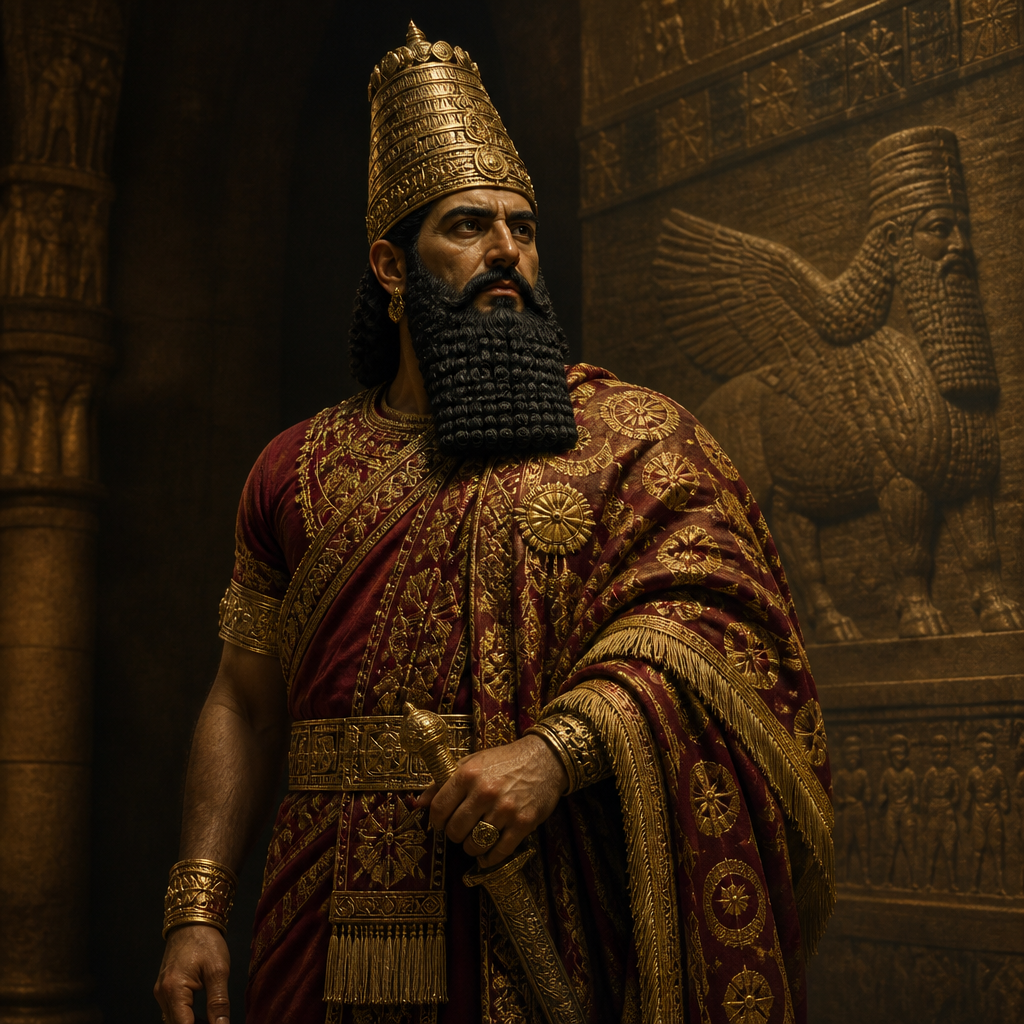
Esarhaddon was a powerful monarch of the Neo-Assyrian Empire during the 7th century BC, reigning during the era of the Divided Monarchy in Israel and Judah. In the biblical narrative, he is identified as the son and successor of Sennacherib. His ascension to the throne occurred under violent circumstances following a palace conspiracy led by his own brothers, an event recorded in both the historical and prophetic books of the Old Testament.
While his biblical footprint is relatively small, spanning only three verses, his presence serves as a crucial historical marker for the transition of Assyrian power and the ongoing demographic shifts in the Levant. He is notably mentioned in connection with the resettlement programs that followed the collapse of the Northern Kingdom of Samaria, influencing the regional religious and political landscape for generations.
Background and Family
Esarhaddon was the son of Sennacherib, the Assyrian king famous for his siege of Jerusalem during the reign of King Hezekiah of Judah. The biblical record establishes Esarhaddon as one of several siblings, specifically identifying his brothers Adrammelech and Sharezer. The household was characterized by extreme internal strife; according to 2 Kings 19:37 and Isaiah 37:38, his brothers murdered their father while he was worshiping in the temple of his god, Nisroch. Following the assassination, the two brothers fled to the land of Ararat, leaving the throne vacant. Esarhaddon subsequently rose to power, assuming the leadership of the Assyrian Empire in the wake of this patricide.
Major Life Events
The primary biblical event associated with Esarhaddon’s reign is his succession. The text describes a sudden shift in Assyrian leadership that provided a reprieve for the Kingdom of Judah. While his father Sennacherib had been a direct threat to Jerusalem, the internal chaos of the Assyrian court—culminating in Esarhaddon's rise—shifted the empire's focus away from the immediate destruction of Hezekiah’s capital.
Beyond his ascension, Esarhaddon is credited in the book of Ezra with the forced migration of foreign peoples into the territory formerly known as the Northern Kingdom of Israel. Ezra 4:2 records that the adversaries of the returning Jewish exiles claimed they had been sacrificing to God "since the time of King Esar-haddon of Assyria, who brought us here." This indicates that Esarhaddon continued the Assyrian policy of deportation and resettlement, populating the lands of the ten tribes with various ethnic groups from other parts of the empire. This action laid the groundwork for the complex religious and ethnic identity of the Samaritans in the centuries that followed.
Relationship to Other Biblical Figures
Esarhaddon’s relationships are primarily defined by his immediate family and his indirect impact on the leaders of Israel and Judah. As the child of Sennacherib, he represents the continuation of the Mesopotamian threat that loomed over the Divided Monarchy. He is the sibling of Adrammelech and Sharezer, whose violent actions directly facilitated his path to the throne. In the post-exilic period, his name is invoked by the heads of local families who interacted with Zerubbabel, the leader of the Jewish returnees, illustrating that Esarhaddon’s administrative decisions regarding land resettlement remained relevant long after his death.
Spiritual Significance
In the biblical context, Esarhaddon serves as a testament to the fulfillment of prophetic judgment and the sovereignty of God over foreign empires. The murder of Sennacherib and the subsequent reign of Esarhaddon are presented as the historical reality following the divine intervention that saved Jerusalem from the Assyrian army. For the authors of the Old Testament, Esarhaddon is not merely a secular ruler but a tool within the broader providential history of the Near East, whose policies regarding the movement of nations directly affected the purity and political stability of the people of Israel.
Esarhaddon’s significance lies in his role as a fulfiller of historical transition within the Neo-Assyrian Empire, which was the primary antagonist of the Northern and Southern Kingdoms. His reign marks the point at which the Assyrian threat shifted from direct military invasion of Judah to the administrative stabilization of the previously conquered Samaria through resettlement programs. Theologically, his rise to power demonstrates that even the mightiest pagan empires are subject to internal collapse and divine timing, as his father's death occurred precisely as predicted by the prophet Isaiah.
Frequently Asked Questions
How did Esarhaddon become king of Assyria?
He became king after his brothers, Adrammelech and Sharezer, murdered their father Sennacherib and fled to the land of Ararat, as recorded in 2 Kings 19:37.
Which biblical books mention Esarhaddon?
Esarhaddon is mentioned in three books: 2 Kings, Isaiah, and Ezra.
What role did Esarhaddon play in the history of Samaria?
According to Ezra 4:2, Esarhaddon was responsible for bringing foreign groups to the land of Israel and settling them there, contributing to the mixed population of the region.
Who was Esarhaddon's father?
His father was Sennacherib, the king of Assyria who famously besieged Jerusalem during the time of King Hezekiah.
Is Esarhaddon considered a hero or a villain in the Bible?
The Bible presents him neutrally as a historical figure and a foreign monarch, though his actions in resettling foreign peoples created long-term complications for the nation of Israel.
Family & Relationships
Parents
 SennacheribFather2 Kings 18:13
Inferred
No verse names Sennacherib and Esarhaddon together; the son link is carried from the surrounding genealogy and is not stated in Scripture.Evidence: 2 Kings 18:13
 Esar-haddonThis page
 Adrammelech, Son of SennacheribBrother2 Kings 19:37
Inferred
No verse names Esarhaddon and Adrammelech together; the brother link is carried from the surrounding genealogy and is not stated in Scripture.Evidence: 2 Kings 19:37
 Sharezer, Son of SennacheribBrother2 Kings 19:37
Inferred
No verse names Sharezer and Esarhaddon together; the brother link is carried from the surrounding genealogy and is not stated in Scripture.Evidence: 2 Kings 19:37
Connected Figures
Family
Father · 2 Kings 18:13
The powerful King of Assyria during the Divided Monarchy who invaded Judah, besieged Jerusalem, and was ultimately assassinated by his own sons.
Divided MonarchyFirst: 2 Kings 18:1316 versesKing of Assyria
Brother · 2 Kings 19:37
An Assyrian prince of the Divided Monarchy period who, along with his brother Sharezer, assassinated their father, King Sennacherib, while he was worshiping in a temple.
Brother · 2 Kings 19:37
An Assyrian prince during the Divided Monarchy who, alongside his brother Adrammelech, assassinated their father King Sennacherib while he worshiped in the temple of Nisroch.
Divided MonarchyFirst: 2 Kings 19:373 versesPrince of Assyria
Categories
Mentions by Book
- 2 Kings2
- Ezra1
- Isaiah1
Scripture References
All 4 indexed verses, in canonical order, from the Berean Standard Bible.
2 Kings · 2
- 2 Kings 18:13Partial
In the fourteenth year of Hezekiah’s reign, Sennacherib king of Assyria attacked and captured all the fortified cities of Judah.
Cited as evidence on a family card; added so References, Key Verses and Mentions by Book share one index.
- 2 Kings 19:37
One day, while he was worshiping in the temple of his god Nisroch, his sons Adrammelech and Sharezer put him to the sword and escaped to the land of Ararat. And his son Esar-haddon reigned in his place.
Ezra · 1
- Ezra 4:2
they approached Zerubbabel and the heads of the families, saying, “Let us build with you because, like you, we seek your God and have been sacrificing to Him since the time of King Esar-haddon of Assyria, who brought us here.”
Isaiah · 1
- Isaiah 37:38
One day, while he was worshiping in the temple of his god Nisroch, his sons Adrammelech and Sharezer put him to the sword and escaped to the land of Ararat. And his son Esar-haddon reigned in his place.