Chenaanah, Father of Zedekiah
Chenaanah was the father of the false prophet Zedekiah, who misled King Ahab and King Jehoshaphat regarding the battle at Ramoth-gilead.
Chenaanah is a figure mentioned in the biblical record of the Divided Monarchy, specifically during the joint military campaign of King Ahab of Israel and King Jehoshaphat of Judah. While Chenaanah himself does not participate in the narrative events directly, his identity is preserved through the actions of his son, Zedekiah.
His name is inextricably linked to one of the most significant confrontations between true and false prophecy in the Old Testament. As the father of Zedekiah, Chenaanah’s legacy is tied to the dramatic and ultimately tragic events at the court of Ahab, where a coalition of four hundred prophets falsely predicted victory against the Arameans.
Background and Family
The historical record regarding Chenaanah is limited to his role as a patriarch within a family of prophetic influence in the Northern Kingdom of Israel. The biblical text provides no specific information regarding his tribe, his own occupation, or his ancestry. However, his name appears in four distinct verses (1 Kings 22:11, 24; 2 Chronicles 18:10, 23), always in the context of identifying his son, Zedekiah.
During the era of the Divided Monarchy (roughly 9th century BC), familial identification was critical for establishing authority and social standing. The repetitive use of the phrase "Zedekiah son of Chenaanah" suggests that Chenaanah was a man of some recognition or that the name served to ground the narrative in a specific historical lineage within the court of Samaria.
Major Life Events
While the scriptures do not record Chenaanah’s personal deeds, his impact is felt through the actions of his son during the crisis at Samaria. When King Ahab of Israel sought to retake Ramoth-gilead from the Arameans, he summoned four hundred prophets to inquire of the Lord. Zedekiah son of Chenaanah emerged as the leader of this group.
Zedekiah performed a symbolic prophetic act by making iron horns, claiming that Ahab would gore the Arameans until they were destroyed. When the true prophet Micaiah was brought forward and contradicted this message, Zedekiah struck Micaiah in the face and mocked him. In these high-stakes political and spiritual moments, the text repeatedly references Chenaanah to identify the primary antagonist to Micaiah’s message. This inclusion in the double records of Kings and Chronicles ensures that Chenaanah’s name is preserved as the source of a deceptive prophetic line.
Relationship to Other Biblical Figures
Chenaanah’s primary relationship in the text is with his son, Zedekiah. The relationship defines Chenaanah’s place in the biblical canon; he is the father of a man who opposed the word of the Lord and physically assaulted a true prophet. Through this connection, Chenaanah is peripherally associated with King Ahab and King Jehoshaphat, as his son was a prominent fixture in their royal court during the deliberation of war.
Spiritual Significance
In the context of the Divided Monarchy, Chenaanah represents the generational roots of the religious environment in Samaria. The Northern Kingdom had largely abandoned the pure worship of Yahweh for a state-sponsored religion that often synthesized local traditions and political convenience. By identifying Zedekiah as the "son of Chenaanah," the biblical author provides a historical anchor for the false prophecy that led Ahab to his death. Though Chenaanah is a silent figure, his name is preserved as a marker of the household from which the deception of the king originated. The text uses his name to distinguish this Zedekiah from other men of the same name, ensuring the reader knows exactly which family was responsible for the spiritual conflict at the gates of Samaria.
Spiritual Significance
Chenaanah serves as a genealogical marker for one of the most notorious false prophets in the Old Testament, Zedekiah. His significance lies in providing historical legitimacy and identity to the narrative of the battle for Ramoth-gilead. The repetition of his name across both Kings and Chronicles underscores the importance of his lineage in the court of Ahab.
Theologically, Chenaanah’s presence in the text highlights the biblical theme of legacy. Though he does not speak, his son acts with an authority that suggests a background of influence. He is remembered not for his own deeds, but for the fruit of his household—a son who led the nation toward a disastrous military defeat by tickling the ears of a king.
Frequently Asked Questions
Who was Chenaanah's most famous child?
Chenaanah was the father of Zedekiah, a court prophet in the Northern Kingdom of Israel who famously made iron horns to predict a victory for King Ahab.
What tribe did Chenaanah belong to?
The Bible does not specify the tribe of Chenaanah, though he lived during the Divided Monarchy and his son was active in the court of the Northern Kingdom (Israel) at Samaria.
In which books of the Bible is Chenaanah mentioned?
Chenaanah is mentioned in 1 Kings and 2 Chronicles, specifically in the parallel accounts of the prophecy regarding the battle of Ramoth-gilead.
Did Chenaanah himself ever give a prophecy?
There is no record of Chenaanah prophesying; the biblical text only mentions him to identify his son, Zedekiah.
What does the name Chenaanah mean?
The name is often associated with the root for 'Canaan' or 'to be low/humble,' though its specific meaning in this context is debated among scholars.
Connected Figures
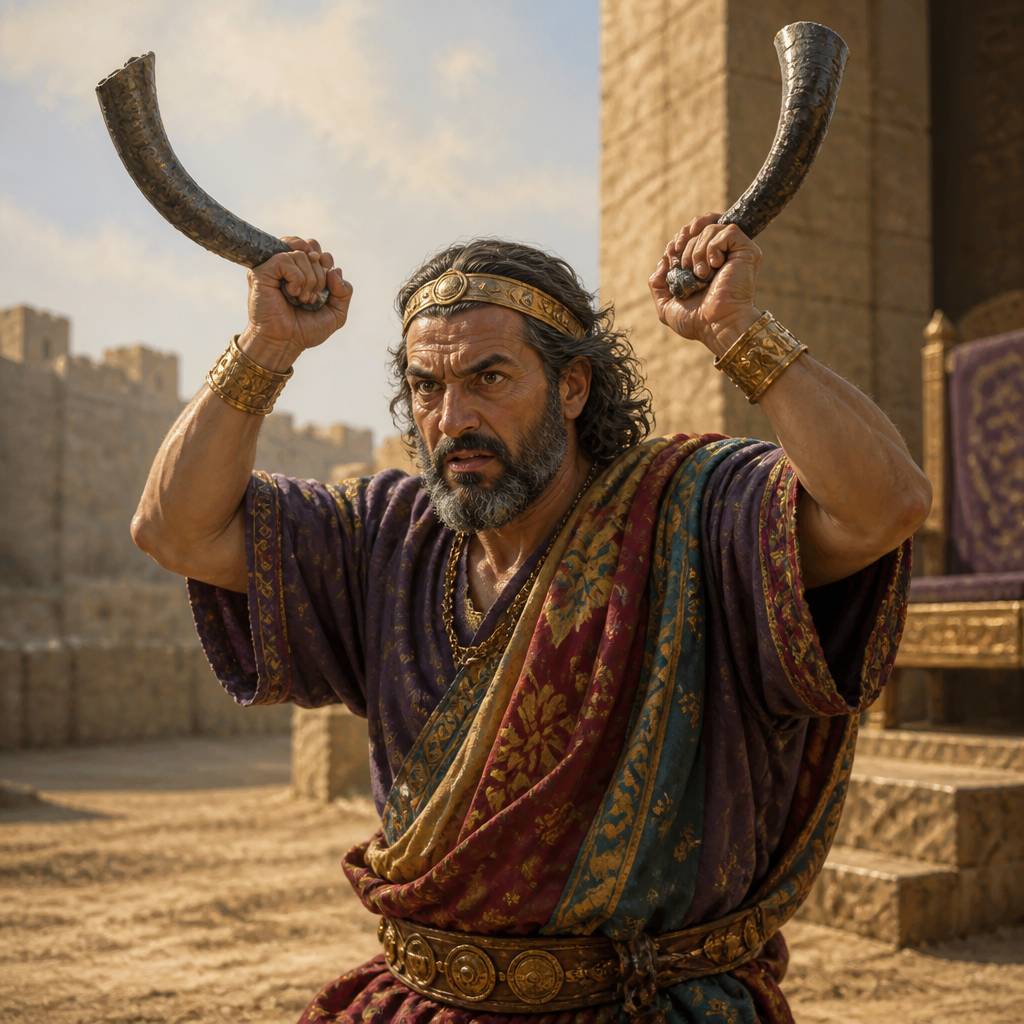
Zedekiah son of Chenaanah
Son
Ahab
King of Israel influenced by his son
Micaiah
Prophetic rival of his son
Categories
Mentions by Book
- 1 Kings2
- 2 Chronicles2
Family & Relationships
Child
1 Kings 22:11
Others Named Chenaanah
Chenaanah, Great-Grandson of Benjamin1 Chronicles 7:10
Chenaanah was a prominent member of the tribe of Benjamin during the Divided Monarchy, listed among the sons of Bilhan in the Davidic genealogical records.