Mary, Sister of Martha and Lazarus
A devoted follower of Jesus from Bethany known for her contemplative posture at Christ's feet and her sacrificial act of anointing Him with expensive perfume.
Mary of Bethany was a close friend and disciple of Jesus Christ during His earthly ministry in the 1st century AD. Residing in the village of Bethany, just outside Jerusalem, she is distinguished in the New Testament for her deep spiritual perception and her preference for listening to the teachings of Jesus over domestic concerns. She is the daughter of a man known in the records as the father of Lazarus, and she shared a home with her siblings, Martha and Lazarus.
Throughout the Gospels of Luke and John, Mary is consistently depicted in a posture of devotion, specifically at the feet of Jesus. Her presence in the biblical narrative is marked by three distinct episodes: listening to Jesus' word, mourning the death of her brother, and anointing Jesus prior to His passion. These moments highlight her role as a primary witness to the miracles of Jesus and a recipient of His specific theological affirmations regarding the priority of spiritual devotion.
Background and Family
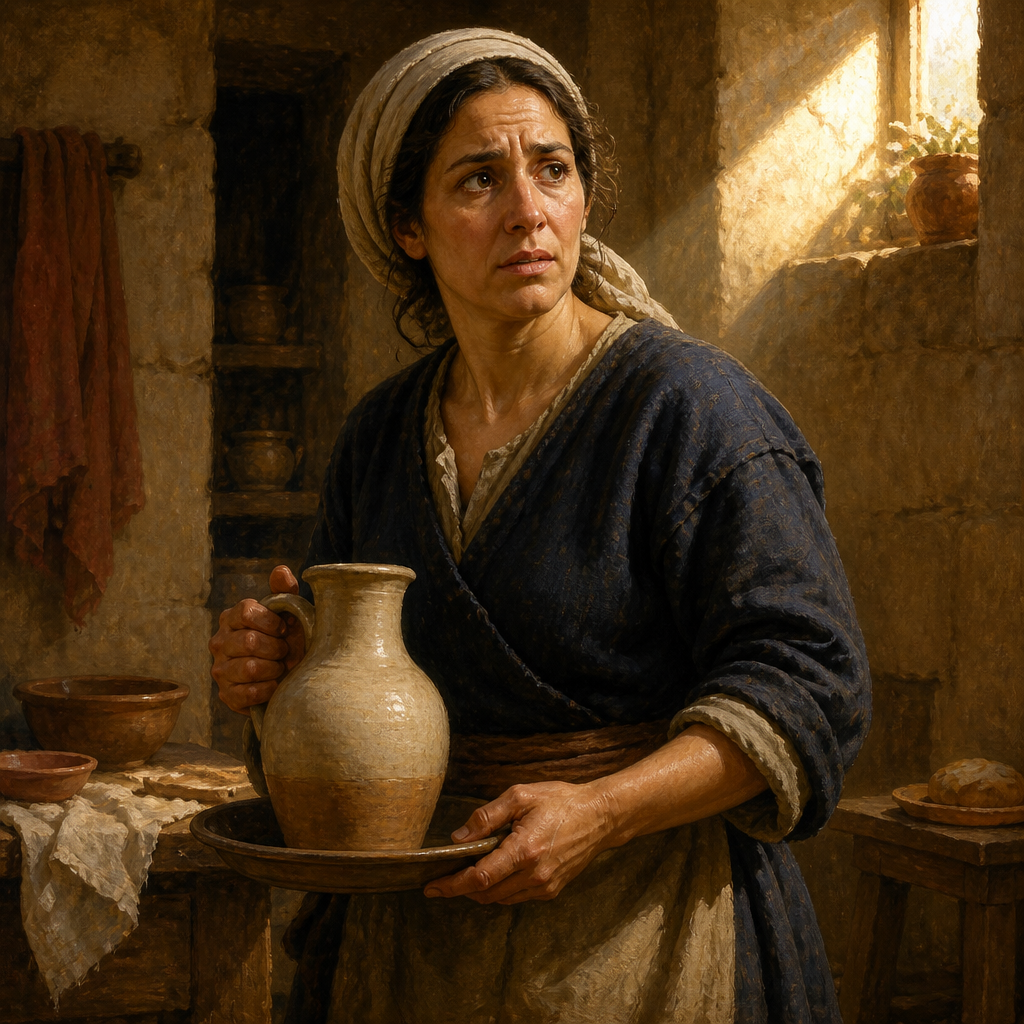
Mary resided in the village of Bethany, located on the eastern slope of the Mount of Olives. The biblical record identifies her as the sister of Martha and Lazarus. While the tribe or specific lineage of the family is not explicitly stated, the family appears to have possessed significant social standing and financial means, evidenced by their ability to host Jesus and His disciples, the possession of a private tomb, and Mary’s ownership of a very expensive alabaster jar of pure nard.
In the domestic hierarchy, Mary is often contrasted with her sister Martha. While Martha is characterized by her administrative diligence and hospitality, Mary is defined by her interior life and theological focus. The Gospel of John explicitly notes that the village of Bethany was identified by its association with Mary and Martha, suggesting the family was well-known in the region.
Major Life Events
The Choice of the 'Good Portion'
In the first recorded encounter with Mary in Luke 10, Jesus visits the home of the sisters. While Martha is described as 'distracted with much serving,' Mary is found sitting at the Lord’s feet, listening to His message. When Martha requests that Jesus rebuke Mary for her lack of domestic assistance, Jesus instead commends Mary. He states that 'Mary has chosen the good portion,' affirming that spiritual communion with the Word takes precedence over the anxieties of service.
The Death and Resurrection of Lazarus
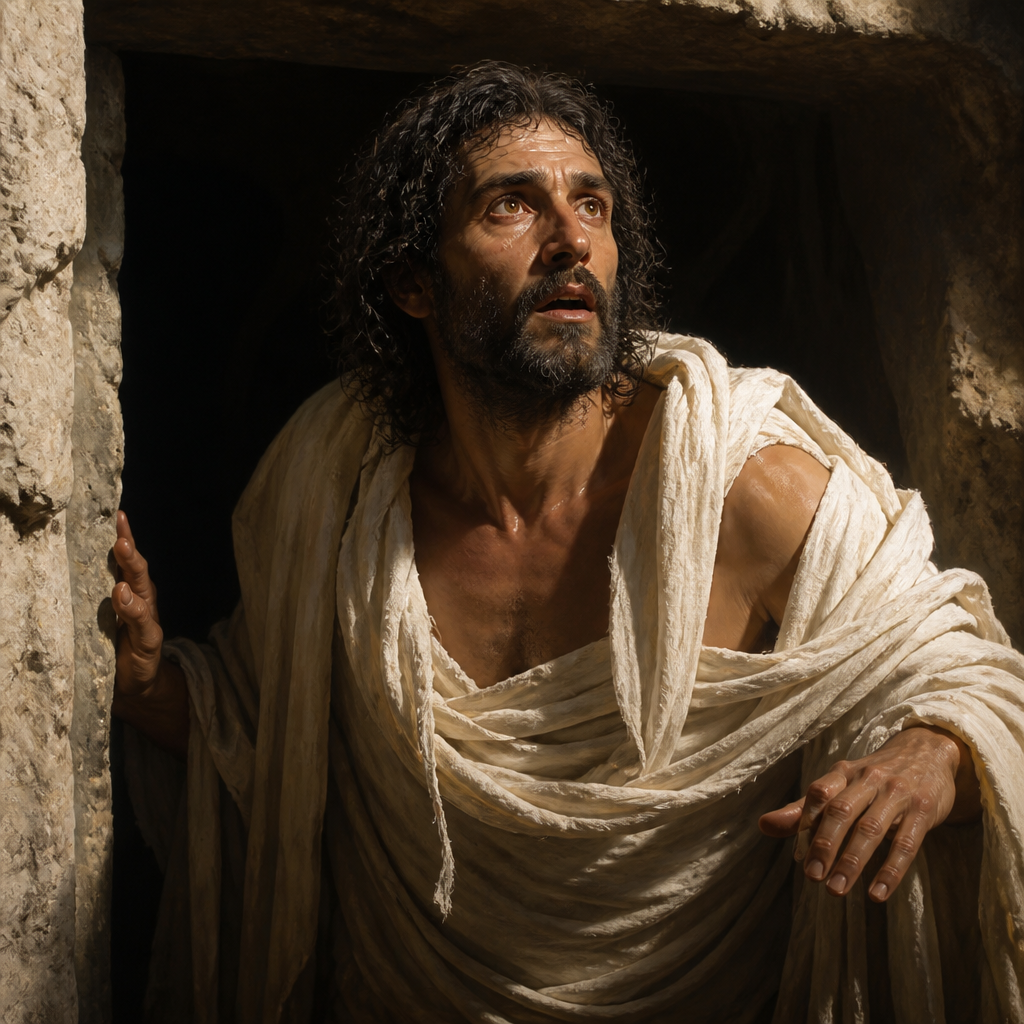
Mary plays a central role in the narrative of John 11. Following the death of her brother Lazarus, Mary initially remains in the house while Martha goes to meet the arriving Jesus. Upon being summoned, Mary goes to Jesus and, falling at His feet, expresses her grief: 'Lord, if You had been here, my brother would not have died' (John 11:32). Her weeping, along with the mourning of those with her, deeply moves Jesus, leading to the shortest verse in scripture ('Jesus wept') and the subsequent miracle of Lazarus being raised from the dead. This event served as a catalyst for many Jewish witnesses to believe in Jesus.
The Anointing at Bethany
Shortly before the Passover and the crucifixion, Jesus returned to Bethany. During a dinner in His honor, Mary performed a significant act of devotion. She took a pint of expensive perfume, made of pure nard, and anointed Jesus’ feet, wiping them with her hair. The text notes that the fragrance filled the entire house. When Judas Iscariot criticized the act as a waste of resources that could have been given to the poor, Jesus defended her, noting that she had kept the perfume for the day of His burial. This act is widely regarded as a prophetic recognition of Jesus' impending death.
Relationship to Other Biblical Figures
Mary’s primary relationship is with Jesus, whom she addresses as 'Teacher' (Didaskalos) and 'Lord' (Kyrios). Her relationship with her sister Martha is one of complementary opposites; though they clash over domestic duties, they are united in their faith and their shared mourning. Her relationship with her brother Lazarus is characterized by deep affection, as her grief over his death was profound enough to stir the emotions of the community and Jesus Himself. Additionally, she was well-regarded by the local Jewish community, as many came to console her during her bereavement.
Spiritual Significance
Theologically, Mary of Bethany represents the ideal of the contemplative disciple. Her repeated positioning at the feet of Jesus—first to learn, then to mourn, and finally to worship—symbolizes the total submission of the intellect, the emotions, and the will to the Messiah. Her act of anointing Jesus is significant for its timing and its cost. By using nard worth approximately a year's wages for a laborer, she demonstrated a selfless love that transcended economic logic. Jesus’ defense of her actions suggests that Mary understood the necessity of His coming sacrifice in a way that even the Twelve Apostles often struggled to grasp.
Spiritual Significance
Mary of Bethany serves as a model for the priority of spiritual devotion over religious activity. Her character is used in the New Testament to illustrate that 'only one thing is necessary'—attentiveness to the Word of God. She is one of the few individuals whom Jesus explicitly commends for their spiritual insight and choices, setting her apart as a hallmark of faith and sacrificial love.
Furthermore, her role in the resurrection of Lazarus and the subsequent anointing of Jesus links her directly to the major christological revelations of the Gospel of John. She is a witness to Christ as the 'Resurrection and the Life' and an active participant in the events leading to His burial. Her actions highlight the importance of the individual's response to the presence of God in Christ.
Frequently Asked Questions
Where did Mary of Bethany live?
She lived in Bethany, a village near Jerusalem, with her siblings Martha and Lazarus.
What did Jesus say about Mary when Martha complained about her?
Jesus said that Mary had 'chosen the good portion' which would not be taken away from her, emphasizing that listening to His teaching was more important than domestic chores.
Why did Mary anoint Jesus' feet with expensive perfume?
Mary anointed Jesus as an act of devotion and worship. Jesus interpreted this act as a preparation for His burial, acknowledging its prophetic significance.
How did Mary react to the death of her brother Lazarus?
She fell at Jesus' feet in grief, stating that if He had been there, her brother would not have died. Her intense sorrow deeply moved Jesus to tears.
What was the value of the perfume Mary used?
The perfume was a pint of pure nard. According to the Gospel accounts, it was extremely expensive, and Judas Iscariot valued it at three hundred denarii (roughly a year's wages).
Connected Figures
Categories
Mentions by Book
- John9
- Luke2
Family & Relationships
Sibling
Luke 10:39
Sibling
Luke 10:39
Sibling
Luke 10:38
Parent
Luke 10:39
Sibling
John 11:1
Others Named Mary
Mary, Mother of John MarkActs 12:12
A prominent woman in the early Jerusalem church whose home served as a primary meeting and prayer location for the apostles.
Mary, Hard Worker of RomeRomans 16:6
A prominent woman in the first-century Roman church commended by the Apostle Paul for her exceptional labor and dedication to the Christian community.
Mary, Mother of James and JosesMatthew 27:56
A dedicated follower of Jesus who witnessed His crucifixion, prepared for His burial, and was among the first to witness the empty tomb.