Mary, Mother of John Mark
A prominent woman in the early Jerusalem church whose home served as a primary meeting and prayer location for the apostles.
Mary, the mother of John Mark, was a Christian woman of significant standing in the early Jerusalem church. While she is mentioned by name in only a single verse within the Book of Acts, her inclusion provides a vital glimpse into the infrastructure of the primitive Christian community. As the mother of John Mark and the sister of Barnabas, she was connected to the inner circle of the apostolic movement during the first century AD.
Her residence in Jerusalem was large enough to accommodate a significant gathering of believers, suggesting she was a woman of means who utilized her personal resources for the advancement of the Gospel. Her home became a sanctuary for the church during times of intense persecution, serving as a hub for corporate prayer and a safe house for leaders like the Apostle Peter.
Background and Family
Mary lived in Jerusalem during the formative years of the early church. While the Bible does not explicitly state her tribal affiliation, she was the sister of Barnabas, a Levite from Cyprus (Acts 4:36; Colossians 4:10). This familial link suggests she may have shared this Levitical heritage. She is identified primarily through her son, "John, also called Mark," who would later become a companion to Paul and Barnabas and is traditionally credited as the author of the Gospel of Mark.
The existence of a household staff, specifically a servant girl named Rhoda (Acts 12:13), and the capacity of her home to host "many people" indicates that Mary was a woman of relative wealth and social status. In the cultural context of the first century AD, maintaining a home of this size in Jerusalem required significant financial stability.
Major Life Events
The primary record of Mary’s life occurs in Acts 12. Following the execution of James the brother of John by Herod Agrippa I, the Apostle Peter was imprisoned. The text records that while Peter was in chains, the church offered earnest prayer for him. After Peter’s miraculous release by an angel, his first instinct was to seek out the local assembly.
And when he had realized this, he went to the house of Mary the mother of John, also called Mark, where many people had gathered together and were praying. (Acts 12:12)
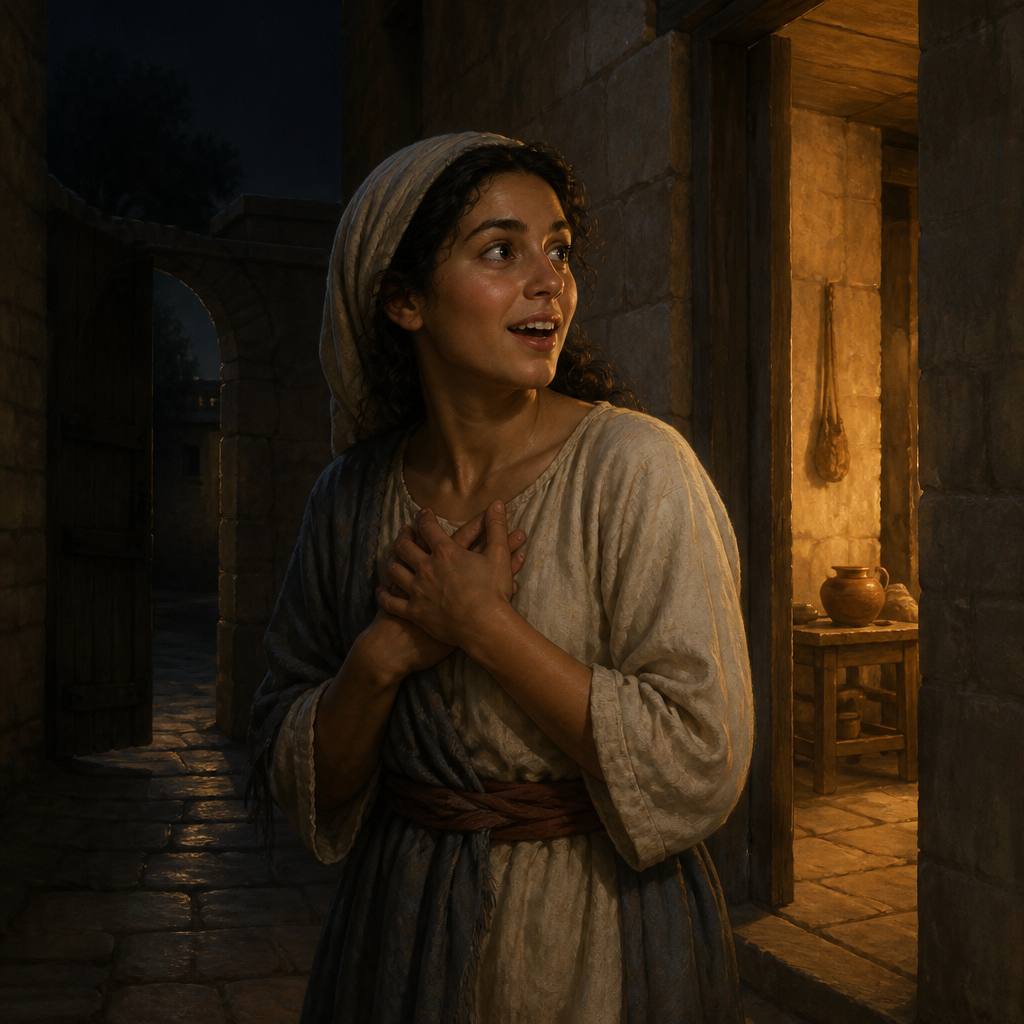
Upon arriving at Mary's gate, Peter was recognized by Rhoda. The scene depicts a household deeply involved in the spiritual life of the community. Mary’s home served as a nerve center for the Jerusalem believers, providing the physical space necessary for collective intercession during a moment of crisis.
Relationship to Other Biblical Figures
Mary’s significance is amplified by her relationships. As the mother of John Mark, she raised a young man who would become a key figure in the missionary journeys of the early church. Her brother, Barnabas, was known as the "Son of Encouragement" and was a lead figure in the Antioch church. It is highly probable that the close fellowship between these leaders was fostered within the hospitality of Mary’s home. Furthermore, the fact that Peter went straight to her house after his escape suggests a high level of trust and intimacy between Mary and the leaders of the Twelve.
Spiritual Significance
Mary represents the vital role of women and homeowners in the expansion of the early church. Before the establishment of dedicated church buildings, the faith relied on the courage of individuals like Mary who opened their private residences to what was then a persecuted sect. Her willingness to host a large prayer meeting during the height of Herod’s crackdown demonstrates a profound commitment to Christ and the safety of His followers.
Spiritual Significance
Mary, the mother of John Mark, is theologically significant as a model of Christian hospitality and institutional support in the early church. Her home is one of the earliest recorded examples of a 'house church,' showing that the movement thrived through the generosity of individuals who dedicated their private property to the community. Her role underscores the importance of the domestic sphere in the survival of the apostles during the Roman and Herodian persecutions of the first century AD.
Furthermore, as the mother of the evangelist Mark and the sister of Barnabas, she represents a lineage of faith that bridged the Jerusalem church with the wider Gentile mission. Her presence in the narrative of Acts 12 highlights that the success of the apostolic ministry was intrinsically tied to the quiet, steadfast support of faithful women who provided the necessary resources for prayer and fellowship.
Frequently Asked Questions
Who was Mary's son?
Her son was John, who was also called Mark. He is traditionally identified as the author of the Gospel of Mark and was a companion to both Peter and Paul.
Where did Mary live?
Mary lived in Jerusalem during the early years of the Christian church following the ascension of Jesus.
Was Mary related to Barnabas?
Yes, according to Colossians 4:10, Mark was the cousin of Barnabas, which identifies Mary as Barnabas's sister.
What happened at Mary's house in the Bible?
Her house was a gathering place for the early Christians. Most notably, the Apostle Peter went there immediately after he was miraculously released from prison by an angel.
Did Mary have servants?
Yes, Acts 12:13 mentions a servant girl named Rhoda who worked in Mary's household and answered the gate when Peter knocked.
Connected Figures
Categories
Mentions by Book
- Acts1
Family & Relationships
Child
Acts 12:12
Sibling
Acts 12:12
Spouse / partner
Husband of Mary (Early Church)
Acts 12:12
Sibling
Acts 4:36
Parent
Colossians 4:10
Spouse / partner
Husband of Mary (Early Church)
Acts 12:12
Others Named Mary
Mary, Sister of Martha and LazarusLuke 10:39
A devoted follower of Jesus from Bethany known for her contemplative posture at Christ's feet and her sacrificial act of anointing Him with expensive perfume.
Mary, Hard Worker of RomeRomans 16:6
A prominent woman in the first-century Roman church commended by the Apostle Paul for her exceptional labor and dedication to the Christian community.
Mary, Mother of James and JosesMatthew 27:56
A dedicated follower of Jesus who witnessed His crucifixion, prepared for His burial, and was among the first to witness the empty tomb.