Ribai
Who was Ribai in the Bible?
Ribai was a Benjamite from Gibeah and the father of Ittai, one of King David’s elite warriors known as 'The Thirty'.
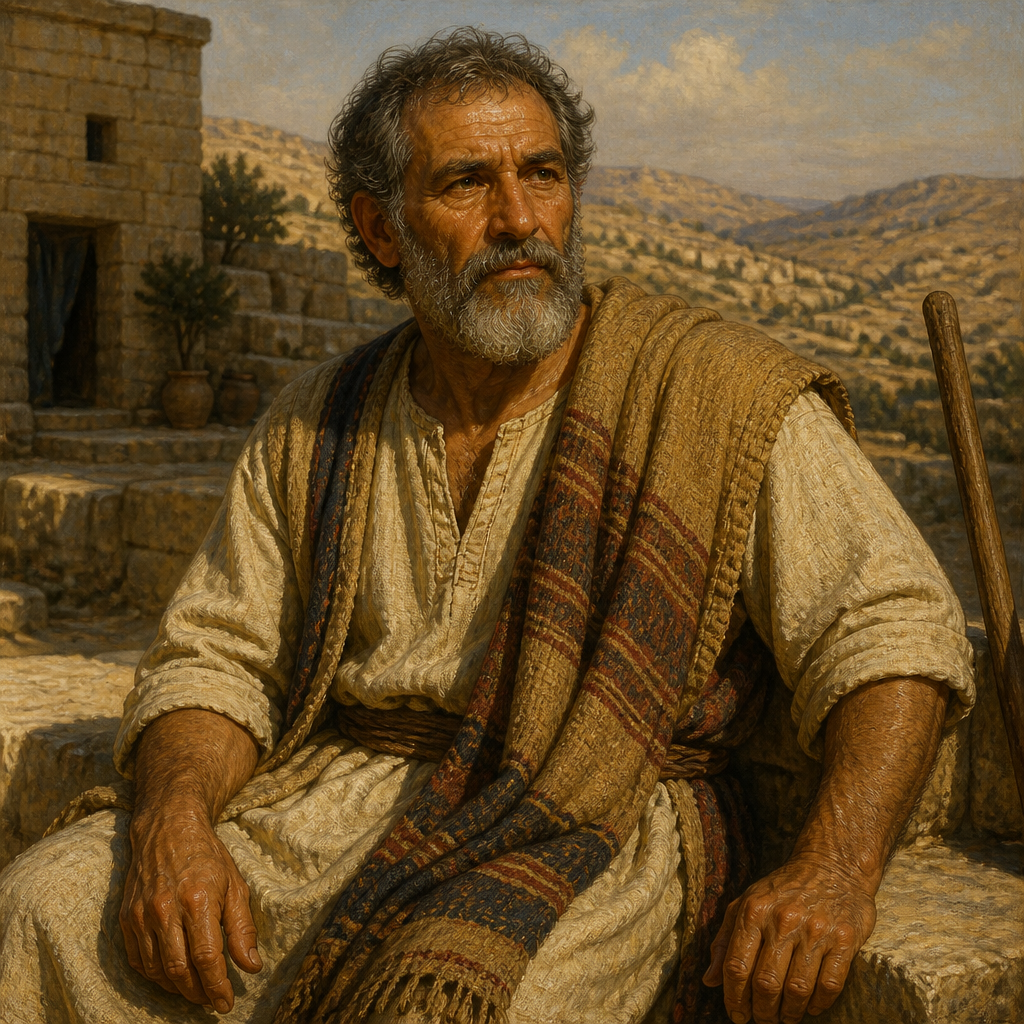
Ribai was a resident of Gibeah within the territory of the tribe of Benjamin during the period of the United Monarchy. While he is not credited with military exploits of his own in the biblical text, he is identified as the father of Ittai (also spelled Ithai), a prominent member of King David’s specialized military unit known as 'The Thirty.'
His inclusion in the genealogical records of 2 Samuel and 1 Chronicles serves to establish the lineage and regional origin of his son, Ittai. As a Benjamite from Gibeah—the ancestral home of David's predecessor and rival, King Saul—Ribai’s family represents those from Saul’s own tribe who pledged their ultimate loyalty to the Davidic throne.
Background and Family
Ribai is situated historically within the 10th century BC, during the transition and consolidation of the United Monarchy under King David. The biblical text identifies him specifically as being 'from Gibeah of the Benjamites' (2 Samuel 23:29). Gibeah held significant political and cultural weight during this era, as it had served as the capital and primary residence of King Saul, the first king of Israel.
The mention of Ribai’s home in Gibeah suggests that his family was part of the tribal aristocracy or military class of Benjamin. Because the tribe of Benjamin remained largely loyal to the house of Saul following his death at Mount Gilboa, the presence of Ribai’s son in David’s inner circle of heroes is a noteworthy detail regarding the internal politics of the early Judean monarchy.
Major Life Events
The scriptural record does not preserve specific actions, speeches, or achievements performed by Ribai himself. Instead, he appears in the 'Catalogue of Mighty Men,' a specialized military roster that lists the elite soldiers who supported David during his rise to power and his subsequent reign.
Ribai is mentioned in two parallel passages: 2 Samuel 23:29 and 1 Chronicles 11:31. In both instances, he is cited strictly as the father of Ittai (or Ithai). This form of identification was a standard ancient Near Eastern practice to provide legitimacy and social standing to an individual by naming their patriarch. The survival of Ribai’s name in these ancient archives indicates that his son’s status was high enough to merit the preservation of his father's name for posterity.
Relationship to Other Biblical Figures
Ribai’s primary relationship defined in the Bible is with his son, Ittai the Benjamite. Ittai was one of the 'Gibborim' (Mighty Men), a group of warriors renowned for their bravery, skill, and loyalty to King David. It is important to distinguish Ribai’s son, Ittai the Benjamite, from Ittai the Gittite (a Philistine loyalist from Gath), though both served David concurrently.
Through his son, Ribai is indirectly linked to the court of King David. The fact that Ribai raised a son who became a champion for David—despite their origins in Saul’s hometown—suggests a family shift in allegiance. This shift was critical for the unification of the twelve tribes under the Davidic line, as it demonstrated that even the kinsmen of Saul recognized David’s divine appointment.
Spiritual Significance
While Ribai is a minor figure, his presence in the text underscores the biblical theme of legacy and the importance of the family unit in Israelite society. In the context of the United Monarchy, Ribai represents the quiet foundation upon which the 'Mighty Men' were built. The inclusion of his name in the sacred chronicles ensures that his contribution to the nation—namely, the raising of a faithful and courageous son—is not forgotten in the grand narrative of Israel’s history.
Ribai’s significance lies in his role as a father to one of David's elite warriors. His name appears in the formal military records of the United Monarchy, providing crucial genealogical and geographical data that links the tribe of Benjamin to David’s military successes. He stands as a representative of the Benjamite families who integrated into the new Davidic administration despite their previous ties to the house of Saul.
Theologically, Ribai is part of the extensive lists that emphasize the historical reality of David’s kingdom. These lists serve to ground the narrative in actual families and locations, reinforcing the idea that God's providence for Israel operated through real individuals and their domestic lineages.
Frequently Asked Questions
Who was Ribai in the Bible?
Ribai was a Benjamite from the city of Gibeah and the father of Ittai, one of King David's 'Mighty Men'.
What tribe did Ribai belong to?
He belonged to the tribe of Benjamin.
Where did Ribai live?
He lived in Gibeah, which was famously the home of Israel's first king, Saul.
Why is Ribai mentioned in the books of Samuel and Chronicles?
He is mentioned to identify the parentage and origin of his son, Ittai, who was a high-ranking member of David’s elite military unit.
Did Ribai serve in King David's army?
The Bible does not explicitly state that Ribai served in the army; only his son, Ittai, is listed among David’s 'Mighty Men'.
Family & Relationships
 RibaiThis page
Children
 Ittai, son of RibaiSon2 Samuel 23:29Stated
Connected Figures
Family
Son · 2 Samuel 23:29
One of King David’s 'Mighty Men' (the Gibborim), a Benjamite warrior recognized for his military prowess during the United Monarchy.
United MonarchyFirst: 2 Samuel 23:292 versesElite warriorBenjamin
Categories
Mentions by Book
- 2 Samuel1
- 1 Chronicles1
Scripture References
All 2 indexed verses, in canonical order, from the Berean Standard Bible.
2 Samuel · 1
- 2 Samuel 23:29
Heled son of Baanah the Netophathite, Ittai son of Ribai from Gibeah of the Benjamites,
1 Chronicles · 1
- 1 Chronicles 11:31
Ithai son of Ribai from Gibeah of the Benjamites, Benaiah the Pirathonite,