Ittai, son of Ribai
Who was Ittai, son of Ribai, in the Bible?
One of King David’s 'Mighty Men' (the Gibborim), a Benjamite warrior recognized for his military prowess during the United Monarchy.
This is one of 2 people named Ittai in the Bible. See all 2 →
Ittai, son of Ribai, was a distinguished soldier within the elite military guard of King David known as the 'Mighty Men' or the Gibborim. Hailing from Gibeah of the Benjamites, his presence in the king’s inner circle is noteworthy given that he belonged to the same tribe and hometown as David’s predecessor and rival, King Saul. His inclusion in this select group signifies a high level of martial skill and individual achievement during the peak of the United Monarchy in the 10th century BC.
While the biblical record of this specific Ittai is limited to two parallel genealogical lists of David’s warriors, his mention in both 2 Samuel and 1 Chronicles underscores his historical importance to the chroniclers of Israel’s military history. As one of the 'Thirty' (a secondary tier of elite soldiers), he served as a symbol of the national unity David fostered by incorporating talented men from all tribes—including Benjamin—into his administration and defense forces.
Background and Family
Ittai was the son of Ribai, a resident of Gibeah. Gibeah was a significant location in the territory of the tribe of Benjamin, historically serving as the capital and ancestral home of King Saul (1 Samuel 10:26). The fact that Ittai, a Benjamite from Gibeah, served in the elite guard of King David—who had replaced the house of Saul—suggests a transition of tribal loyalty or a personal commitment to the Davidic throne. In 1 Chronicles 11:31, his name is rendered with a slight spelling variation as 'Ithai' (אִתַי), though the identification remains the same.
Major Life Events
The life of Ittai, son of Ribai, is primarily defined by his status as one of David’s 'Mighty Men.' These warriors were not ordinary soldiers; they were highly decorated veterans who had performed extraordinary feats of valor during David’s rise to power and the subsequent expansion of the kingdom.
Ittai is specifically listed among 'the Thirty' (the Shaloshim). This group functioned as a high-ranking officer corps within David’s army. While the 'Three' (the Shalosh) were the highest-ranking heroes, the 'Thirty' were the backbone of the military leadership. Ittai’s appointment to this role would have occurred during the consolidation of the United Monarchy in the mid-10th century BC. His inclusion in these lists (2 Samuel 23:29 and 1 Chronicles 11:31) serves as a formal record of his service and his contribution to the security of the nation.
Relationship to Other Biblical Figures
Ittai’s most significant relationship is his professional bond with King David. As a member of the Gibborim, he was part of an organization that was intensely loyal to the king, often serving as his personal bodyguard and the shock troops for major campaigns.
Additionally, his name appears alongside other famous warriors such as Benaiah son of Jehoiada and Abishai son of Zeruiah. Living in Gibeah of the Benjamites, he likely navigated complex social dynamics, representing a bridge between the former Benjamite-led monarchy and the new Judean dynasty. The biblical text mentions no specific interaction between him and other figures, focusing purely on his military rank and lineage.
Spiritual Significance
Though the text does not record specific theological oracles or prayers from Ittai, his presence in the canon reflects the biblical theme of unity. The chroniclers highlight that David’s strength was bolstered by men from every corner of Israel. Ittai represents the dedication of one's physical strength and career to the service of the Lord’s anointed king. In the context of the United Monarchy, his service illustrates how individual talent and tribal identity were surrendered to the larger purpose of establishing a unified Israel under God’s chosen leadership. His inclusion in the eternal record of the 'Mighty Men' suggests that his faithfulness in his specific vocation—warfare and defense—was viewed as a service worthy of remembrance.
Ittai, son of Ribai, is significant as a representative of the Benjamite contribution to King David’s military success. His inclusion in the list of the 'Thirty' proves that David successfully integrated supporters of the previous Saulide regime into his own government, fostering national stability. Theologically, he stands as a model of the 'helper' who supports the fulfillment of the Davidic covenant through steadfast service.
His mention in the parallel histories of 2 Samuel and 1 Chronicles validates his historical existence and his high standing in the social hierarchy of 10th-century BC Israel. As a son of Gibeah, he exemplifies the transition of the Benjamite heartland from a center of opposition to a pillar of the United Monarchy.
Frequently Asked Questions
Who was the father of Ittai the Benjamite?
Ittai was the son of Ribai from Gibeah.
What military rank did Ittai hold?
He was one of King David’s 'Mighty Men' and was specifically listed among 'the Thirty,' an elite group of high-ranking warriors.
Where was Ittai from?
He was from Gibeah, which was located in the territory of the tribe of Benjamin.
Is Ittai the Benjamite the same as Ittai the Gittite?
No. Ittai the son of Ribai was a Benjamite and one of the 'Thirty,' while Ittai the Gittite was a Philistine from Gath who joined David later.
In which books of the Bible is Ittai mentioned?
He is mentioned in 2 Samuel 23 and 1 Chronicles 11.
Family & Relationships
Parents
 RibaiFather2 Samuel 23:29Stated
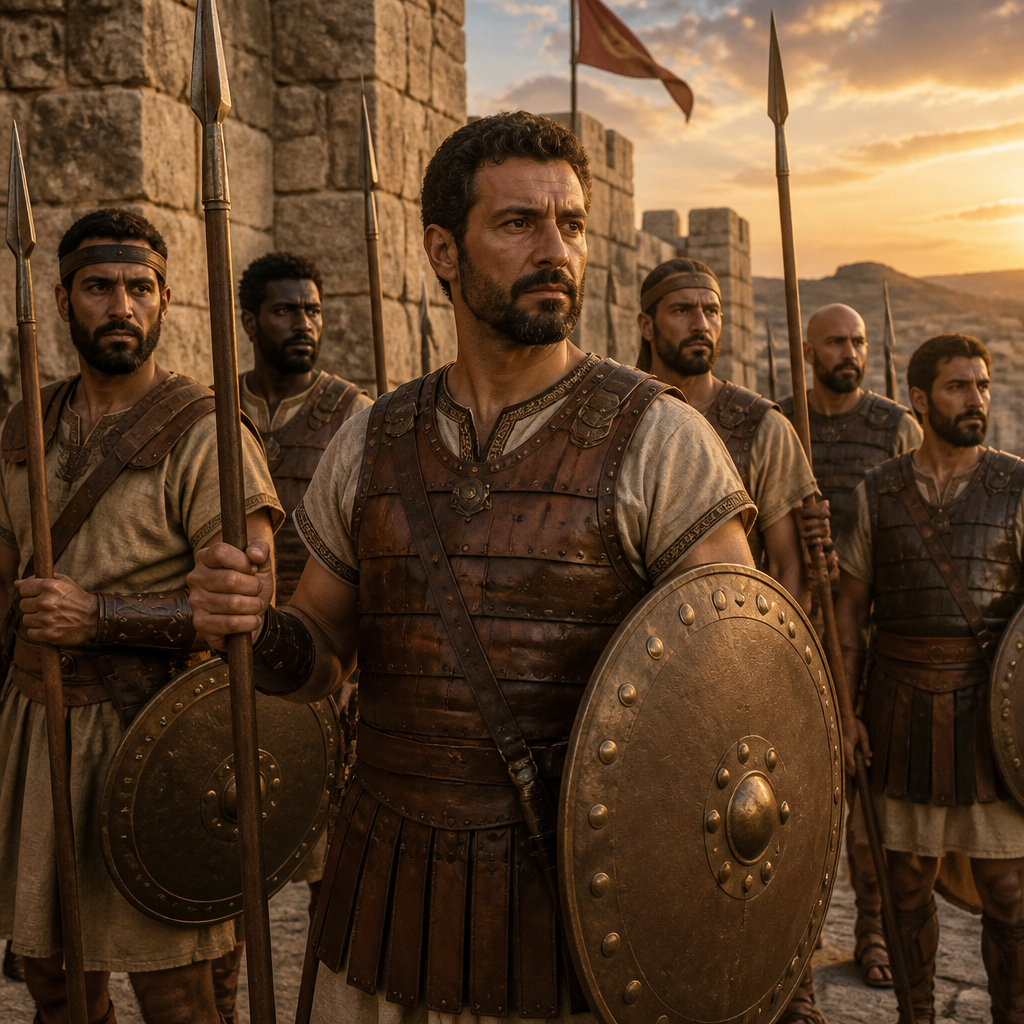 Ittai, son of RibaiThis page
Connected Figures
Family
Father · 2 Samuel 23:29
Ribai was a Benjamite from Gibeah and the father of Ittai, one of King David’s elite warriors known as 'The Thirty'.
United MonarchyFirst: 2 Samuel 23:292 versesPatriarchBenjamin
Categories
Mentions by Book
- 2 Samuel1
- 1 Chronicles1
Scripture References
All 2 indexed verses, in canonical order, from the Berean Standard Bible.
2 Samuel · 1
- 2 Samuel 23:29
Heled son of Baanah the Netophathite, Ittai son of Ribai from Gibeah of the Benjamites,
1 Chronicles · 1
- 1 Chronicles 11:31Partial
Ithai son of Ribai from Gibeah of the Benjamites, Benaiah the Pirathonite,
Cited as a key verse; added so References, Key Verses and Mentions by Book share one index.
Others Named Ittai
Compare all 2 bearers →Ittai the Gittite2 Samuel 15:19
A Philistine commander from Gath who demonstrated profound loyalty to King David during Absalom’s rebellion, eventually commanding a third of David's army.