Paruah
Who was Paruah in the Bible?
Paruah was a man of the tribe of Issachar during the United Monarchy, best known as the father of Jehoshaphat, one of King Solomon’s twelve district governors.
Paruah is an individual mentioned in the Old Testament during the 10th century BC, a period marked by the administrative height of the United Monarchy under King Solomon. Though his personal deeds are not recorded in scripture, his name is preserved in the official administrative lists of the Solomonic court. These records represent the zenith of Israelite bureaucratic organization and centralizing power.
His primary significance in the biblical narrative is genealogical, serving as the identifier for his son, Jehoshaphat. Through his son, Paruah is linked to the strategic region of Issachar, a territory that played a vital role in the logistical support and economic stability of the Israelite kingdom. His inclusion in the text highlights the importance of lineage and hereditary status within the tribal structure of ancient Israel.
Background and Family
Paruah (Hebrew: Paruach, meaning "flourishing" or "sprouted") lived during the United Monarchy, specifically during the reign of King Solomon (c. 970–931 BC). While his specific occupation and tribe are not explicitly stated in the Masoretic Text, his son’s jurisdiction over the territory of Issachar strongly suggests that Paruah belonged to the tribe of Issachar. In the tribal hierarchies of the time, the appointment of a governor often correlated with local prominent families to ensure regional cooperation.
Paruah’s historical footprint is restricted to the administrative records found in the book of 1 Kings. These lists document the transition of Israel from a loose confederation of tribes to a sophisticated, centralized state. The mention of Paruah serves to legitimize his son’s authority, following the common ancient Near Eastern practice of identifying officials by their patrilineal descent.
Major Life Events
There are no specific biographical events recorded for Paruah himself. His life is defined by his contribution to the administrative framework of Solomon’s kingdom through his son, Jehoshaphat. The biblical record mentions him solely in the context of the district governors who were responsible for providing food for the king’s household:
"Jehoshaphat son of Paruah in Issachar;" (1 Kings 4:17)
This single mention places Paruah in the context of the most organized period of Israelite history. While he is a silent figure in the text, his existence is a prerequisite for the high office held by his son, indicating a family of some social standing within the northern territories.
Relationship to Other Biblical Figures
Paruah’s only recorded relationship is to his son, Jehoshaphat. This Jehoshaphat (not to be confused with the later King of Judah) was one of twelve deputies appointed by Solomon. Each deputy was responsible for providing supplies for the palace for one month of the year. The territory assigned to Paruah’s son was Issachar, a fertile region in the Jezreel Valley known for its agricultural productivity.
This relationship underscores the systemic nature of Solomon's rule, where family units were integrated into the national economy. Paruah’s legacy was thus tied to the sustenance of the Davidic throne and the efficient management of the Promised Land’s resources.
Spiritual Significance
From a scholarly and theological perspective, Paruah represents the "hidden" contributors to the biblical narrative. The inclusion of his name in the Holy Scriptures, despite the absence of a detailed biography, serves as a reminder of the biblical emphasis on individual identity within the covenant community. In the economy of the United Monarchy, every household and every father contributed to the overall peace (shalom) and prosperity of the nation. Paruah’s name stands as a witness to the orderly fulfillment of God’s promises to Israel regarding the land and its governance during the golden age of the monarchy.
Paruah’s presence in the biblical text is primarily administrative and genealogical. He serves as a marker for the historical reality of Solomon’s reign, providing a specific name and family tie to the regional governance of Issachar. His mention ensures that the record of Israel’s administrative districts is grounded in specific, identifiable individuals rather than generalized regions.
Theologically, Paruah exemplifies the biblical concept of the 'remnant of the ordinary.' His inclusion in the canon confirms that the history of Israel was not merely a story of kings and prophets, but of families whose lineages were recorded and honored in the official history of the people of God.
Frequently Asked Questions
Who was Paruah in the Bible?
Paruah was the father of Jehoshaphat, one of King Solomon’s twelve district governors who oversaw the territory of Issachar.
What does the name Paruah mean?
The name Paruah is derived from a Hebrew root meaning 'flourishing,' 'sprouted,' or 'increased.'
Which tribe did Paruah belong to?
While not explicitly stated, it is highly likely he belonged to the tribe of Issachar, as his son governed that specific tribal territory.
How many times is Paruah mentioned in the Bible?
Paruah is mentioned only once in the Bible, in 1 Kings 4:17.
In what time period did Paruah live?
He lived during the United Monarchy, specifically during the 10th century BC during the reign of King Solomon.
Family & Relationships
 ParuahThis page
Children
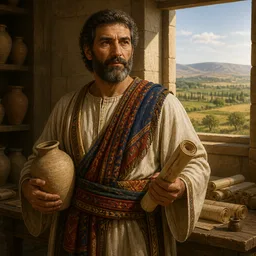 Jehoshaphat, District Governor of IssacharSon1 Kings 4:17Stated
Connected Figures
Family
Son · 1 Kings 4:17
A district governor under King Solomon who oversaw the administration and taxation of the territory belonging to the tribe of Issachar.
United MonarchyFirst: 1 Kings 4:171 versesDistrict Governor / Royal CommissionerIssachar
Categories
Mentions by Book
- 1 Kings1
Scripture References
All 1 indexed verse, in canonical order, from the Berean Standard Bible.
1 Kings · 1
- 1 Kings 4:17
Jehoshaphat son of Paruah in Issachar;