Hosah
Who was Hosah in the Bible?
A Levite gatekeeper who was assigned the Shallecheth Gate at the Temple in Jerusalem.
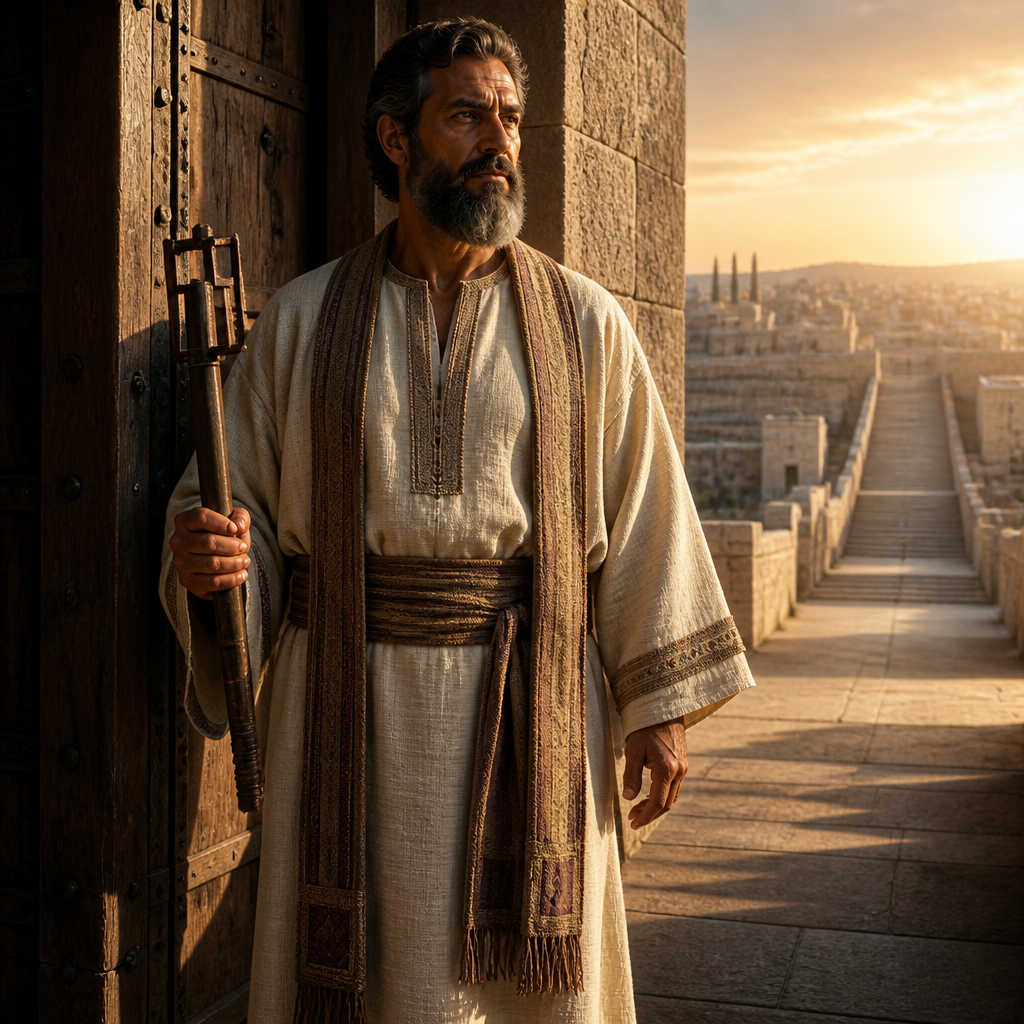
Hosah was a Levite of the Merarite clan who served as a prominent gatekeeper in the service of the tabernacle and later the Temple preparations under King David. His role was not merely one of manual labor but of high responsibility, as the gatekeepers were considered part of the specialized liturgical and security infrastructure of Israel's central worship site.
Hosah is primarily documented in the genealogical and administrative records of 1 Chronicles. His service is characterized by his placement at the critical West Gate of the sanctuary, a position he held alongside his many sons and relatives. His lineage is noted for its strength and numbers, contributing significantly to the ordered service established during the United Monarchy.
Background and Family
Hosah belonged to the Merarite branch of the Levites, one of the three primary divisions of the tribe of Levi responsible for the physical and spiritual upkeep of the Lord’s sanctuary. While the biblical text does not provide an extensive biography, it focuses heavily on his patriarchal role and his contribution to the Levitical workforce.
Hosah is specifically credited with having thirteen sons and brothers who served in the ministry. The text identifies four of his sons by name: Shimri, Hilkiah, Tebaliah, and Zechariah. A notable detail regarding his family structure is found in 1 Chronicles 26:10, which mentions that although Shimri was not the biological firstborn, Hosah appointed him as the leader or "first" among his brethren. This highlights a deliberate administrative decision by Hosah to prioritize capability or specific divine direction over traditional birthright in the context of Temple service.
Major Life Events
The primary events of Hosah's life revolve around the organization of the Temple guards and gatekeepers during the reign of King David and the subsequent transition into the formal Temple era. Hosah is first mentioned in 1 Chronicles 16:38, where he is stationed alongside Obed-edom as a gatekeeper during the joyful arrival of the Ark of the Covenant in Jerusalem. This was a pivotal moment in Israel's history, as the Ark was being moved from the house of Obed-edom to the tent David had pitched for it.
Later, as David organized the Levites for the future Temple that Solomon would build, Hosah participated in the casting of lots to determine the specific assignments for the various gates. According to 1 Chronicles 26:16, the lot for the West Gate fell to Hosah and a man named Shuppim. This assignment included the Shallecheth Gate, which was located on the "ascending highway." This gate was a vital point of entry, requiring a man of integrity and vigilant oversight to ensure that only those who were ceremonially clean could enter the sacred precincts.
Relationship to Other Biblical Figures
Hosah worked in close proximity to Obed-edom, a fellow gatekeeper. While Obed-edom is often associated with the Gittites, Hosah represents the Merarite lineage, showing the collaborative nature of the different Levitical families working in unison for the sanctuary. His relationship with his sons is also emphasized; the biblical record takes care to name his children and note the total number of his able-bodied relatives (thirteen in all), suggesting a household dedicated entirely to the service of the Tabernacle.
Spiritual Significance
In the biblical context, the role of a gatekeeper like Hosah was a position of great trust. Psalm 84:10 famously notes that it is better to be a doorkeeper in the house of God than to dwell in the tents of wickedness. Hosah’s life exemplifies this sentiment. The gatekeepers were the first line of defense against the profanation of the Temple.
Hosah's decision to appoint Shimri as the chief, despite not being the firstborn, suggests a spiritual discernment that looked beyond outward tradition to the internal qualities necessary for leadership in the house of God. His legacy is one of institutional faithfulness, ensuring that the transition from a nomadic tent to a permanent stone Temple was characterized by order, security, and holiness.
Hosah's significance lies in his representation of the Merarite Levites who maintained the sanctity of the Temple through the office of gatekeeping. His role at the West Gate and the Shallecheth Gate was essential for the security and ceremonial purity of the sanctuary, ensuring that the physical boundaries of God's dwelling place were respected.
Furthermore, Hosah’s family record underscores the importance of generational service. By dedicating his thirteen sons and brothers to the ministry, Hosah ensured that his lineage remained central to the worship of Yahweh during the transition from David’s reign into the United Monarchy. His story serves as a biblical example of the dignity found in administrative and protective roles within the faith community.
Frequently Asked Questions
What tribe did Hosah belong to?
Hosah was a Levite, specifically from the clan of Merari.
Which gate was Hosah responsible for?
He was assigned the West Gate and the Shallecheth Gate on the ascending highway.
Who were Hosah's named sons?
His named sons were Shimri, Hilkiah, Tebaliah, and Zechariah.
Why did Hosah make Shimri his firstborn?
The Bible states that although Shimri was not the firstborn by birth, Hosah appointed him as the 'first' or chief, though the specific reason for this deviation from tradition is not detailed.
How many relatives did Hosah have in service?
The text states that the sons and brothers of Hosah numbered thirteen in total who served as gatekeepers.
Family & Relationships
 HosahThis page
Children
 Hilkiah, Son of HosahSon1 Chronicles 26:10
Inferred
No verse names Hosah and Hilkiah together; the son link is carried from the surrounding genealogy and is not stated in Scripture.Evidence: 1 Chronicles 26:10
 Shimri, Son of HosahSon1 Chronicles 26:10
Inferred
1 Chronicles 26:10 names Shimri and Hosah in the same verse but does not state a father tie between them; the link rests on the surrounding narrative.Evidence: 1 Chronicles 26:10
 TebaliahSon1 Chronicles 26:10
Inferred
No verse names Hosah and Tebaliah together; the son link is carried from the surrounding genealogy and is not stated in Scripture.Evidence: 1 Chronicles 26:10
 Zechariah, Son of HosahSon1 Chronicles 26:10
Inferred
No verse names Hosah and Zechariah together; the son link is carried from the surrounding genealogy and is not stated in Scripture.Evidence: 1 Chronicles 26:10
Connected Figures
Family
Son · 1 Chronicles 26:10
A Merarite Levite and gatekeeper appointed by King David to serve at the Tabernacle.
United MonarchyFirst: 1 Chronicles 26:112 versesGatekeeper of the SanctuaryLevi
Son · 1 Chronicles 26:10
A Levite gatekeeper of the Merarite clan who was appointed by his father as the chief of his house despite not being the biological firstborn.
United MonarchyFirst: 1 Chronicles 26:102 versesGatekeeperLevi
Son · 1 Chronicles 26:10
A Levite of the Merari family who served as a gatekeeper in the Tabernacle during the reign of King David.
United MonarchyFirst: 1 Chronicles 26:112 versesGatekeeperLevi
Son · 1 Chronicles 26:10
A Merarite Levite during the United Monarchy who served as a gatekeeper in the Tabernacle and Temple administration.
United MonarchyFirst: 1 Chronicles 26:112 versesLevite gatekeeperLevi
Mentions by Book
- 1 Chronicles4
Scripture References
All 4 indexed verses, in canonical order, from the Berean Standard Bible.
1 Chronicles · 4
- 1 Chronicles 16:38
along with Obed-edom and his sixty-eight relatives. Obed-edom son of Jeduthun, and also Hosah, were to be gatekeepers.
- 1 Chronicles 26:10
Hosah the Merarite also had sons: Shimri the first (although he was not the firstborn, his father had appointed him as the first),
- 1 Chronicles 26:11
Hilkiah the second, Tebaliah the third, and Zechariah the fourth. The sons and brothers of Hosah numbered 13 in all.
- 1 Chronicles 26:16
The lots for the West Gate and the Shallecheth Gate on the ascending highway fell to Shuppim and Hosah. There were guards stationed at every watch.