Samson's Mother
The wife of Manoah and mother of Samson, she was an unnamed woman chosen by the Angel of the LORD to bear a child dedicated as a Nazirite for the deliverance of Israel.
The woman known in the biblical record as the wife of Manoah is a prominent figure in the book of Judges during the transition between the Period of the Judges and the rise of the Israelite monarchy. Living in Zorah within the clan of the Danites, she is introduced as a woman who was barren and had no children. Despite her anonymity in the text, her role is pivotal as she is the primary recipient of the divine revelation concerning the birth of Samson, the final judge mentioned in the central narrative of the book of Judges.
Her character is marked by spiritual discernment and composure. Unlike her husband, Manoah, who exhibits fear and confusion following their encounters with the divine, the mother of Samson demonstrates a keen understanding of God’s intent. She serves as the biological and spiritual vessel for the first Nazirite from birth, adhering to strict dietary and ritualistic laws to ensure the sanctity of her son's mission to begin the deliverance of Israel from the Philistines.
Background and Family
The narrative of Samson's mother begins in Judges 13, set against the backdrop of the Philistine oppression of Israel, which lasted forty years. She resided in Zorah, a town situated in the Shephelah (the foothills of Judea), and was married to Manoah of the tribe of Dan. The biblical text explicitly notes that she was "barren and had no children" (Judges 13:2). In the Ancient Near Eastern context, barrenness was often viewed as a social and personal calamity, making the subsequent divine intervention both a personal blessing and a national milestone.
While her name is not preserved in the Hebrew Bible, her identity is defined by her relationship to her husband and her future son. The text presents her as a woman of the Conquest era, specifically during the late period of the Judges when the tribes of Israel struggled to maintain their territory and religious identity against the encroaching Philistine power.
Major Life Events
The First Visitation
The life of Samson’s mother changed when the "Angel of the LORD" appeared to her while she was alone. The Messenger informed her that despite her barrenness, she would conceive and give birth to a son. However, this pregnancy carried unique requirements: she was forbidden from drinking wine or strong drink and from eating anything "unclean." These restrictions were necessary because the child was to be a "Nazirite to God from the womb" (Judges 13:5). The Angel also revealed the child's destiny: he would begin the deliverance of Israel from the Philistines.
The Second Visitation
After reporting the vision to her husband, Manoah prayed for a second visitation so they might be taught how to raise the boy. God listened to Manoah’s prayer, but the Angel again appeared to the woman alone in the field. She demonstrated quick thinking and domestic coordination by running to fetch her husband so he could speak with the visitor. When Manoah arrived, the Angel reaffirmed the instructions previously given to the woman, emphasizing that she must be careful to do everything commanded (Judges 13:13-14).
The Sacrifice and Revelation
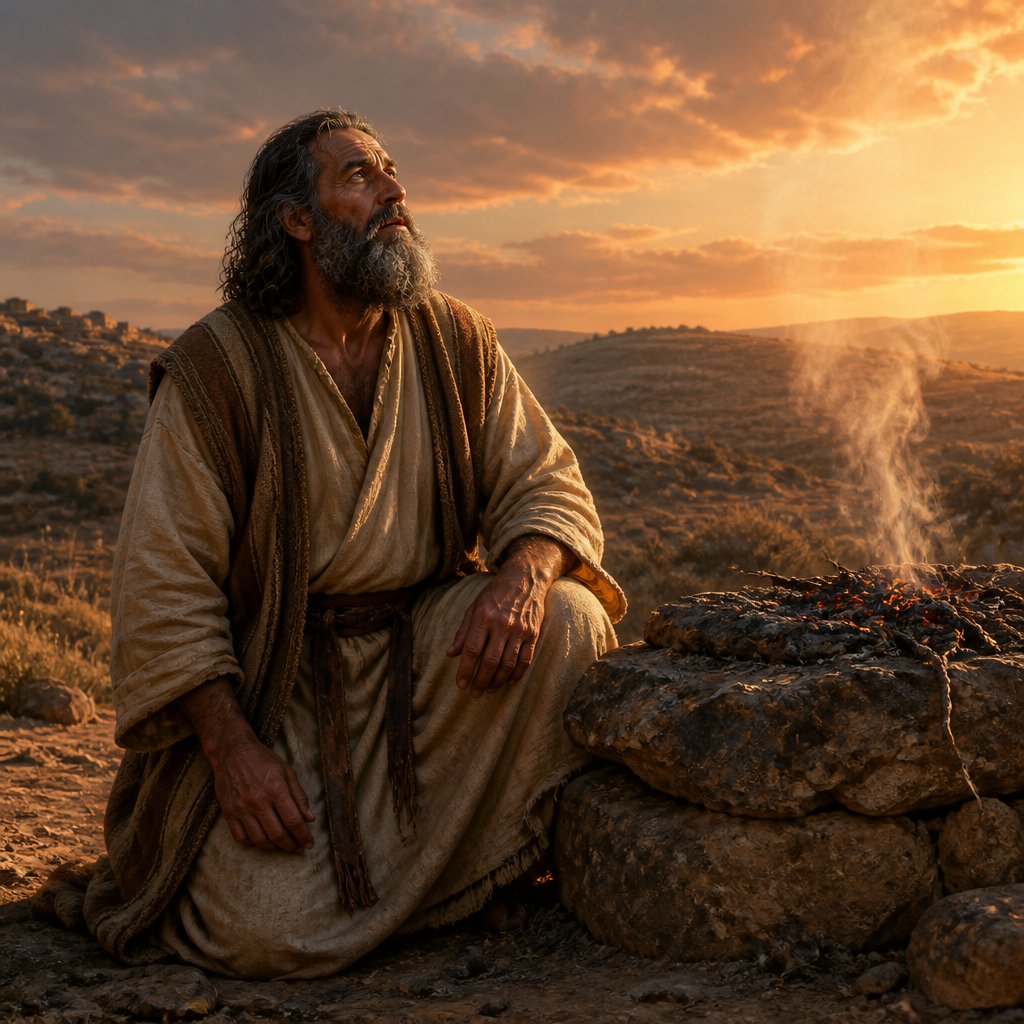
Following the instructions, Manoah offered a young goat and a grain offering on a rock. As the flame from the altar ascended toward heaven, the Angel of the LORD ascended in the flame. While Manoah reacted with terror, believing they would die because they had seen God, his wife provided a rational and faithful counter-argument. She noted that if the LORD intended to kill them, He would not have accepted their offering or revealed such promising news regarding their future son (Judges 13:23). This exchange highlights her role as the more spiritually perceptive of the couple.
The Birth of Samson
In accordance with the divine promise, the woman gave birth to a son and named him Samson. The record concludes her specific narrative arc by noting that the boy grew, the LORD blessed him, and the Spirit of the LORD began to stir him (Judges 13:24-25). She successfully fulfilled the Nazirite requirements imposed upon her during her pregnancy, ensuring the child’s ritual purity from conception.
Relationship to Other Biblical Figures
Her primary relationships are with her husband, Manoah, and her son, Samson. Her interaction with Manoah is characterized by her role as a messenger and a voice of theological reason. She is the conduit through which Manoah receives God's instructions. In relation to Samson, she is the first person to implement the Nazirite vow on his behalf. While Samson eventually becomes a figure of great strength and significant moral complexity, his mother is portrayed as the steady, obedient foundation upon which his early life was built.
Spiritual Significance
The mother of Samson holds high theological significance as a recipient of a theophany (an appearance of God or a divine messenger). Her story mirrors other "miraculous birth" narratives in the Bible, such as those of Sarah, Hannah, and Elizabeth, where God intervenes in a situation of barrenness to bring forth a leader for Israel.
Furthermore, she is unique because the Nazirite vow, usually a voluntary and temporary status for adults (Numbers 6), was applied to her son by divine decree before his birth. This necessitated her own temporary adherence to the vow's restrictions. Her ability to distinguish the "awesome" nature of the Man of God and her calm interpretation of divine signs mark her as a model of faith during a chaotic period in Israel's history. She represents the quiet remnant of Israelites who remained attentive to God's voice even when the nation at large had done "evil in the eyes of the LORD" (Judges 13:1).
Spiritual Significance
Theologically, the mother of Samson serves as a bridge between the era of the Judges and the eventual move toward a centralized deliverer. Her receptivity to the Angel of the LORD contrasts with the general spiritual malaise of Israel at the time. She is one of the few figures in the book of Judges who receives a direct divine visitation, placing her in a category of high spiritual favor. Her role emphasizes that the deliverance of Israel begins not with military might, but with domestic obedience and the consecration of the family.
Her importance is also found in her role as the 'first Nazirite by proxy.' By abstaining from wine and unclean foods during her pregnancy, she demonstrates the concept of prenatal consecration. This establishes a biblical precedent for the idea that a person's calling and setting apart by God can begin even before birth, a theme that recurs in the lives of prophets like Jeremiah and the figure of John the Baptist in the New Testament.
Frequently Asked Questions
What is the name of Samson's mother?
The Bible does not provide a name for Samson's mother; she is referred to only as the wife of Manoah or 'the woman' throughout Judges 13.
What were the specific instructions given to her by the Angel?
She was commanded to abstain from wine, strong drink, and any unclean food during her pregnancy, and she was told that no razor should ever touch her son's head.
How did she react to seeing the Angel of the LORD?
She initially described him as a 'man of God' with an 'exceedingly awesome' appearance. Unlike her husband, who feared death after the encounter, she recognized that God's acceptance of their sacrifice was a sign of favor and life.
To what tribe did she and her husband belong?
They belonged to the tribe of Dan, specifically the clan of the Danites living in Zorah.
Why was her son a Nazirite from birth?
The Angel of the LORD decreed it as part of God's plan for Samson to begin the deliverance of Israel from the Philistines.
Connected Figures
Categories
Mentions by Book
- Judges24