Jether, Son of Gideon
The eldest son of the judge Gideon who, as a youth, was commanded by his father to execute the Midianite kings Zebah and Zalmunna.
Jether was the firstborn son of Gideon, a prominent judge of Israel during the period of the Judges. His brief appearance in the biblical narrative occurs in the aftermath of Israel’s decisive victory over the Midianite coalition. As the heir to Gideon, Jether occupied a position of significant potential social and military status within his clan of Abiezer and the tribe of Manasseh.
Despite his status as the firstborn, Jether is remembered for a single moment of hesitation recorded in the Book of Judges. When ordered by his father to perform the ceremonial execution of two defeated enemy kings, Jether was unable to comply. This failure, attributed by the text to his youth and fear, provides a window into the transition between generations during one of Israel's most turbulent eras.
Background and Family
Jether was the eldest of the seventy-one recorded sons of Gideon (also known as Jerubbaal). As the firstborn, he was the primary heir to Gideon’s estate and authority. His family belonged to the clan of Abiezer within the tribe of Manasseh. Jether grew up during a time of intense national upheaval, as Israel struggled against the seasonal raids of the Midianites, Amalekites, and other eastern peoples.
His siblings included the future usurper Abimelech, born to Gideon’s concubine in Shechem, and Jotham, the youngest brother who would later survive Abimelech’s purge. Although Jether was the rightful successor, the biblical record suggests that his life was defined more by his father’s shadow and his own youth than by any recorded leadership of his own.
Major Life Events
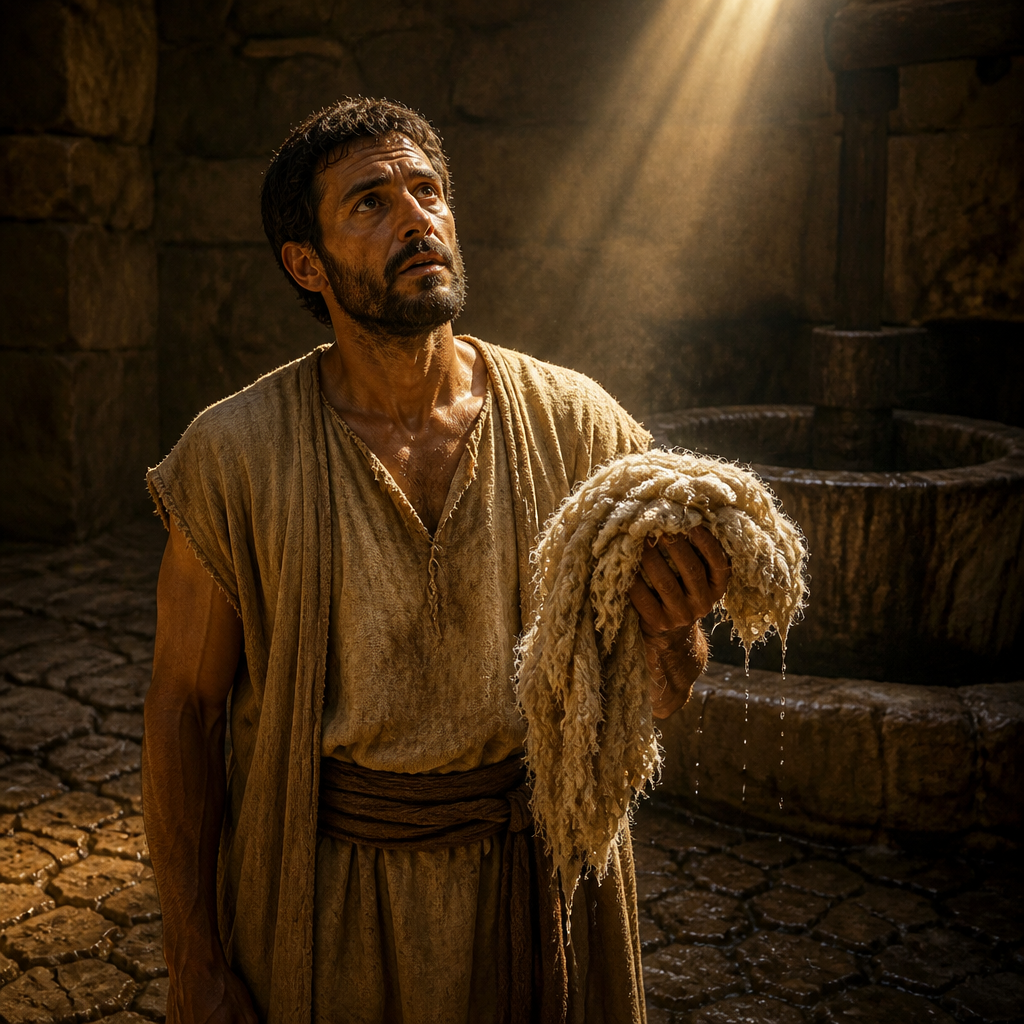
The entirety of Jether’s biographical data is contained within the context of the pursuit of the Midianite kings Zebah and Zalmunna. After Gideon’s forces successfully routed the Midianite camp, Gideon captured the two kings. In an act intended to both punish the kings for the murder of his own brothers at Tabor and to provide his son with a rite of passage into warrior status, Gideon turned to Jether.
So he said to Jether, his firstborn, “Get up and kill them.” But the young man did not draw his sword; he was fearful because he was still a youth. (Judges 8:20)
Jether’s refusal to draw his sword was not an act of moral objection, but rather a manifestation of his youth and the intimidating presence of two veteran monarchs. Zebah and Zalmunna subsequently taunted Gideon, suggesting that it was better to be killed by a man of strength than a boy. Gideon then executed them himself.
Relationship to Other Biblical Figures
Jether’s primary relationship is defined by his father, Gideon. In the patriarchal society of the time, the firstborn was expected to embody the father’s strength. Jether’s presence in the narrative serves as a foil to the maturing Gideon, who had evolved from a fearful man hiding in a winepress to a commander who expected his son to be a cold-blooded executioner.
He is also linked by blood to Abimelech. While Jether failed to draw his sword against the enemies of Israel, Abimelech would eventually show no such hesitation, murdering nearly all of his brothers—likely including Jether—in his violent quest for the throne at Shechem (Judges 9:5).
Spiritual Significance
Though Jether says nothing in the text, his inaction is spiritually and narratively significant. It highlights the recurring biblical theme that leadership and courage are not strictly hereditary qualities. Being the "firstborn" of a great judge did not automatically bestow the "Spirit of the Lord" that had clothed Gideon earlier in the narrative.
Furthermore, the episode underscores the brutality of the era of the Judges. Jether’s fear represents a lingering human vulnerability in a cycle of constant warfare. His inability to kill the kings led to the kings' final insult against Gideon's household, illustrating the importance of "strength" (Judges 8:21) as the primary currency of respect in this pre-monarchic period.
Spiritual Significance
Jether serves as a narrative marker for the limits of Gideon's dynasty. His inability to execute the Midianite kings signaled that the military charisma of Gideon had not yet passed to his heir, foreshadowing the eventual collapse of Gideon's house under the violence of Abimelech. Theologically, Jether’s story illustrates that physical lineage does not guarantee spiritual or military fortitude.
Frequently Asked Questions
Who was Jether's father?
Jether was the firstborn son of Gideon, the judge of Israel from the tribe of Manasseh.
Why did Jether refuse to kill the Midianite kings?
The Bible states that Jether did not draw his sword because he was afraid, as he was still only a youth (Judges 8:20).
What happened to Jether after the war with Midian?
The Bible does not record Jether's life after the encounter with Zebah and Zalmunna, but it is widely inferred that he was among the seventy sons of Gideon murdered by their half-brother Abimelech on a single stone at Ophrah (Judges 9:5).
What does the name Jether mean?
The name Jether (יֶתֶר) in Hebrew generally means 'abundance,' 'remnant,' or 'excellence.'
Connected Figures

Categories
Mentions by Book
- Judges1
Family & Relationships
Sibling
Judges 8:20
Sibling
Judges 8:20
Sibling
Judges 8:31
Parent
Judges 6:11
Sibling
Judges 9:5
Others Named Jether
Jether, Son of Jada1 Chronicles 2:32
A member of the tribe of Judah and the house of Jerahmeel who died without leaving any descendants.
Jether, Son of Ezrah1 Chronicles 4:17
Jether was a member of the Tribe of Judah and the first-named son of Ezrah, recorded in the genealogical records of the Divided Monarchy period.
Jether, Father of Amasa1 Kings 2:5
Jether was an Ishmaelite who married David's sister Abigail and fathered Amasa, the commander of the armies of Judah.