Jaazaniah, Son of Shaphan
Who was Jaazaniah, Son of Shaphan, in the Bible?
Jaazaniah, son of Shaphan, was one of the seventy elders of Israel seen by the prophet Ezekiel in a vision, participating in clandestine idolatrous worship within the Jerusalem temple complex.
This is one of 3 people named Jaazaniah in the Bible. See all 3 →
Jaazaniah, son of Shaphan, is a figure mentioned exclusively in the book of Ezekiel. He appears within a harrowing vision granted to the prophet while in exile in Babylon around 592 BC. In this vision, Ezekiel is supernaturally transported to the Temple in Jerusalem to witness the various abominations being committed by the leadership of Judah, which served as the theological justification for the city's impending destruction.
Background and Family
The biblical record identifies Jaazaniah specifically as the "son of Shaphan." In the context of the late Judean monarchy, the name Shaphan is highly significant. While the text does not explicitly confirm it, many scholars associate this Shaphan with the royal scribe who served under King Josiah (2 Kings 22). If this identification is correct, Jaazaniah belonged to a family of high-ranking officials known for their literacy and administrative influence. However, unlike other members of Shaphan’s lineage—such as Ahikam or Gedaliah, who were noted for their support of the prophet Jeremiah—Jaazaniah is presented in a state of spiritual rebellion.
Major Life Events
Jaazaniah’s entire biblical footprint is contained within Ezekiel 8:11. During the vision, Ezekiel sees seventy men of the elders of the house of Israel standing in a hidden chamber within the Temple precincts. Jaazaniah is singled out by name, standing in the center of this group.
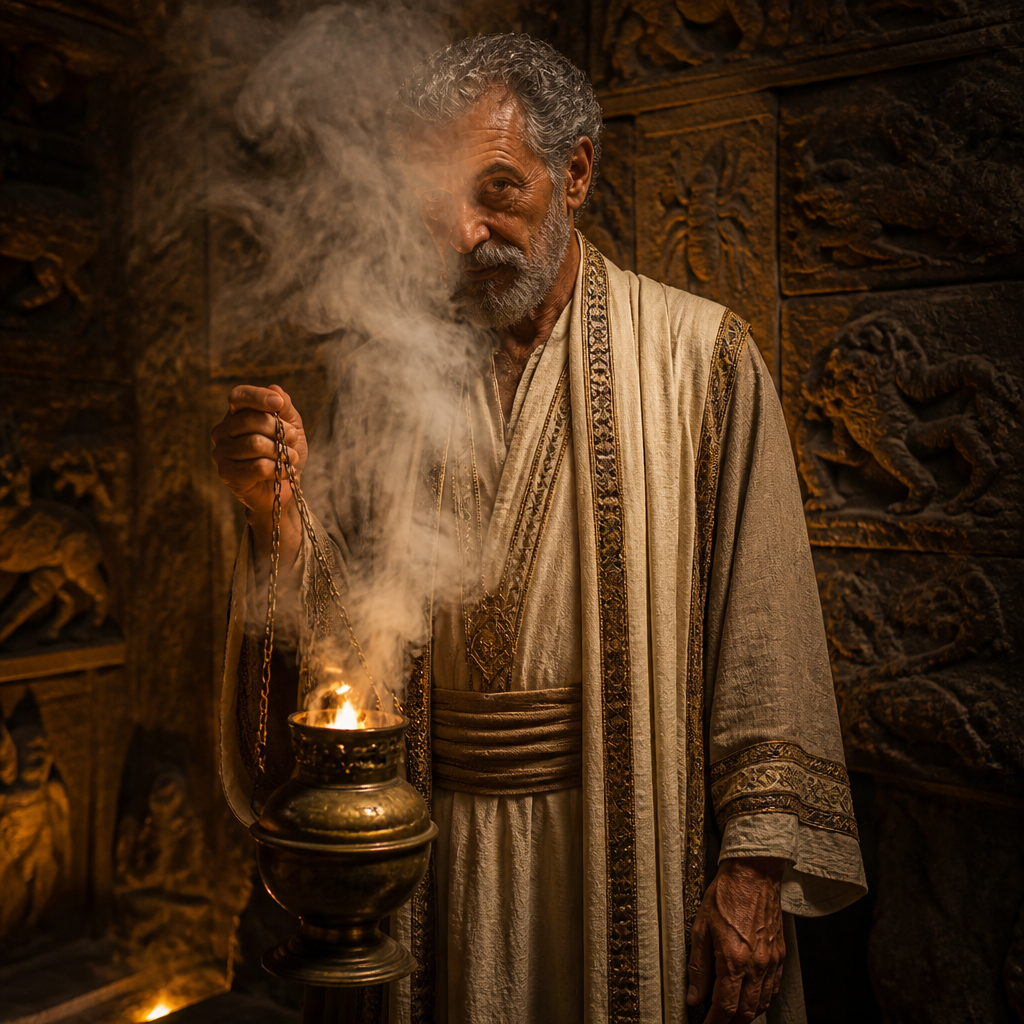
"Before them stood seventy elders of the house of Israel, with Jaazaniah son of Shaphan standing among them. Each had a censer in his hand, and a fragrant cloud of incense was rising." (Ezekiel 8:11, BSB)
The elders were engaged in the worship of "creeping things and loathsome beasts" and various idols of Israel portrayed on the walls. Jaazaniah’s role in this scene is that of a cultic leader; while the other seventy elders are mentioned as a collective, his specific naming suggests he held a position of prominence or represented the depth of the apostasy within the most respected families of Jerusalem.
Relationship to Other Biblical Figures
Jaazaniah is framed in direct contrast to the prophet Ezekiel. While Ezekiel is being shown the truth of Jerusalem’s spiritual decay by the Spirit of God, Jaazaniah and his peers believe their actions are unobserved, famously stating in the vision, "The LORD does not see us; the LORD has forsaken the land" (Ezekiel 8:12).
His identification as the son of Shaphan also creates a narrative tension with the legacy of Josiah’s reforms. If he is indeed the son of the scribe who helped rediscover the Book of the Law, his participation in secret idolatry marks a total generational departure from the covenantal faithfulness of his father’s era.
Spiritual Significance
The presence of Jaazaniah in the Temple's secret chambers serves as a powerful indictment of the religious and political leadership of Judah. The use of a censer and incense—tools strictly designated for the worship of Yahweh—to honor "detestable idols" signifies the total corruption of the priesthood and the elderhood.
His mention highlights the theme of individual and corporate accountability. Despite being part of a group of seventy, Jaazaniah is held up as a specific example of the internal rot that led to the Babylonian Exile. His story serves as a warning that lineage and social standing provide no immunity from divine judgment when one participates in the abandonment of the covenant.
Jaazaniah, son of Shaphan, represents the absolute failure of the Judean eldership during the final years of the Kingdom of Judah. By specifically naming him in a vision of secret idolatry, the text emphasizes that even the most influential and traditionally 'righteous' families had succumbed to the surrounding pagan influences, justifying the necessity of the Exile. He stands as a literary and historical symbol of the 'abominations' that forced the Glory of the LORD to depart from the Temple.
Frequently Asked Questions
Who was Jaazaniah, son of Shaphan?
He was one of the seventy elders of Israel whom the prophet Ezekiel saw in a vision participating in secret idolatrous worship inside the Jerusalem Temple.
What was Jaazaniah doing in Ezekiel's vision?
He was standing among seventy elders, holding a censer and offering incense to idols depicted on the walls of a secret chamber in the Temple.
Was Jaazaniah related to King Josiah's scribe?
While not explicitly confirmed, most scholars believe his father, Shaphan, was the same Shaphan who served as King Josiah’s scribe and played a role in the discovery of the Book of the Law.
Why is Jaazaniah the only elder named in Ezekiel 8?
His name is likely singled out to highlight that even the sons of the most faithful leaders of the previous generation had turned to idolatry, showing the depth of Jerusalem's corruption.
Family & Relationships
Parents
 Shaphan, Father of JaazaniahFatherEzekiel 8:11Stated
 Jaazaniah, Son of ShaphanThis page
Connected Figures
Family
Father · Ezekiel 8:11
The father of Jaazaniah, one of the seventy elders of Israel seen by the prophet Ezekiel committing idolatry in a vision of the temple.
Categories
Mentions by Book
- Ezekiel1
Scripture References
All 1 indexed verse, in canonical order, from the Berean Standard Bible.
Ezekiel · 1
- Ezekiel 8:11
Before them stood seventy elders of the house of Israel, with Jaazaniah son of Shaphan standing among them. Each had a censer in his hand, and a fragrant cloud of incense was rising.
Others Named Jaazaniah
Compare all 3 bearers →Jaazaniah, Son of JeremiahJeremiah 35:3
Jaazaniah was the son of Jeremiah and a prominent member of the Rechabite family during the reign of King Jehoiakim in the Divided Monarchy.
Jaazaniah, Son of AzzurEzekiel 11:1
Jaazaniah, son of Azzur, was a leader in Jerusalem identified by the prophet Ezekiel as one of the men plotting evil and giving wicked counsel during the final years before the city's fall.