Buzi
Who was Buzi in the Bible?
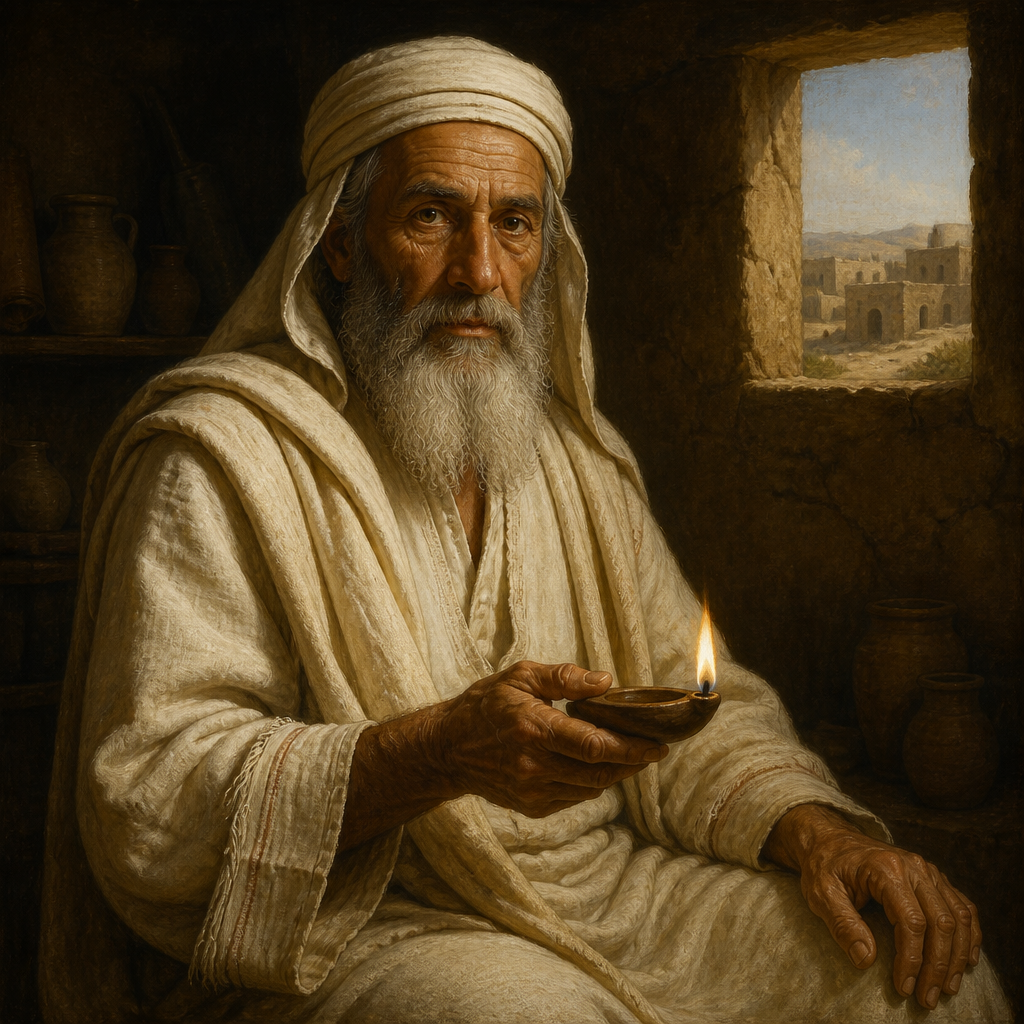
Buzi was a priest in the line of Aaron and the father of the major prophet Ezekiel during the Babylonian Exile.
Buzi is a figure mentioned briefly in the Old Testament, specifically within the prophetic literature of the Exilic Period. He is identified exclusively as the father of Ezekiel, one of the four major prophets of the Hebrew Bible. While Buzi himself does not perform any recorded actions in the text, his identity as a priest provides the essential genealogical and social framework for understanding Ezekiel’s ministry and status among the Judean exiles in Babylon.
His name appears only once in the biblical canon, in the opening verses of the Book of Ezekiel. Despite this singular mention, his name serves as a vital marker of priestly lineage, confirming that Ezekiel was born into a family of the high-ranking Zadokite priesthood who served at the Temple in Jerusalem prior to its destruction by Nebuchadnezzar II in 586 BC.
Background and Family
Buzi is introduced in Ezekiel 1:3 as a priest of Israel. While the text does not explicitly detail his specific duties or his lineage beyond his name, the designation of his son, Ezekiel, as a priest confirms that Buzi belonged to the tribe of Levi and the house of Aaron. In the context of the sixth century BC, this lineage was of paramount importance. The priesthood was hereditary, and for Ezekiel to be recognized as a legitimate priest among the exiles by the River Kebar, his father’s status had to be established.
Research into the etymology of the name "Buzi" suggests roots meaning "contempt" or "my contempt," though in a genealogical context, it likely served as a standard family identifier. Buzi would have lived during the final decades of the Kingdom of Judah, likely serving in the Solomonic Temple in Jerusalem before the Babylonian deportations began.
Major Life Events
Because the biblical record is focused on the prophetic call of his son, there are no specific narrative events recorded for Buzi’s life. However, based on the chronology of Ezekiel’s life, it is inferred that Buzi was part of the community impacted by the Babylonian incursions. Ezekiel was taken into exile in 597 BC along with King Jehoiachin. It is highly probable that Buzi was either among those deported to the land of the Chaldeans or remained in Jerusalem during its final years of siege. The text identifies Ezekiel as "the son of Buzi" while Ezekiel is in the "land of the Chaldeans," placing the family within the historical context of the Exile.
Relationship to Other Biblical Figures
The primary relationship defined in scripture is that of Buzi as the father of Ezekiel. This connection is significant because Ezekiel’s prophetic visions are often deeply concerned with the protocols of the Temple, the holiness of the priesthood, and the eventual restoration of a new Temple. Buzi represents the link to the traditional religious order that existed before the Exile. By identifying Ezekiel through Buzi, the text validates Ezekiel’s authority to speak on matters of the Law and ritual purity, as he was raised and trained within a priestly household.
Spiritual Significance
Buzi’s significance lies in his role as a progenitor of the prophetic voice. In the ancient Near East, a man's identity was inextricably linked to his father's house. By recording Buzi’s name, the Spirit of God ensures that Ezekiel is seen not as a disconnected individual, but as a legitimate heir to the covenantal responsibilities of the Levites. Buzi stands as a representative of the generation that witnessed the transition from the glory of the Judean Monarchy to the hardship of the Babylonian captivity, passing on the priestly heritage to a son who would sustain the faith of the people in a foreign land.
Buzi serves as the genealogical anchor for the prophet Ezekiel. His mention in Ezekiel 1:3 establishes the prophet’s credentials as a member of the priesthood, which is crucial for interpreting Ezekiel's later visions regarding the Temple and the sacrificial system. Without this identification, Ezekiel’s focus on ritual holiness and priestly duties would lack its formal biblical authorization.
Furthermore, Buzi represents the continuity of the Aaronic priesthood during one of Israel's most disruptive historical periods. Even in the 'land of the Chaldeans,' the recognition of Buzi as a priest signals that the structural identity of Israel’s religious leadership survived the initial deportations of the Exile.
Frequently Asked Questions
Who was Buzi in the Bible?
Buzi was a priest and the father of the prophet Ezekiel.
What tribe did Buzi belong to?
As a priest, Buzi belonged to the tribe of Levi and was a descendant of Aaron.
Where did Buzi live?
Buzi lived in Jerusalem during the late Kingdom of Judah and was associated with the Babylonian Exile period.
Does Buzi perform any miracles in the Bible?
No, there are no recorded actions, words, or miracles attributed to Buzi; he is mentioned only to establish Ezekiel's lineage.
What does the name Buzi mean?
The name Buzi is derived from a Hebrew root meaning 'contempt' or 'despised,' though its specific significance as a name is not detailed in the text.
Family & Relationships
 BuziThis page
Children
 EzekielSonEzekiel 1:3Stated
Connected Figures
Family
Son · Ezekiel 1:3
A priest and prophet of the Exilic Period who served as a sign to the house of Israel while in the land of the Chaldeans.
Exile and ReturnFirst: Ezekiel 1:33 versesPriest and Prophet
Categories
Mentions by Book
- Ezekiel1
Scripture References
All 1 indexed verse, in canonical order, from the Berean Standard Bible.
Ezekiel · 1
- Ezekiel 1:3
the word of the LORD came directly to Ezekiel the priest, the son of Buzi, in the land of the Chaldeans by the River Kebar. And there the LORD’s hand was upon him.