Puah, the Hebrew Midwife
One of two Hebrew midwives ordered by Pharaoh to kill newborn Hebrew boys during the Egyptian oppression.
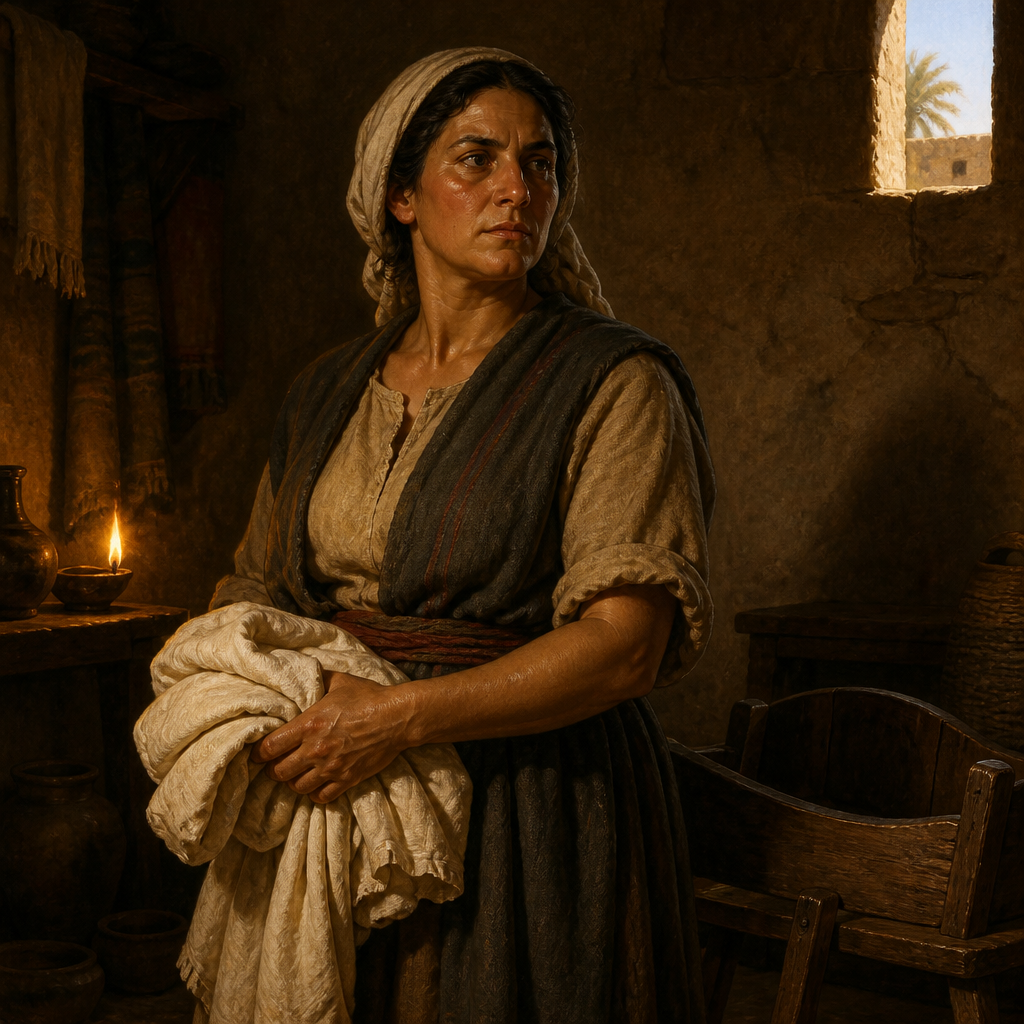
Puah was a Hebrew midwife operating in Egypt during the period of the Israelites' enslavement. Along with her associate Shiphrah, she is identified by name in the opening chapter of the Book of Exodus. Her role is defined by a critical confrontation with the King of Egypt, who commanded the midwives to execute male infants at birth to curb the growing population of the Israelites.
Despite the direct decree of the monarch, Puah and Shiphrah refused to comply, citing their fear of God as their primary motivation. This act of civil disobedience is one of the earliest recorded instances of moral resistance against state-sponsored oppression in the biblical text. While her personal history beyond this event is not detailed, her actions are credited with the preservation of the generation that would eventually include Moses.
Background and Family
The biblical record for Puah is found exclusively in Exodus 1. She is identified as a "Hebrew midwife," though scholars occasionally debate whether this means she was ethnically Hebrew or a midwife to the Hebrews. Given the context of the Israelite expansion and the Pharaoh's direct address to her, she is traditionally viewed as a member of the Israelite community. No specific genealogy, tribe, or family relations are provided in the text; she appears solely in her professional capacity during the Egyptian Sojourn.
Major Life Events
The defining moment of Puah’s life occurs when she is summoned by the King of Egypt. Concerned by the demographic shift of the Israelites, the Pharaoh orders Puah and Shiphrah to observe the "birthstones" (Exodus 1:16) and kill any male child while sparing the females. This was a systematic attempt at genocide intended to weaken the Israelites' military potential and ensure their eventual assimilation or extinction.
Puah and Shiphrah chose to defy the royal mandate. When summoned again to explain why the boys were living, they provided a clever response: they claimed the Hebrew women were "vigorous" and gave birth before a midwife could arrive (Exodus 1:19). The text notes that because the midwives feared God, He was kind to them and "established households for them" (Exodus 1:21).
Relationship to Other Biblical Figures
Puah is inextricably linked to Shiphrah, as the two are always mentioned together in this narrative. They operate as a unit representing the initial resistance to Egyptian cruelty. While they do not interact directly with Moses in the text, their refusal to kill male infants created the social conditions that allowed Moses to be born and hidden by his mother, Jochebed.
Spiritual Significance
Puah’s significance lies in her prioritization of divine law over human edicts. Her "fear of God" is presented as the foundation for her courage. By preserving the lives of the children, she becomes a guardian of the covenantal promise made to Abraham regarding a vast progeny. Her inclusion by name—while the Pharaoh remains anonymous—highlights the biblical theme of God honoring the faithful who are often marginalized by secular power structures.
Spiritual Significance
Puah represents the first line of defense for the nation of Israel during the Egyptian oppression. Her actions demonstrate that individual moral agency can thwart the designs of powerful empires. Theologically, she exemplifies 'fear of the Lord' not as terror, but as a guiding principle that leads to life-affirming action and the protection of the vulnerable.
Furthermore, Puah’s story serves as the catalyst for the Exodus narrative. By sparing the male children, she ensures the survival of the future deliverer, Moses. Her presence in the text elevates the role of women in the redemptive history of Israel, showing that the deliverance from Egypt began not with a plague or a miracle, but with the quiet, defiant faithfulness of a midwife.
Frequently Asked Questions
Was Puah an Egyptian or a Hebrew?
The text identifies her as a 'Hebrew midwife.' While some interpret this as her being an Egyptian who served Hebrews, the majority of biblical tradition and the context of her 'fearing God' suggest she was a member of the Israelite community.
Did Puah lie to the Pharaoh?
Puah and Shiphrah told Pharaoh that Hebrew women were vigorous and gave birth quickly. The Bible does not explicitly condemn this as a lie, but rather emphasizes that God blessed the midwives because they feared Him and refused to commit murder.
How many times is Puah mentioned in the Bible?
This specific Puah is mentioned only once in the Bible, in Exodus 1:15, though her collective actions with Shiphrah are described through verse 21.
What happened to Puah after the Exodus began?
The biblical text provides no further information about Puah after the account of her defiance and God establishing a household for her. Her fate during the plagues and the crossing of the Red Sea is not recorded.
Connected Figures
Categories
Mentions by Book
- Exodus1
Others Named Puah
Puah, Son of Issachar1 Chronicles 7:1
Puah was a son of Issachar and a tribal leader whose descendants formed the Punite clan during the Egyptian sojourn and the Exodus.
Puah, Father of TolaJudges 10:1
Puah was a man of the tribe of Issachar and the father of Tola, the judge who rose to save Israel after the reign of Abimelech.