Daughter of Machir
Who was Daughter of Machir in the Bible?
A noblewoman of the tribe of Manasseh whose marriage to Hezron bridged two of Israel's most prominent tribal lineages.
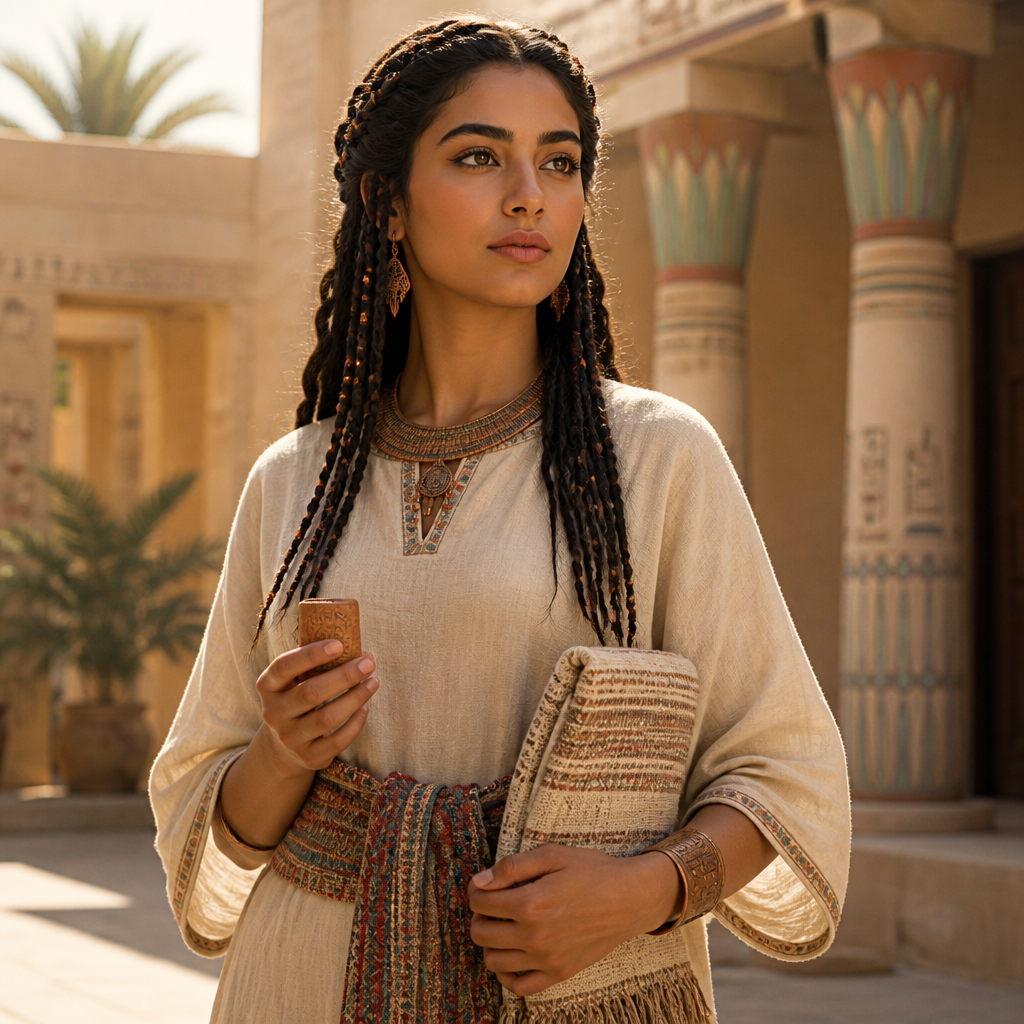
The daughter of Machir is a figure appearing in the genealogical records of the tribe of Judah, specifically within the lineage of Hezron. As the daughter of Machir and the wife of Hezron, she represents a significant genealogical union between the house of Manasseh and the house of Judah during the period of Israel's growth in Egypt. Her identity is defined by her distinguished pedigree, being the child of Machir, the son of Manasseh, and Maacah.
While her personal name is not preserved in the Masoretic Text, her inclusion in the Chronicler’s record highlights her importance in establishing the ancestry of Segub and the eventual expansion of the Jairite line in Gilead. Her life is situated within the era of the Egyptian Sojourn, a time when the burgeoning tribes of Israel were solidifying their familial structures before the Exodus.
Background and Family
The daughter of Machir was born into one of the most prestigious families of the tribe of Manasseh. Her father, Machir, was the firstborn son of Manasseh and a prominent military leader whose descendants would later be known for their valor in the conquest of the Transjordan. According to 1 Chronicles 7, her mother was Maacah. She grew up alongside several siblings, including Gilead, Peresh, Sheresh, and Hammolecheth. This familial context places her at the heart of the Manassite aristocracy during the years of the Egyptian Sojourn.
Major Life Events
The primary event recorded regarding this woman is her marriage to Hezron, a grandson of Judah through Perez. The biblical record in 1 Chronicles 2:21 notes that Hezron was sixty years old when he took her as his wife. This detail suggests a union of significant social or political weight, likely intended to forge a bond between the tribes of Judah and Manasseh.
Following their marriage, she gave birth to a son named Segub. This birth is a pivotal moment in the biblical record because Segub became the father of Jair, who later gained fame for capturing twenty-three cities in the land of Gilead. Though the text focuses on the male line, it is her heritage as the daughter of Machir that provides the legal and ancestral basis for these later territorial claims in the Transjordan.
Relationship to Other Biblical Figures
Her relationships serve as a bridge between two major tribal identities. As the wife of Hezron, she is linked to the messianic line of Judah. As the daughter of Machir, she remains firmly rooted in the heritage of Joseph. Her brother, Gilead, became the eponymous ancestor of the region of Gilead, while her son Segub and grandson Jair would eventually occupy that very land. This overlap of tribal interests is rare in early biblical genealogies and marks her as a key figure in the integration of Israel’s tribal histories.
Spiritual Significance
In the context of the book of Chronicles, the daughter of Machir represents the fruitfulness and interconnectedness of the covenant people. The mention of her father as the "father of Gilead" emphasizes that even while the Israelites were in Egypt, they maintained a strong sense of their future inheritance in Canaan. Her marriage demonstrates that the tribes were not isolated silos but were actively weaving a shared national identity through kinship. While her individual voice is not heard, her presence in the text ensures that the legitimate claim of the Jairites to their land is traced back to a specific, recognized union sanctioned by the heads of these great houses.
The daughter of Machir is significant for providing the genealogical link between the tribe of Judah and the territory of Gilead. Her marriage to Hezron explains how a descendant of Judah (Jair) could hold an inheritance in Manassite territory, illustrating the complexity of tribal land laws and the importance of maternal lineage in certain historical contexts of the Old Testament.
Frequently Asked Questions
Who was the father of the daughter of Machir?
Her father was Machir, the son of Manasseh and grandson of Joseph.
Who was her husband?
She was the wife of Hezron, the son of Perez and grandson of Judah, who married her when he was sixty years old.
Did she have any children?
Yes, the Bible records that she bore a son named Segub to Hezron.
What tribe did she belong to?
She belonged to the tribe of Manasseh by birth and became part of Hezron's household within the tribe of Judah through marriage.
Why is she mentioned in 1 Chronicles?
She is mentioned to establish the lineage of Segub and Jair, explaining the connection between the tribe of Judah and the land of Gilead.
Family & Relationships
Parents
 Machir, Son of ManassehFather1 Chronicles 2:21Stated
 Maacah, Wife of MachirMother1 Chronicles 7:16
Inferred
No verse names Daughter of Machir and Maacah together; the mother link is carried from the surrounding genealogy and is not stated in Scripture.Evidence: 1 Chronicles 7:16
 Hezron, Son of PerezHusband1 Chronicles 2:21Stated
 Daughter of MachirThis page
 Gilead, Grandson of ManassehBrotherNumbers 26:29
Inferred
No verse names Gilead and Daughter of Machir together; the sister link is carried from the surrounding genealogy and is not stated in Scripture.Evidence: Numbers 26:29; 1 Chronicles 2:21
 HammolechethSister1 Chronicles 2:21
Inferred
No verse names Hammolecheth and Daughter of Machir together; the sister link is carried from the surrounding genealogy and is not stated in Scripture.Evidence: 1 Chronicles 2:21; 1 Chronicles 7:15
 PereshBrother1 Chronicles 7:16Stated
 ShereshBrother1 Chronicles 7:16Stated
Children
 Segub, Son of HezronSon1 Chronicles 2:21Stated
Connected Figures
Family
Father · 1 Chronicles 2:21
The firstborn son of Manasseh and grandson of Joseph, Machir was a formidable warrior whose descendants conquered and settled the region of Gilead.
Egypt and WildernessFirst: Genesis 50:2318 versesWarriorManasseh
Mother · 1 Chronicles 7:16
A woman of the tribe of Manasseh during the Egyptian sojourn and wilderness era, recognized as the wife of Machir and mother of Peresh and Sheresh.
Egypt and WildernessFirst: 1 Chronicles 7:156 versesMatriarchManasseh
Husband · 1 Chronicles 2:21
A high-ranking member of the tribe of Judah and a direct ancestor in the Davidic and Messianic lineage.
Egypt and WildernessFirst: Genesis 46:1213 versesClan FounderJudah
Son · 1 Chronicles 2:21
A descendant of Judah through Hezron, known primarily for his genealogical role in linking the tribe of Judah with the region of Gilead.
Brother · Numbers 26:29
A prominent tribal leader and grandson of Manasseh whose descendants formed the primary clans of the Machirite line during the Egyptian Sojourn and the Wilderness wanderings.
Egypt and WildernessFirst: Numbers 26:2917 versesClan FounderManasseh
Sister · 1 Chronicles 2:21
Hammolecheth was a prominent woman of the tribe of Manasseh, the daughter of Machir and sister of Gilead, who founded a line of descendants in the land of Gilead.
Egypt and WildernessFirst: 1 Chronicles 7:187 versesMatriarch of the AbiezritesManasseh
Brother · 1 Chronicles 7:16
Peresh was a descendant of Manasseh, the son of Machir and Maacah, noted in the genealogical records of the tribe of Manasseh.
Egypt and WildernessFirst: 1 Chronicles 7:165 versesManasseh
Brother · 1 Chronicles 7:16
Sheresh was a descendant of Manasseh through Machir, recorded in the genealogies of 1 Chronicles as a father of Ulam and Rakem.
Egypt and WildernessFirst: 1 Chronicles 7:165 versesprogenitorManasseh
Categories
Mentions by Book
- Numbers1
- 1 Chronicles3
Scripture References
All 4 indexed verses, in canonical order, from the Berean Standard Bible.
Numbers · 1
- Numbers 26:29Partial
These were the descendants of Manasseh: The Machirite clan from Machir, the father of Gilead, and the Gileadite clan from Gilead.
Cited as evidence on a family card; added so References, Key Verses and Mentions by Book share one index.
1 Chronicles · 3
- 1 Chronicles 2:21
Later, Hezron slept with the daughter of Machir the father of Gilead. He had married her when he was sixty years old, and she bore to him Segub.
- 1 Chronicles 7:16Partial
Machir’s wife Maacah gave birth to a son, and she named him Peresh. His brother was named Sheresh, and his sons were Ulam and Rekem.
Cited as evidence on a family card; added so References, Key Verses and Mentions by Book share one index.
- 1 Chronicles 7:18Partial
His sister Hammolecheth gave birth to Ishhod, Abiezer, and Mahlah.
Cited as evidence on a family card; added so References, Key Verses and Mentions by Book share one index.