Amminadab, Prince of Judah in the Exodus
A prominent leader of the tribe of Judah during the Egyptian sojourn and the father of the high priestess Elisheba and the tribal chieftain Nahshon.
Amminadab, a member of the tribe of Judah, lived during the pivotal era of the Egyptian bondage and the subsequent Exodus. While the biblical narrative does not record his specific speeches or actions, his identity is firmly established through his immediate family connections, which link the burgeoning Davidic royal line with the Aaronic priesthood. He was the son of Ram and a descendant of Perez, placing him in the direct lineage of the Messiah.
His importance in the biblical record is largely genealogical and structural. As the father-in-law of Aaron, the first High Priest, and the father of Nahshon, the prince of Judah during the wilderness wanderings, Amminadab serves as a foundational figure in the history of Israel’s leadership. His life spans the transition from the growth of the Hebrew people in Egypt to their emergence as a organized nation in the desert of Sinai.
Background and Family
Amminadab was born into the tribe of Judah during the period when the Israelites were dwelling in Egypt. According to the genealogies found in the Book of Ruth (4:19) and 1 Chronicles (2:10), he was the son of Ram, who was the son of Hezron. This lineage traces back directly to Perez, the son of Judah and Tamar. As such, Amminadab was part of the primary branch of the tribe that would eventually produce the Davidic monarchy.
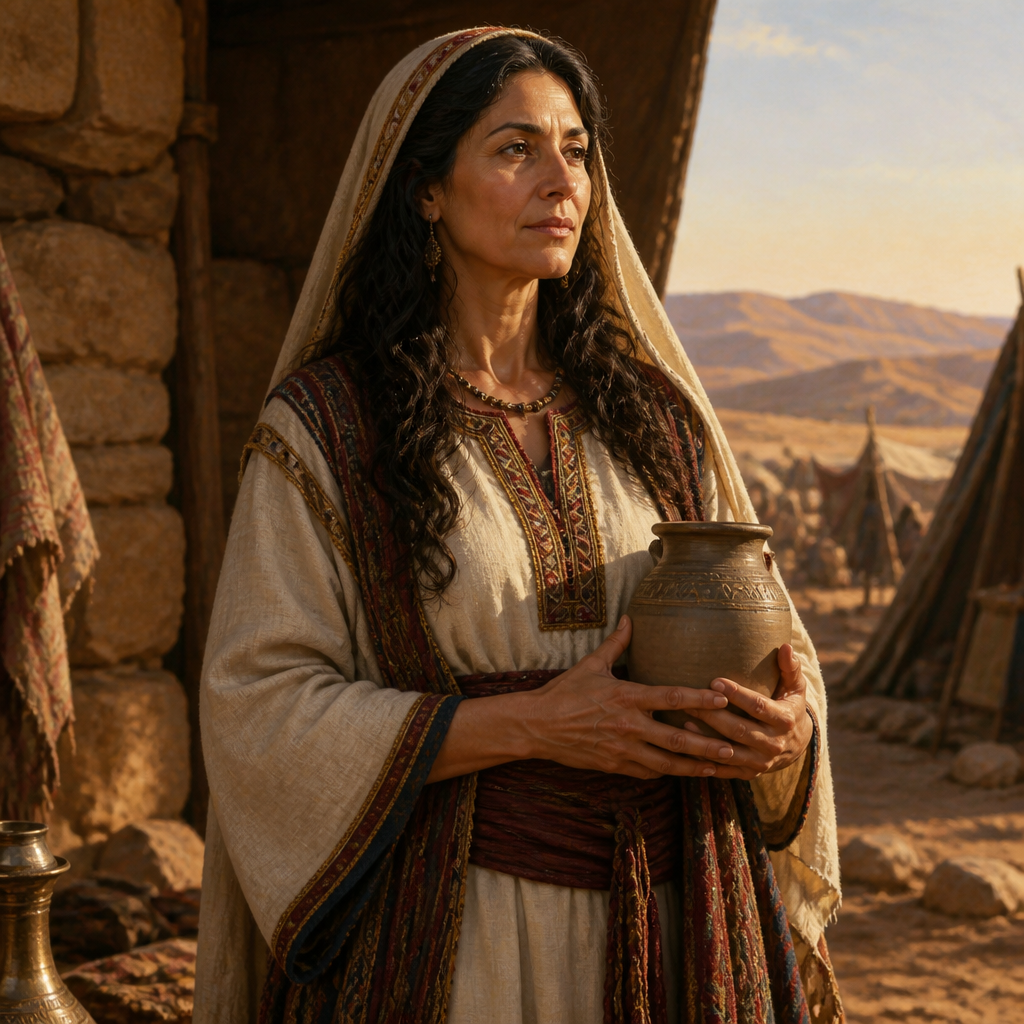
His family structure is uniquely significant because it bridges the two most influential houses in Israel: the house of the king and the house of the priest. Exodus 6:23 records that Amminadab’s daughter, Elisheba, married Aaron, the brother of Moses. This union made Amminadab the father-in-law to the first High Priest of Israel. Through this marriage, the priestly line of Aaron was physically joined with the royal tribe of Judah. Amminadab was also the father of Nahshon, a man who is consistently identified in the Pentateuch as the leader or prince of the descendants of Judah during the census and the wilderness journey (Numbers 1:7, 2:3).
Major Life Events
The biblical text does not provide a narrative account of Amminadab’s personal deeds, likely because he belonged to the generation that lived through the height of the Egyptian oppression. His presence is felt primarily through his children's roles in the fledgling nation.
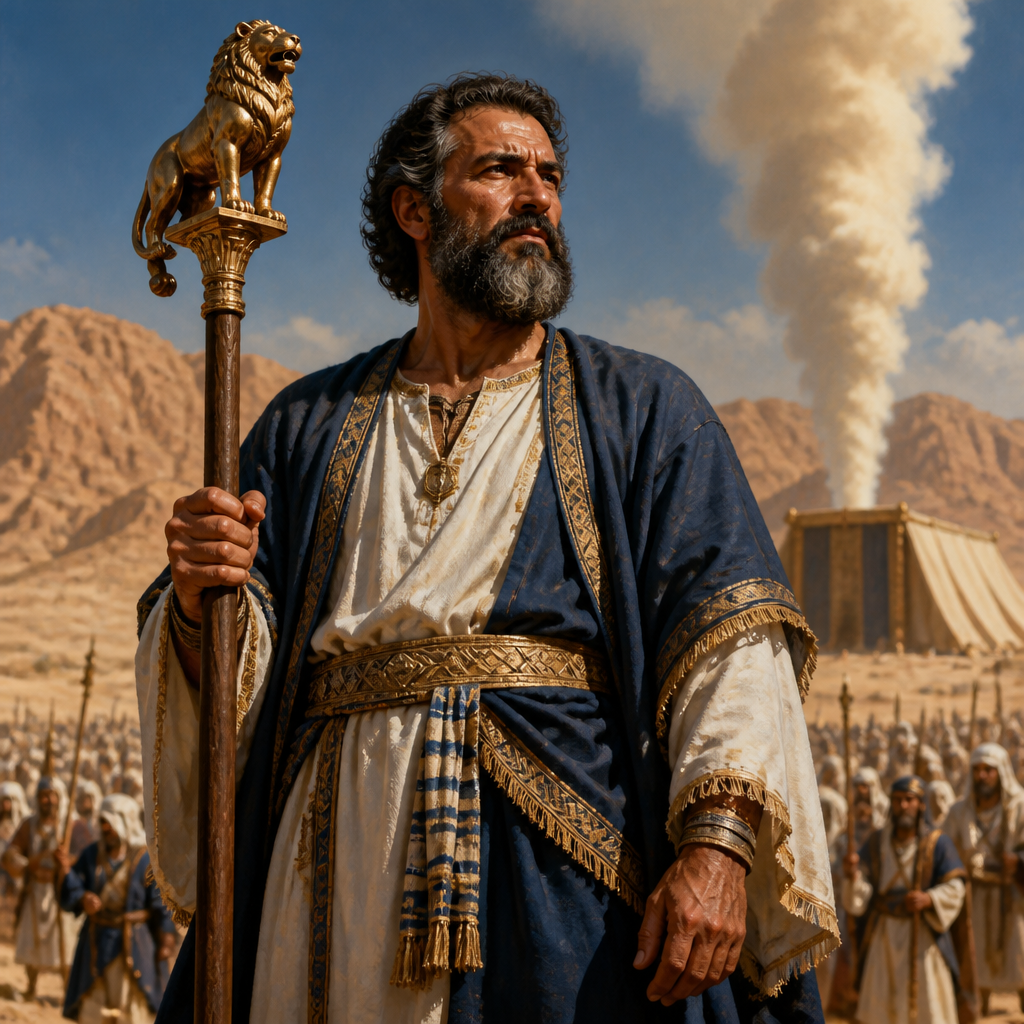
In the Book of Numbers, Amminadab is repeatedly mentioned as the father of Nahshon. When Moses was commanded to take a census of the men of war in Israel, Nahshon was selected to represent Judah (Numbers 1:7). Later, when the Tabernacle was dedicated, Nahshon was the first tribal leader to present an offering (Numbers 7:12, 17). While these events focus on his son, the repeated use of the patronymic "son of Amminadab" serves to honor Amminadab’s status within the tribe. It indicates that by the time of the Exodus, Amminadab’s household was recognized as the preeminent family within Judah, the largest and most influential tribe.
Relationship to Other Biblical Figures
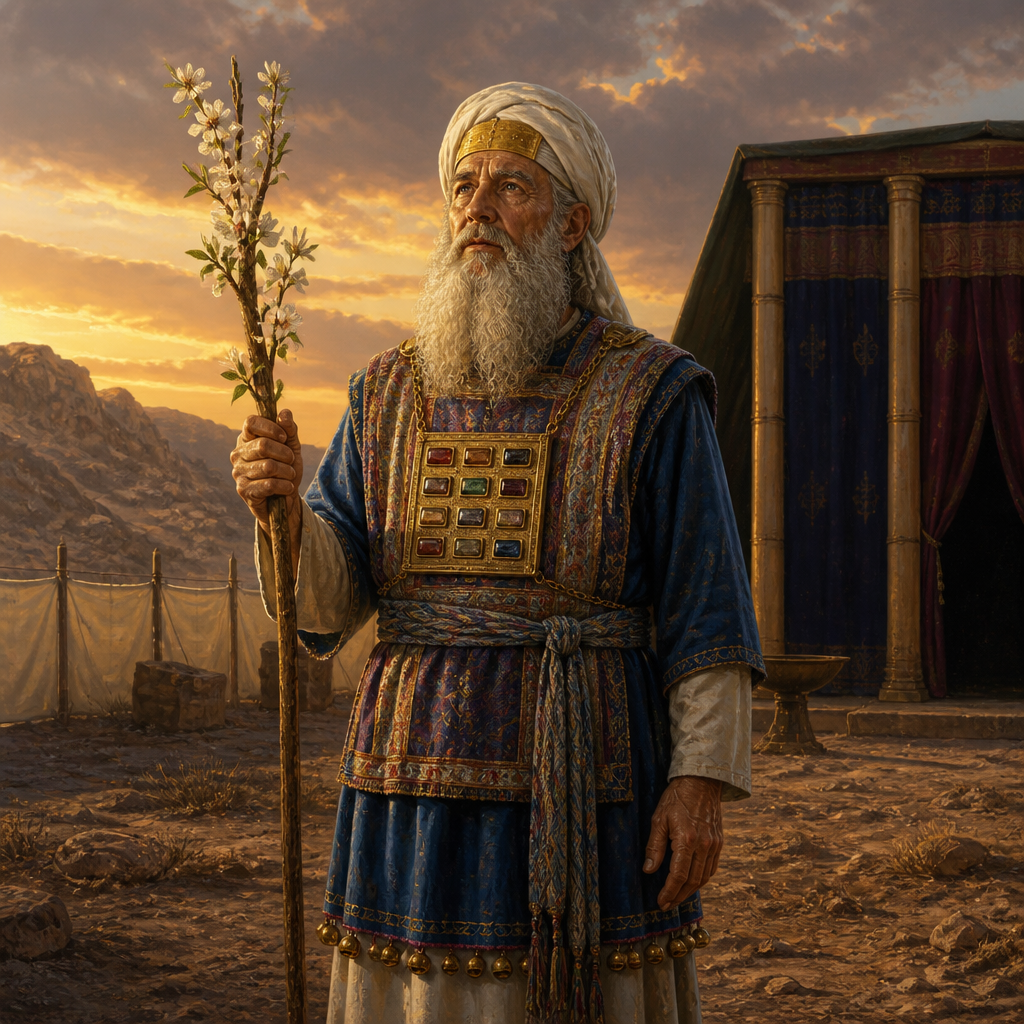
Amminadab stands at the center of a web of critical biblical figures. His relationship with Aaron is perhaps his most notable connection outside his own tribe. By giving his daughter Elisheba in marriage to Aaron, Amminadab ensured that all subsequent High Priests of Israel—beginning with his grandsons Nadab, Abihu, Eleazar, and Ithamar—carried the bloodline of the house of Amminadab.
Furthermore, Amminadab is a vital link in the Messianic genealogy. Both the Gospel of Matthew (1:4) and the Gospel of Luke (3:33) include Amminadab in the ancestry of Jesus Christ. In these lists, he appears between Ram and Nahshon. His inclusion in these records confirms his place in the "scarlet thread" of redemption history, connecting the ancient patriarchs to the eventual birth of the Savior in the New Testament era.
Spiritual Significance
Although Amminadab is a silent figure in the scriptures, his spiritual significance is found in the concepts of legacy and divine providence. He represents the faithful preservation of the Israelite identity during centuries of foreign servitude. The name Amminadab itself, which can be translated as "my kinsman is noble" or "people of the prince," reflects the high standing of his family even before the formal establishment of the Israelite state.
His role in the Bible highlights the importance of the family unit in the transmission of God's promises. By raising children like Elisheba and Nahshon, who stepped into significant roles of service to the community and the Tabernacle, Amminadab contributed to the stability and sanctity of the nation. He serves as a reminder that those who remain steadfast in the shadows of history are often the ones who provide the foundation for the great leaders who stand in the light.
Spiritual Significance
Amminadab’s theological importance is rooted in his position within the genealogy of Jesus Christ and his role in uniting the tribal leadership of Judah with the Aaronic priesthood. As the father of Nahshon and the father-in-law of Aaron, he represents the intersection of the two most important offices in Israelite history: the kingship and the priesthood. This union foreshadows the dual role of Christ as both King and High Priest.
His repeated mention in the genealogical records of Ruth, Chronicles, Matthew, and Luke underscores the meticulous nature of biblical history. It demonstrates that every generation, even those living in periods of silence or suffering like the Egyptian bondage, is essential to the unfolding of God’s plan for the redemption of humanity.
Frequently Asked Questions
Who was Amminadab's father?
According to Ruth 4:19 and 1 Chronicles 2:10, Amminadab was the son of Ram, a descendant of Perez and Judah.
How is Amminadab related to the High Priest Aaron?
Amminadab was Aaron's father-in-law. His daughter, Elisheba, married Aaron and became the mother of the priestly line (Exodus 6:23).
Was Amminadab a king?
No, Amminadab was not a king, as he lived before the establishment of the Israelite monarchy. However, he was a member of the leading family of the tribe of Judah and an ancestor of King David.
Is Amminadab mentioned in the New Testament?
Yes, Amminadab is mentioned in the genealogies of Jesus found in Matthew 1:4 and Luke 3:33.
Who was Amminadab's son?
His son was Nahshon, who served as the leader of the tribe of Judah during the census and the dedication of the Tabernacle in the wilderness (Numbers 1:7, 7:12).
Connected Figures
Categories
Mentions by Book
- Numbers5
- Ruth2
- 1 Chronicles1
- Exodus1
- Luke1
- Matthew1
Family & Relationships
Child
Exodus 6:23
Child
Exodus 6:23
Parent
Ruth 4:19
Others Named Amminadab
Amminadab, Levite of the Divided Monarchy1 Chronicles 15:10
A prominent Levite chief of the Uzzielite clan who assisted King David in the sacred transfer of the Ark of the Covenant to Jerusalem.