Zedekiah son of Maaseiah
Who was Zedekiah son of Maaseiah in the Bible?
A false prophet during the Divided Monarchy who was executed by Nebuchadnezzar for prophesying lies to the Jewish exiles in Babylon.
This is one of 6 people named Zedekiah in the Bible. See all 6 →
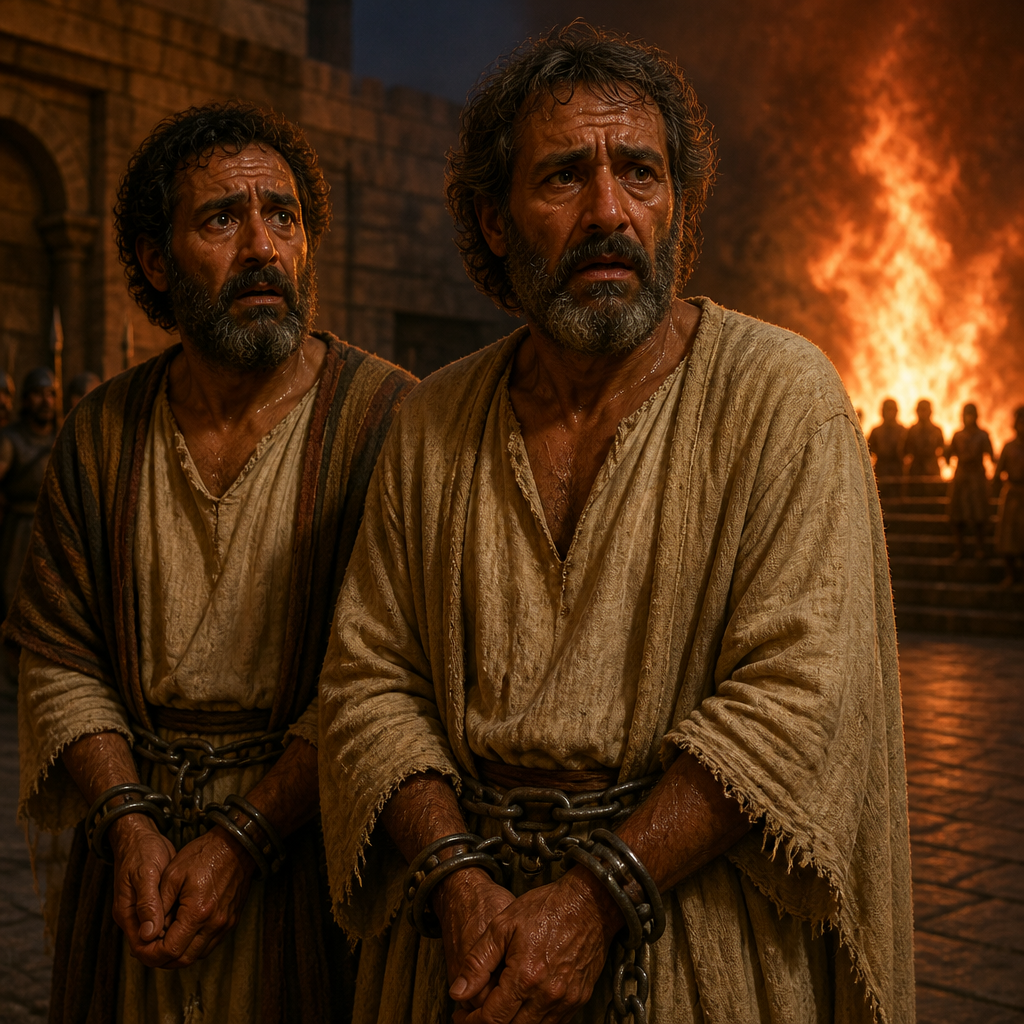
Zedekiah son of Maaseiah was a figure active during the twilight of the Kingdom of Judah and the beginning of the Babylonian captivity. Unlike the canonical prophets who warned of coming judgment or called for repentance, Zedekiah is identified in the biblical record as a false prophet. He operated among the Jewish exiles already in Babylon, claiming to speak in the name of the LORD while delivering messages that contradicted the divine will revealed through the prophet Jeremiah.
His career was marked by deception and ended in a gruesome public execution. Because his actions were seen as a betrayal of both his religious calling and the safety of the exiled community, his name and fate became a proverbial curse among the people of Judah. His story serves as a brief but harrowing illustration of the political and spiritual tensions facing the Jewish people during the transition from the Divided Monarchy to the Exilic Period.
Background and Family
Zedekiah was the son of a man named Maaseiah. Beyond this patronymic, the biblical text provides no specific details regarding his tribe, lineage, or early life. He emerged as a public figure during the period of the Divided Monarchy, specifically at a time when the Babylonian Empire under Nebuchadnezzar II had begun the forced deportation of the Judean population. Zedekiah was part of the community of exiles living in Babylon, where he assumed the role of a prophet.
Major Life Events
Zedekiah’s primary recorded activity was his participation in a movement of false prophecy alongside a contemporary named Ahab son of Kolaiah. While the prophet Jeremiah, staying in Jerusalem, wrote letters to the exiles instructing them to settle in Babylon for a seventy-year duration (Jeremiah 29:4–10), Zedekiah and Ahab appear to have been offering a contradictory message. The biblical text notes that they were "prophesying to you lies in My name" (Jeremiah 29:21).
This deceptive activity likely involved promises of a swift return to Jerusalem or a premature end to Babylonian dominance. Such rhetoric was not only spiritually false but politically dangerous, as it incited unrest among the captives against their Babylonian overlords. Consequently, Zedekiah caught the attention of King Nebuchadnezzar. The Babylonian king ordered a public execution, specifically by fire. Jeremiah 29:22 records the horrific nature of his death, stating that the king of Babylon "roasted them in the fire."
Relationship to Other Biblical Figures
Zedekiah’s life is defined by his opposition to the true word of God delivered by the prophet Jeremiah. Jeremiah 29 contains a letter sent from Jerusalem to the exiles, in which Jeremiah explicitly names Zedekiah as a deceiver whose death would be witnessed by the very people he had misled. Zedekiah worked closely with Ahab son of Kolaiah; the two are consistently mentioned together as a pair of false prophets who shared the same message, the same condemnation, and the same fate.
Spiritual Significance
The legacy of Zedekiah son of Maaseiah is one of infamy. The manner of his death was so striking that it entered the cultural lexicon of the Judean exiles. According to Jeremiah 29:22, his name was used in a formal curse: "May the LORD make you like Zedekiah and Ahab, whom the king of Babylon roasted in the fire!"
In a theological context, Zedekiah represents the internal threat to the community of faith—those who use the prestige of the prophetic office to lead people away from the difficult truth toward a comfortable lie. His execution by a pagan king is presented as a manifestation of divine judgment, proving that those who falsely claim to speak for God ultimately face the consequences of their presumption.
Zedekiah son of Maaseiah serves as a sobering example of the dangers of false prophecy within the biblical narrative. His presence in the book of Jeremiah highlights the struggle for spiritual authority during the Babylonian Exile, contrasting the harsh but necessary truth of Jeremiah's message with the popular but fraudulent hope offered by figures like Zedekiah. His inclusion underscores the biblical theme that God's name must not be used for personal or political deception.
Furthermore, the specific mention of his execution by fire provides a rare glimpse into the disciplinary methods of the Babylonian Empire and how those historical events were interpreted through a theological lens. Zedekiah’s life and death serve as a warning that religious leadership carries a high level of accountability, and his transition from a prophet to a proverbial curse demonstrates the enduring impact of spiritual betrayal.
Frequently Asked Questions
What did Zedekiah son of Maaseiah prophesy?
The Bible does not record his exact words, but Jeremiah 29:21 states he prophesied 'lies' in the name of the LORD, likely suggesting a false hope of a quick return from exile.
How did Zedekiah son of Maaseiah die?
He was executed by King Nebuchadnezzar of Babylon, who had him 'roasted in the fire' (Jeremiah 29:22).
Who was Zedekiah's partner in prophecy?
He worked alongside Ahab son of Kolaiah, another false prophet mentioned in Jeremiah 29.
Where was Zedekiah living when he prophesied?
He was among the Jewish exiles who had been taken to Babylon (Jeremiah 29:20-21).
Why did his name become a curse?
Because of the horrific nature of his execution and his status as a deceiver, exiles would use his name in a curse to wish a similar fate upon others.
Family & Relationships
Parents
 Maaseiah, Father of Zedekiah the False ProphetFatherJeremiah 29:21Stated
 Zedekiah son of MaaseiahThis page
Connected Figures
Family
Father · Jeremiah 29:21
The father of the false prophet Zedekiah who was executed by Nebuchadnezzar during the Divided Monarchy.
Categories
Mentions by Book
- Jeremiah2
Scripture References
All 2 indexed verses, in canonical order, from the Berean Standard Bible.
Jeremiah · 2
- Jeremiah 29:21
This is what the LORD of Hosts, the God of Israel, says about Ahab son of Kolaiah and Zedekiah son of Maaseiah, who are prophesying to you lies in My name: “I will deliver them to Nebuchadnezzar king of Babylon, and he will kill them before your very eyes.
- Jeremiah 29:22
Because of them, all the exiles of Judah who are in Babylon will use this curse: ‘May the LORD make you like Zedekiah and Ahab, whom the king of Babylon roasted in the fire!’
Others Named Zedekiah son of Maaseiah
Compare all 6 bearers →Zedekiah, Son of Jehoiakim1 Chronicles 3:16
A descendant of the Davidic royal line listed in the genealogy of King Jehoiakim during the Divided Monarchy.
Zedekiah of the SealNehemiah 10:1
A prominent leader or official among the Judean returnees who co-signed Nehemiah’s covenant to faithfully observe the Law of God after the Babylonian exile.
Zedekiah son of Chenaanah1 Kings 22:11
A false prophet during the Divided Monarchy who used iron horns to symbolically predict victory for King Ahab of Israel before opposing the true prophet Micaiah.
Zedekiah son of HananiahJeremiah 36:12
A Judean official during the reign of King Jehoiakim who was present during the reading of Jeremiah’s scroll.
Zedekiah, Last King of Judah2 Kings 24:17
The final king of the Kingdom of Judah who reigned during the Babylonian siege of Jerusalem and oversaw the city's eventual destruction.