Shamsherai
Who was Shamsherai in the Bible?
A Benjaminite leader and son of Jeroham, identified as a head of his ancestral house in the genealogical records of 1 Chronicles.
Shamsherai was a prominent member of the Tribe of Benjamin during the era of the Divided Monarchy. His name appears within the genealogical records of 1 Chronicles 8, a chapter dedicated to detailing the lineage and leadership of Benjamin, the tribe from which Israel's first king, Saul, descended.
As a son of Jeroham, Shamsherai was part of a large and influential family that resided in Jerusalem. The biblical text identifies him and his brothers as 'chief men' or 'heads of their fathers' houses,' indicating that he held a position of significant social and administrative authority within his community and tribal structure.
Background and Family
Shamsherai is situated within the extensive genealogy of the Tribe of Benjamin, specifically among the descendants of Shaharaim (1 Chronicles 8:8-28). The text identifies his father as Jeroham. Shamsherai was one of several brothers, including Shehariah, Athaliah, Jaareshiah, Elijah, and Zichri.
This family unit is presented as a high-ranking lineage within the tribe. The Chronicler notes that these individuals lived in Jerusalem, which served as a primary hub for the Benjaminites even after the division of the kingdom. The inclusion of Shamsherai in this list highlights the continued prominence of Benjaminite families in the southern kingdom of Judah during the Divided Monarchy.
Major Life Events
The biblical record for Shamsherai is strictly genealogical. There are no recorded narrative events, speeches, or specific actions attributed to him in the Masoretic Text. His inclusion in 1 Chronicles serves the purpose of validating the heritage and continuity of the Benjaminite leadership.
As a 'head of his father's house,' Shamsherai would have been responsible for the welfare, legal standing, and military readiness of his extended family group. In the context of the Divided Monarchy, such leaders played a vital role in maintaining the social fabric of Jerusalem and the surrounding territories of Judah.
Relationship to Other Biblical Figures
Shamsherai's primary biblical connection is through his father, Jeroham, and his five brothers. The text specifies that these men were 'chief men' (Hebrew: rashim), distinguished by their names being recorded in the official archives. He is a contemporary of the various kings of Judah, though he is not mentioned in direct contact with the royal court. His status as a Benjaminite leader also connects him to the broader history of the tribe that produced figures such as King Saul and, centuries later, the Apostle Paul.
Spiritual Significance
While Shamsherai lacks a personal narrative, his presence in the Bible underscores the theological theme of God's remembrance of his people. By recording the names of specific family heads like Shamsherai, the Chronicler emphasizes that the identity of the covenant people remained intact through the tumultuous years of the Divided Monarchy. He represents the faithful remnant of the Tribe of Benjamin who remained integrated with the house of David in Jerusalem, ensuring the survival of the tribal identity through successive generations.
Shamsherai's significance lies in his role as a representative of the Tribe of Benjamin's leadership during the Divided Monarchy. His inclusion in the genealogical records of 1 Chronicles serves to document the continuity and organizational structure of the Israelite tribes, particularly those who remained centered in Jerusalem. By naming Shamsherai, the biblical text affirms the importance of individual leaders in preserving the heritage and legal standing of their ancestral houses.
Furthermore, Shamsherai represents the integration of Benjaminite nobility within the Judean capital. This integration was crucial for the political stability of the Southern Kingdom. Though he is a minor figure, his mention reflects the meticulous care taken by biblical authors to preserve the lineage of the people of Israel, ensuring that even during periods of national division, the specific families and leaders of the tribes were not forgotten.
Frequently Asked Questions
Which tribe did Shamsherai belong to?
Shamsherai belonged to the Tribe of Benjamin, as recorded in the genealogies of 1 Chronicles 8.
Who was Shamsherai's father?
Shamsherai was the son of Jeroham, a leader within the tribe of Benjamin.
Where did Shamsherai live?
According to 1 Chronicles 8:28, Shamsherai and his family lived in Jerusalem.
How many brothers did Shamsherai have?
The text mentions five brothers: Shehariah, Athaliah, Jaareshiah, Elijah, and Zichri.
What was Shamsherai's role in the community?
He was considered a 'head of his father's house,' a title indicating he was a chief man or leader within his tribal division.
Family & Relationships
Parents
 Jeroham, Father of Benjaminite LeadersFather1 Chronicles 8:27Stated
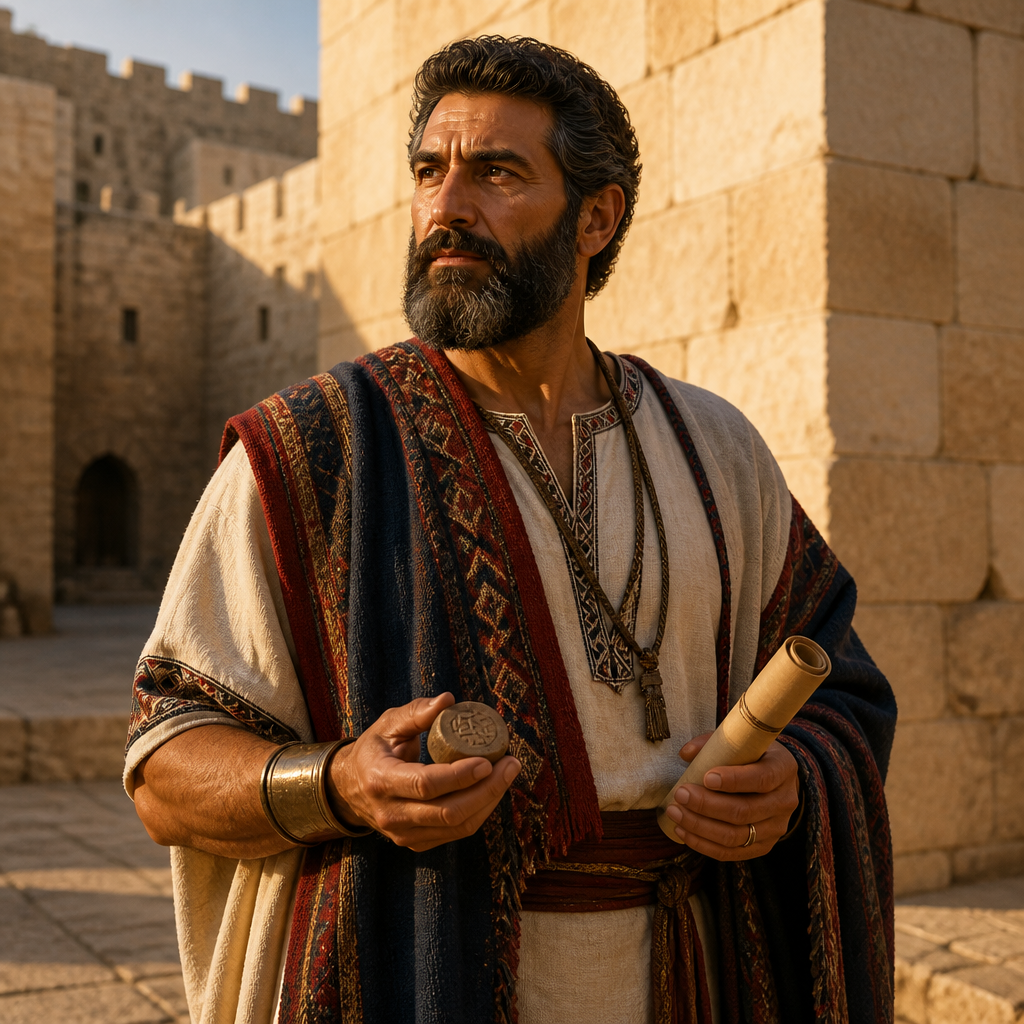 ShamsheraiThis page
 Athaliah, son of JerohamBrother1 Chronicles 8:26Stated
 Elijah, Son of JerohamBrother1 Chronicles 8:26–27Stated
 JaareshiahBrother1 Chronicles 8:26–27Stated
 ShehariahBrother1 Chronicles 8:26Stated
 Zichri, Son of JerohamBrother1 Chronicles 8:26–27Stated
Connected Figures
Family
Father · 1 Chronicles 8:27
A prominent Benjaminite patriarch whose sons were recorded as heads of their households in the tribal genealogies of 1 Chronicles.
Divided MonarchyFirst: 1 Chronicles 8:272 versesPatriarchal head of a Benjaminite householdBenjamin
Brother · 1 Chronicles 8:26
Athaliah was a Benjamite leader and son of Jeroham who resided in Jerusalem during the era of the Divided Monarchy.
Divided MonarchyFirst: 1 Chronicles 8:262 verseshead of houseBenjamin
Brother · 1 Chronicles 8:26–27
A Benjamite leader and son of Jeroham who resided in Jerusalem during the Divided Monarchy.
Brother · 1 Chronicles 8:26–27
A Benjamite leader and son of Jeroham, identified in the genealogical records of 1 Chronicles during the era of the Divided Monarchy.
Divided MonarchyFirst: 1 Chronicles 8:272 versesChief manBenjamin
Brother · 1 Chronicles 8:26
Shehariah was a prominent leader within the Tribe of Benjamin during the era of the Divided Monarchy, noted as a son of Jeroham.
Brother · 1 Chronicles 8:26–27
A Benjaminite head of a household and son of Jeroham who lived in Jerusalem during the Divided Monarchy.
Categories
Mentions by Book
- 1 Chronicles2
Scripture References
All 2 indexed verses, in canonical order, from the Berean Standard Bible.
1 Chronicles · 2
- 1 Chronicles 8:26
Shamsherai, Shehariah, Athaliah,
- 1 Chronicles 8:27Partial
Jaareshiah, Elijah, and Zichri were the sons of Jeroham.
Cited as evidence on a family card; added so References, Key Verses and Mentions by Book share one index.