Elijah, Son of Jeroham
Who was Elijah, Son of Jeroham, in the Bible?
A Benjamite leader and son of Jeroham who resided in Jerusalem during the Divided Monarchy.
This is one of 4 people named Elijah in the Bible. See all 4 →
Elijah, son of Jeroham, is a figure recorded in the genealogical records of the tribe of Benjamin. Unlike his more famous prophetic namesake, this Elijah is noted specifically for his place within the ancestral lineage of the Benjamite families who eventually established their residence in Jerusalem. His name, which means 'My God is Yahweh,' reflects the strong monotheistic tradition of his household even within a genealogical context.
He is identified as one of several brothers, including Jaareshiah and Zichri, who were prominent figures within their tribal division. The biblical record places him in the era of the Divided Monarchy, contributing to the demographic and social structure of the tribe of Benjamin as they navigated their historical role near the administrative and religious center of Judah.
Background and Family
Elijah was a member of the tribe of Benjamin, a tribe known for its fierce warriors and its strategic location between the northern and southern kingdoms. He was the son of Jeroham, a descendant of Gedor, according to the chronicler's detailed records in 1 Chronicles 8. His family was significant enough to be preserved in the official registries of the tribe, indicating a status of headship or importance within their specific clan.
Elijah grew up alongside a large number of siblings. The text explicitly names his brothers as Jaareshiah, Zichri, Shamsherai, Shehariah, and Athaliah. While the name Athaliah is often associated with the infamous queen of Judah, here it refers to a male sibling of Elijah. This large family unit suggests a robust household that contributed to the strength of the Benjamite presence in the region.
Major Life Events
The biblical text does not provide a narrative account of Elijah's specific actions or deeds. Instead, his presence is marked by his inclusion in the genealogical list of those who lived in Jerusalem. Following the division of the kingdom, the tribe of Benjamin was largely aligned with the tribe of Judah, and the chronicler notes that these men were 'heads of the fathers' households, throughout their generations, chief men' (1 Chronicles 8:28).
Elijah’s primary role, therefore, was likely administrative or patriarchal. As a 'chief man,' he would have been responsible for the governance of his immediate family, the preservation of tribal land allotments, and the representation of his clan in communal and religious affairs in Jerusalem. The inclusion of his name in 1 Chronicles serves to document the continuity of the Benjamite people during a time of significant political transition.
Relationship to Other Biblical Figures
Elijah’s primary relationships are defined by his paternity and his siblings. His father, Jeroham, is the central figure of this specific branch of the Benjamite tree. His brothers—Jaareshiah, Zichri, Shamsherai, Shehariah, and Athaliah—form a collective group of leaders who are treated as a single unit of tribal prominence.
Unlike other figures of the same name who operated in the public prophetic or political sphere, Elijah the son of Jeroham represents the internal domestic and tribal stability of Israel. His life is defined by his connection to the city of Jerusalem, where he and his family dwelt, signaling a shift for some Benjamites from their traditional rural allotments to the urban center of the Davidic monarchy.
Spiritual Significance
While no specific spiritual oracles are attributed to Elijah, his name itself is a testament to the religious identity of his family. In an era where the Divided Monarchy often struggled with syncretism and the worship of foreign deities, the name 'Elijah' ('Yahweh is my God') served as a personal and public confession of faith.
The preservation of his name in the Holy Scriptures underscores the biblical theme that every individual within the covenant community is known and recorded by God. In the context of 1 Chronicles, his inclusion validates the legitimacy and heritage of the Benjamites, ensuring that their contribution to the post-exilic identity of Israel was rooted in a documented history of 'chief men' who remained loyal to their tribal roots and their God.
Elijah, son of Jeroham, represents the vital role of tribal leadership and genealogical continuity in Israel’s history. His inclusion in the Chronicles serves as a historical anchor for the tribe of Benjamin, affirming their status and presence in Jerusalem. Though his life lacks the dramatic narratives of others, he embodies the 'chief men' who maintained the social and religious fabric of the nation through their daily leadership and family governance.
Theologically, he serves as a reminder that the biblical record values the quiet faithfulness of tribal heads as much as the visible deeds of kings and prophets. By documenting his name and lineage, the text preserves the identity of a people who were essential to the survival of the Southern Kingdom and the eventual return of the exiles.
Frequently Asked Questions
Who was Elijah the son of Jeroham?
He was a Benjamite leader and one of the sons of Jeroham, listed in the genealogies of 1 Chronicles as a 'chief man' who lived in Jerusalem.
Which tribe did this Elijah belong to?
He was a member of the Tribe of Benjamin.
Who were the brothers of Elijah, son of Jeroham?
His brothers included Jaareshiah, Zichri, Shamsherai, Shehariah, and Athaliah.
What does the name Elijah mean?
The name Elijah in Hebrew means 'My God is Yahweh' or 'Yahweh is God.'
Where did Elijah and his family live?
According to 1 Chronicles 8:28, he and the other heads of households lived in Jerusalem.
Family & Relationships
Parents
 Jeroham, Father of Benjaminite LeadersFather1 Chronicles 8:27Stated
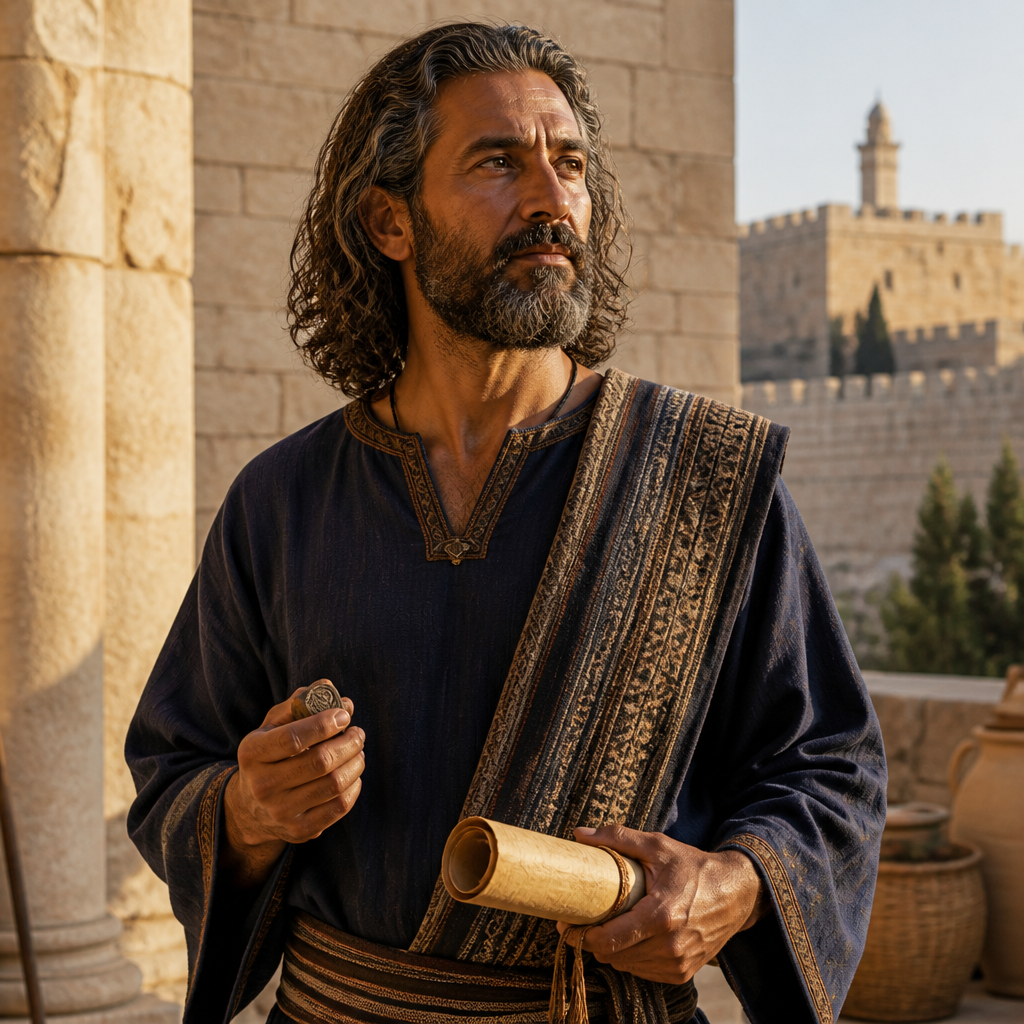 Elijah, Son of JerohamThis page
 Athaliah, son of JerohamBrother1 Chronicles 8:26–27Stated
 JaareshiahBrother1 Chronicles 8:27Stated
 ShamsheraiBrother1 Chronicles 8:26–27Stated
 ShehariahBrother1 Chronicles 8:26–27Stated
 Zichri, Son of JerohamBrother1 Chronicles 8:27Stated
Connected Figures
Family
Father · 1 Chronicles 8:27
A prominent Benjaminite patriarch whose sons were recorded as heads of their households in the tribal genealogies of 1 Chronicles.
Divided MonarchyFirst: 1 Chronicles 8:272 versesPatriarchal head of a Benjaminite householdBenjamin
Brother · 1 Chronicles 8:26–27
Athaliah was a Benjamite leader and son of Jeroham who resided in Jerusalem during the era of the Divided Monarchy.
Divided MonarchyFirst: 1 Chronicles 8:262 verseshead of houseBenjamin
Brother · 1 Chronicles 8:27
A Benjamite leader and son of Jeroham, identified in the genealogical records of 1 Chronicles during the era of the Divided Monarchy.
Divided MonarchyFirst: 1 Chronicles 8:272 versesChief manBenjamin
Brother · 1 Chronicles 8:26–27
A Benjaminite leader and son of Jeroham, identified as a head of his ancestral house in the genealogical records of 1 Chronicles.
Brother · 1 Chronicles 8:26–27
Shehariah was a prominent leader within the Tribe of Benjamin during the era of the Divided Monarchy, noted as a son of Jeroham.
Brother · 1 Chronicles 8:27
A Benjaminite head of a household and son of Jeroham who lived in Jerusalem during the Divided Monarchy.
Categories
Mentions by Book
- 1 Chronicles2
Scripture References
All 2 indexed verses, in canonical order, from the Berean Standard Bible.
1 Chronicles · 2
- 1 Chronicles 8:26Partial
Shamsherai, Shehariah, Athaliah,
Cited as evidence on a family card; added so References, Key Verses and Mentions by Book share one index.
- 1 Chronicles 8:27
Jaareshiah, Elijah, and Zichri were the sons of Jeroham.
Others Named Elijah
Compare all 4 bearers →Elijah the Tishbite1 Kings 17:1
A foundational prophet of the Divided Monarchy known for his confrontation with Baal worship and his departure from earth in a whirlwind.
Elijah, Descendant of HarimEzra 10:21
A descendant of Harim listed among the men who married foreign women during the time of Ezra in the Post-Exilic Period.
Elijah, Descendant of ElamEzra 10:26
A descendant of Elam who returned from the Babylonian exile and was among those who had married foreign women in the time of Ezra.