Nahath, Overseer under Hezekiah
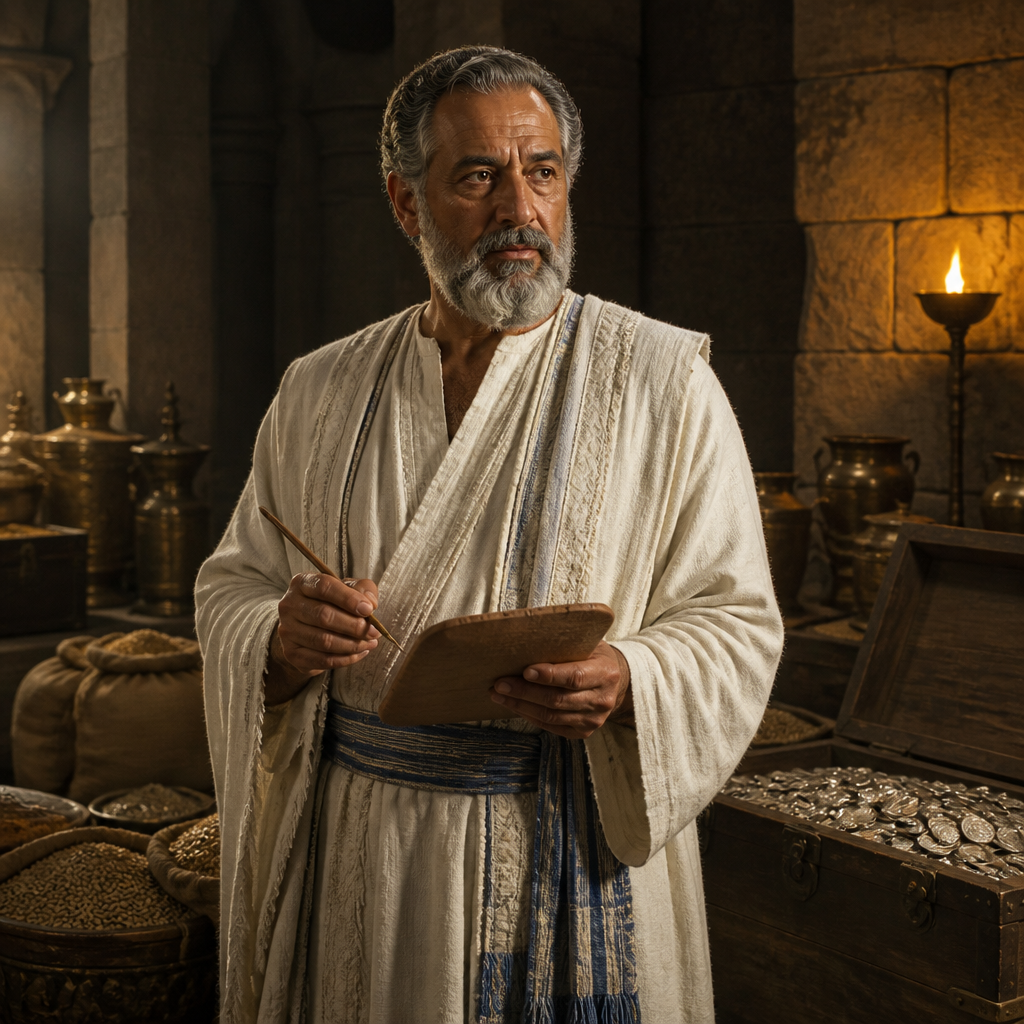
Nahath was a subordinate overseer appointed by King Hezekiah to manage the tithes and offerings dedicated to the Temple in Jerusalem.
Nahath was an official who served during the Divided Monarchy, specifically during the religious reforms of King Hezekiah of Judah in the late 8th century BC. His name appears in the context of the massive organizational effort required to manage the abundance of contributions brought by the people of Israel and Judah following the restoration of the Temple services.
He served as one of ten named subordinates under the leadership of Conaniah and Shimei. His role was integral to the administration of the 'house of God,' ensuring that the resources provided for the Levitical priesthood were handled with integrity and order according to the royal and priestly mandate.
Background and Family
The biblical record concerning Nahath is brief, limited to his administrative role during the reign of King Hezekiah (c. 715–686 BC). While the text does not explicitly state his tribe, the nature of his work—overseeing the holy contributions and tithes—strongly suggests he was of the tribe of Levi, as these duties were traditionally reserved for Levites under the supervision of the high priest. No specific parentage or descendants are recorded for this individual.
Major Life Events
Nahath’s primary historical mention occurs in the wake of Hezekiah’s call for spiritual renewal. After the king ordered the purification of the Temple and the re-establishment of the Passover, the people responded with overwhelming generosity, bringing in tithes of grain, wine, oil, and honey. The sheer volume of these offerings necessitated a structured system of storage and distribution.
To manage this, King Hezekiah and Azariah, the chief official of the Temple, appointed a hierarchy of administrators. Nahath was selected as one of the ten overseers (or supervisors) who worked directly under Conaniah and his brother Shimei. These men were responsible for the 'consecrated things' and the heaps of offerings that had been gathered in the Temple chambers.
Relationship to Other Biblical Figures
Nahath operated within a clear chain of command. He was accountable to Conaniah and Shimei, who were the chief administrators of the offerings. Above them stood King Hezekiah, the civil authority, and Azariah, the 'chief official of the house of God' (likely the High Priest). He served alongside nine other colleagues: Jehiel, Azaziah, Asahel, Jerimoth, Jozabad, Eliel, Ismachiah, Mahath, and Benaiah.
Spiritual Significance
Nahath represents the biblical principle of administrative stewardship. His inclusion in the genealogical and administrative records of 2 Chronicles highlights that the success of Hezekiah’s reforms depended not only on the king’s zeal but also on the quiet, organized service of subordinates. By faithfully managing the physical resources of the Temple, Nahath enabled the priests and Levites to focus on their liturgical duties, thereby sustaining the spiritual life of the nation.
Spiritual Significance
Nahath’s significance lies in the demonstration of order and accountability within the worship of Yahweh. The detailed listing of his name among the overseers emphasizes that God’s work involves practical administration and the careful handling of resources dedicated by the community. His role ensured that the generosity of the people was not wasted or mismanaged, but rather used to support the ministry of the Temple as intended by the Law of Moses.
Frequently Asked Questions
What was Nahath’s job in the Bible?
He was an overseer or supervisor responsible for managing the tithes, offerings, and consecrated gifts brought to the Temple during the reign of King Hezekiah.
When did Nahath live?
He lived during the Divided Monarchy era, specifically during the reign of King Hezekiah in the late 8th century BC.
Who was Nahath's supervisor?
He served under the authority of Conaniah and his brother Shimei, by the appointment of King Hezekiah and the chief priest Azariah.
Which book of the Bible mentions this Nahath?
This Nahath is mentioned exclusively in 2 Chronicles 31:13.
Connected Figures
Categories
Mentions by Book
- 2 Chronicles1
Others Named Nahath
Nahath, Grandson of EsauGenesis 36:13
Nahath was a clan leader and chief of the Edomites, identified as the son of Reuel and a grandson of Esau and Basemath.