Ishi, Son of Appaim
A descendant of Judah through the line of Hezron and Jerahmeel, identified as the son of Appaim and the father of Sheshan.
Ishi, son of Appaim, was a member of the Tribe of Judah during the era of the Divided Monarchy. His life and lineage are preserved within the genealogical records of 1 Chronicles, specifically within the complex family tree of the Jerahmeelites. As a descendant of Judah’s grandson Hezron, Ishi occupied a place in the central nobility of the tribe, contributing to the demographic and social structure of the southern kingdom.
While the biblical record regarding Ishi is brief, it serves as a critical link in the survival of his particular ancestral line. He is primarily defined by his relationships to his father, Appaim, and his son, Sheshan. His inclusion in the chronicler’s work emphasizes the meticulous preservation of Judean heritage during a time when tribal identity was paramount to the religious and political stability of Israel.
Background and Family
Ishi was a member of the Tribe of Judah, belonging to the house of Jerahmeel. According to the genealogical records in 1 Chronicles 2, he was the son of Appaim. The lineage provided shows a direct descent from Judah through Perez and Hezron. Ishi represents the sixth generation from Hezron, placing his family within the established elite of the Judean wilderness and southern territories. The text identifies him as a father, noting specifically that his son was Sheshan.
The Jerahmeelite Context
The Jerahmeelites, to whom Ishi belonged, were a significant clan within Judah. Historically, they inhabited the Negeb of Judah. By recording Ishi’s place in this lineage, the Chronicler reinforces the legitimacy of the southern clans. The specific mention of Ishi’s father, Appaim, is notable because Appaim is described as the son of Nadab, further rooting Ishi in a documented, multi-generational household.
Major Life Events
The biblical text does not record specific deeds, military exploits, or speeches attributed to Ishi. His primary "event" in the scriptural narrative is his existence as a biological and legal bridge between Appaim and Sheshan. In the ancient Near Eastern context, being recorded in such a manner implies he successfully maintained the family estate and ensured the continuity of the Jerahmeelite name.
Relationship to Other Biblical Figures
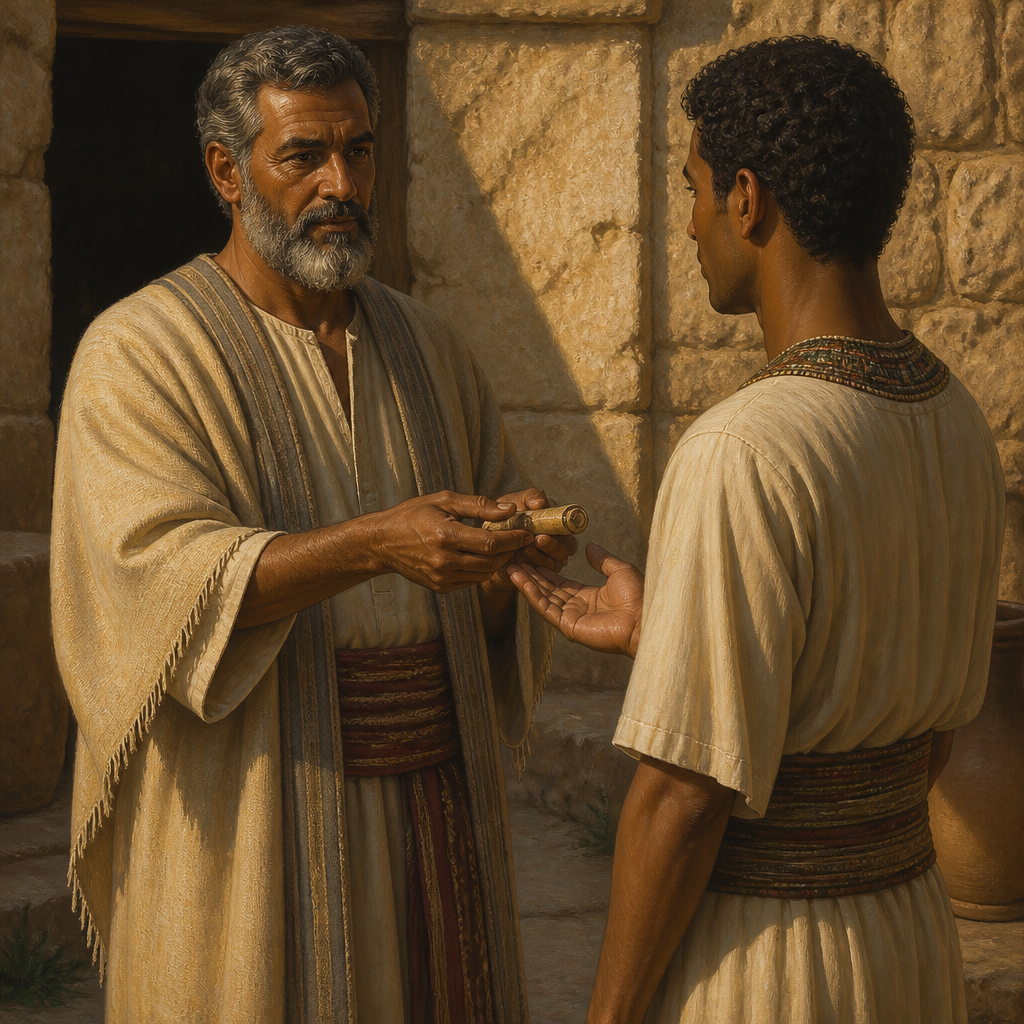
Ishi’s primary relationships are vertical. He is the son of Appaim and the father of Sheshan. The text follows this line further to mention a grandson (or descendant) named Ahlai. However, the narrative shortly after mentions that Sheshan had no sons, only daughters (1 Chronicles 2:34), which makes Ishi’s role as the last male in the direct paternal line of this specific branch particularly significant. It was through Ishi's son Sheshan that the family line was eventually preserved via an Egyptian servant named Jarha, who married one of Sheshan’s daughters.
Spiritual Significance
The spiritual significance of Ishi lies in the theology of the genealogies. In 1 Chronicles, these lists are not merely census data but a theological statement that God remembers and preserves the individuals within the covenant community. Ishi’s name, which translates roughly to "salutary" or "my help/salvation," reflects the ongoing presence of the Tribe of Judah as the vehicle through which the promised Davidic line and communal identity would be sustained. Though he is a minor figure, his presence in the inspired record validates the importance of every generation in the fulfillment of the divine plan for Israel.
Spiritual Significance
Ishi's significance is found in his role as a genealogical link within the Tribe of Judah. By appearing in the records of 1 Chronicles, he represents the continuity of the Jerahmeelite clan during the Divided Monarchy. His inclusion demonstrates the meticulous nature of Hebrew record-keeping, ensuring that even specific branches of the tribe that faced potential extinction—such as his son Sheshan who had no male heirs—were honored and preserved in the national memory.
Theologically, Ishi serves as a reminder that the history of Israel is composed of individual lives that, while not always highlighted by great deeds, are essential to the structural integrity of the people of God. He facilitates the transition of the Jerahmeelite inheritance through the generations, contributing to the stability of the tribe from which the Messiah would eventually come.
Frequently Asked Questions
Which tribe did Ishi belong to?
Ishi belonged to the Tribe of Judah, specifically the clan of the Jerahmeelites.
Who was Ishi's father?
According to 1 Chronicles 2:31, Ishi was the son of Appaim.
Did Ishi have any children?
Yes, the Bible records that Ishi was the father of Sheshan.
In which book of the Bible is this Ishi mentioned?
This specific Ishi is mentioned only in the book of 1 Chronicles, specifically in chapter 2, verse 31.
What does the name 'Ishi' mean?
The name Ishi (יִשְׁעִי) is derived from a root meaning 'salvation' or 'help,' often translated as 'salutary' or 'my help.'
Connected Figures

Categories
Mentions by Book
- 1 Chronicles1
Family & Relationships
Others Named Ishi
Ishi, Simeonite of the Divided Monarchy1 Chronicles 4:42
A leader within the tribe of Simeon whose four sons led a successful military expedition to Mount Seir during the Divided Monarchy.
Ishi, Descendant of Shimon1 Chronicles 4:20
A member of the Tribe of Judah during the Divided Monarchy, recorded in the genealogies of 1 Chronicles as the father of Zoheth and Ben-zoheth.
Ishi, Head of the Tribe of Manasseh1 Chronicles 5:24
A mighty man of valor and a famous leader who served as a family head within the half-tribe of Manasseh during the Divided Monarchy.