Hephzibah
Who was Hephzibah in the Bible?
Hephzibah was the queen consort of King Hezekiah of Judah and the mother of King Manasseh, one of Judah's longest-reigning monarchs.
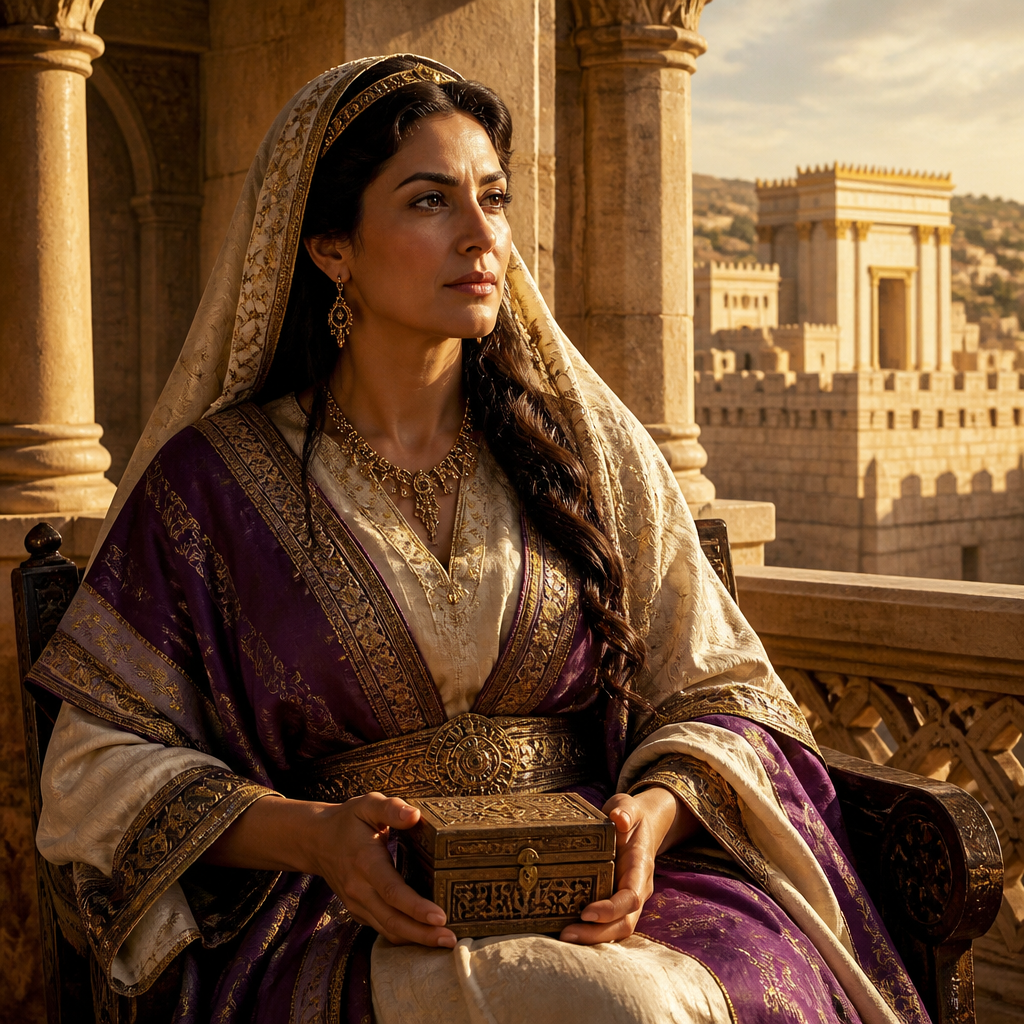
Hephzibah was a prominent royal figure during the late 8th and early 7th centuries BC within the Kingdom of Judah. As the wife of the righteous King Hezekiah and the mother of his successor, Manasseh, she occupied a central position in the Davidic dynasty during a period of significant political and religious transition. Her name, which translates to 'My delight is in her,' suggests a person of high regard or perhaps a symbolic hope for the restoration of the nation.
While the biblical record regarding her personal life and specific actions is extremely sparse, her inclusion in the royal annals serves a formal genealogical purpose. In the Hebrew Bible, the naming of a king’s mother was a standard convention for the kings of Judah, emphasizing the legitimacy of the line and the mother's role in the continuity of the Davidic covenant.
Background and Family
Hephzibah lived during the Divided Monarchy, specifically during the twilight of the Neo-Assyrian threat against Judah. She was the wife of Hezekiah, one of Judah's most celebrated kings known for his religious reforms and successful defense of Jerusalem. Although the Bible does not record her tribal origins or her father's name—a departure from the more detailed descriptions of some other queen mothers—she was clearly a woman of significant status within the Jerusalem court.
Major Life Events
The biblical record mentions Hephzibah exclusively in the context of her son’s ascension to the throne. The text states:
Manasseh was twelve years old when he became king, and he reigned in Jerusalem fifty-five years. His mother’s name was Hephzibah. (2 Kings 21:1)
This mention establishes her as the Queen Mother (Gebirah) during the reign of Manasseh. Given that Manasseh began his reign at the age of twelve, Hephzibah likely wielded considerable influence as a mentor or regent during the early years of his fifty-five-year tenure. This was a pivotal era in which the reforms of her late husband, Hezekiah, were systematically overturned by Manasseh, who introduced widespread idolatry and syncretism to the land. The biblical narrative does not clarify whether Hephzibah supported these changes or remained faithful to the Yahwistic traditions of Hezekiah.
Relationship to Other Biblical Figures
Hephzibah's primary significance in the text is relational. As the wife of Hezekiah, she was part of a household that witnessed one of the greatest spiritual revivals in Judah’s history. As the mother of Manasseh, she bore the heir to the longest reign in the history of the Davidic kings. While she is not mentioned in the book of Isaiah, some scholars note that her name, Hephzibah, is used as a symbolic title for a restored Zion in Isaiah 62:4. While the biblical text does not explicitly link the queen to the prophecy, the use of her name in a prophetic context suggests the term carried a powerful connotation of divine favor and delight within the Judean vocabulary of that era.
Spiritual Significance
Because the Bible provides only the single verse identifying her, any spiritual evaluation of Hephzibah remains speculative. However, her presence in the text reinforces the importance of the Queen Mother in the southern Kingdom of Judah. The chronological placement of her name—linked to the start of Manasseh’s reign—highlights the transition from a period of great faithfulness under Hezekiah to a period of great apostasy under Manasseh. She stands as the biological link between these two radically different spiritual eras in Israel's history.
Hephzibah’s significance lies in her role as the biological and legal link in the Davidic line between Hezekiah and Manasseh. By identifying her, the author of 2 Kings confirms the legitimacy of Manasseh’s claim to the throne of David. In the broader context of Judean historiography, the naming of the king's mother was a crucial element in establishing the continuity of the covenantal promises made to David.
Furthermore, her name ('My delight is in her') serves as a linguistic bridge to prophetic literature. While the historical Hephzibah was a literal queen, the name later becomes a metaphor for the redemptive relationship between God and Jerusalem, symbolizing a time when the land will no longer be termed 'Desolate' but will instead be 'Hephzibah'—the object of God’s pleasure.
Frequently Asked Questions
Who was Hephzibah's husband?
Hephzibah was the wife of Hezekiah, the King of Judah.
Who was Hephzibah's son?
Her son was Manasseh, who succeeded Hezekiah and reigned for fifty-five years in Jerusalem.
What does the name Hephzibah mean?
The name Hephzibah (חֶפְצִי־בָהּ) means 'My delight is in her' in Hebrew.
Is Hephzibah mentioned in the New Testament?
No, Hephzibah is only mentioned in the Old Testament, specifically in the second book of Kings.
What tribe was Hephzibah from?
The biblical text does not specify her tribe or lineage, only her role as queen and mother to the king.
Family & Relationships
 Hezekiah, King of JudahHusband2 Kings 20:21
Inferred
Reconstructed through Manasseh: 2 Kings 20:21 ties Hezekiah to Manasseh; 2 Kings 21:1 ties Manasseh to Hephzibah. No verse states the wife link between Hezekiah and Hephzibah directly.Evidence: 2 Kings 20:21; 2 Kings 21:1; 1 Chronicles 3:13; Jeremiah 15:4; Matthew 1:10
 HephzibahThis page
Children
 Manasseh, King of JudahSon2 Kings 21:1Stated
Connected Figures
Family
Husband · 2 Kings 20:21
The 13th king of Judah, known for his sweeping religious reforms, the miraculous defense of Jerusalem against Assyria, and his restoration of the Passover.
Divided MonarchyFirst: 2 Kings 16:20124 versesKing of JudahJudah
Son · 2 Kings 21:1
The longest-reigning king of Judah, Manasseh is noted for his extreme idolatry, subsequent Assyrian captivity, and dramatic late-life repentance.
Divided MonarchyFirst: 2 Kings 20:2126 versesKing of JudahJudah
Categories
Mentions by Book
- 2 Kings2
Scripture References
All 2 indexed verses, in canonical order, from the Berean Standard Bible.
2 Kings · 2
- 2 Kings 16:20Partial
And Ahaz rested with his fathers and was buried with them in the City of David, and his son Hezekiah reigned in his place.
Cited as evidence on a family card; added so References, Key Verses and Mentions by Book share one index.
- 2 Kings 21:1
Manasseh was twelve years old when he became king, and he reigned in Jerusalem fifty-five years. His mother’s name was Hephzibah.