Azaziah, Overseer of the Temple Storehouses
Azaziah was a subordinate temple official appointed during the reign of King Hezekiah to oversee the collection and distribution of tithes and offerings in Jerusalem.
Azaziah was a significant administrative figure during the religious reforms of the Divided Monarchy, specifically serving under King Hezekiah of Judah in the late 8th century BC. His role was central to the logistical management of the Judean priesthood and the maintenance of the Temple in Jerusalem. During a period of intense spiritual renewal, he was tasked with managing the vast influx of contributions brought by the people of Israel and Judah.
While his presence in the biblical record is brief, Azaziah represents the specialized administrative class required to sustain the centralized worship mandated by Hezekiah’s reforms. He operated within a structured hierarchy, ensuring that the material needs of the Levites and priests were met so they could focus on their religious duties without distraction.
Background and Family
The biblical record regarding Azaziah is found exclusively within the context of the reign of Hezekiah, one of the most prominent kings of the Southern Kingdom of Judah. The era of the Divided Monarchy was marked by alternating periods of apostasy and reform; Hezekiah’s tenure (c. 715–686 BC) was a peak of the latter. Azaziah’s specific tribal affiliation is not explicitly stated in the text of 2 Chronicles 31, though his association with the management of holy offerings and his reporting structure to the chief official of the house of God suggest he was likely a member of the tribe of Levi, specifically part of the administrative division of the priesthood.
Major Life Events
Azaziah’s primary contribution occurs following Hezekiah’s command to the people living in Jerusalem to give the portion due to the priests and Levites, so that they might devote themselves to the Law of the Lord. The resulting response was overwhelming, with the Israelites bringing in heaps of tithes from grain, new wine, olive oil, and honey. To manage this massive surplus, Hezekiah ordered the preparation of storechambers in the Temple.
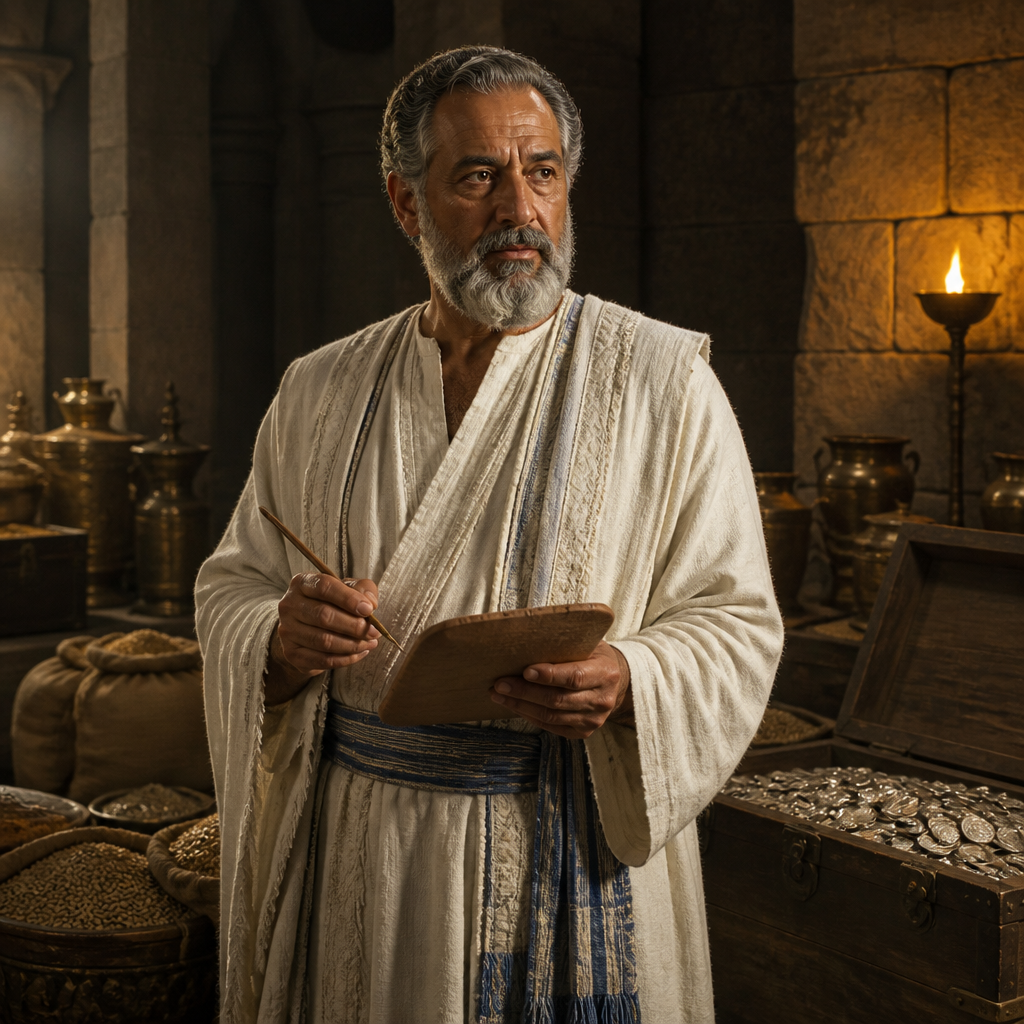
Azaziah was appointed as one of the ten overseers placed under the authority of Conaniah and his brother Shimei. This appointment was not a casual assignment but was by the direct mandate of King Hezekiah and Azariah, the chief official (or ruler) of the house of God. This indicates that Azaziah was a trusted official entrusted with the honest handling of the nation’s sacred wealth. His work involved the meticulous receiving, guarding, and eventual distribution of these consecrated gifts to ensure the equitable support of the clergy throughout the land of Judah.
Relationship to Other Biblical Figures
Azaziah functioned within a strictly defined chain of command. He served directly under Conaniah and Shimei, who were the primary directors of the storehouses. His peer group of overseers included Jehiel, Nahath, Asahel, Jerimoth, Jozabad, Eliel, Ismachiah, Mahath, and Benaiah. Above this administrative layer stood Azariah, the high priest or chief official of the Temple, and King Hezekiah himself. This collaborative effort demonstrates the high level of organization present in the Judean government during this period.
Spiritual Significance
The presence of Azaziah in the biblical text highlights the importance of administrative integrity within the community of faith. While the king provided the vision and the high priest provided the spiritual leadership, men like Azaziah provided the practical infrastructure necessary for the reform to succeed. His role ensured that the "portions" for the ministers of God were handled with accountability, preventing corruption and ensuring that the revival of worship was sustainable. He is a testament to the biblical principle that service in management and administration is a vital component of the overall health of the house of God.
Spiritual Significance
Azaziah serves as a model for administrative faithfulness in the Old Testament. His inclusion in the list of overseers in 2 Chronicles 31 underscores the necessity of organized stewardship in the support of the ministry. Without the logistical support of officials like Azaziah, the Levites would have been forced to leave their service in the Temple to provide for themselves, which would have undermined Hezekiah’s religious reforms.
Theological reflection on Azaziah often emphasizes the 'ministry of helps' or administration. By faithfully managing the tithes and storechambers, he allowed the spiritual life of the nation to flourish. His role confirms that in the biblical worldview, there is no sharp divide between the 'spiritual' work of the priest and the 'secular' work of the accountant or administrator when both are done for the glory of God.
Frequently Asked Questions
What was Azaziah’s specific job in the Temple?
Azaziah was an overseer of the storehouses, responsible for managing the tithes and offerings brought by the people to ensure they were properly stored and distributed to the priests and Levites.
Who was Azaziah’s direct supervisor?
He served under the authority of Conaniah and his brother Shimei, who were the lead officers in charge of the temple contributions.
In which book of the Bible is Azaziah mentioned?
He is mentioned only in 2 Chronicles 31:13.
During whose reign did Azaziah serve?
He served during the reign of King Hezekiah of Judah, during a time of great religious revival and reform.
Connected Figures
Categories
Mentions by Book
- 2 Chronicles1
Others Named Azaziah
Azaziah, Lyre Player of the Divided Monarchy1 Chronicles 15:21
A musician and levitical leader appointed to play the lyre during the transport of the Ark of the Covenant to Jerusalem under King David.
Azaziah, Father of Hoshea1 Chronicles 27:20
Azaziah was a man of the Divided Monarchy whose son, Hoshea, served as a tribal leader over the Ephraimites during the reign of King David.