Meonothai
Who was Meonothai in the Bible?
A descendant of Caleb within the tribe of Judah and the father of Ophrah, listed among the craftsmen of Ge-harashim.
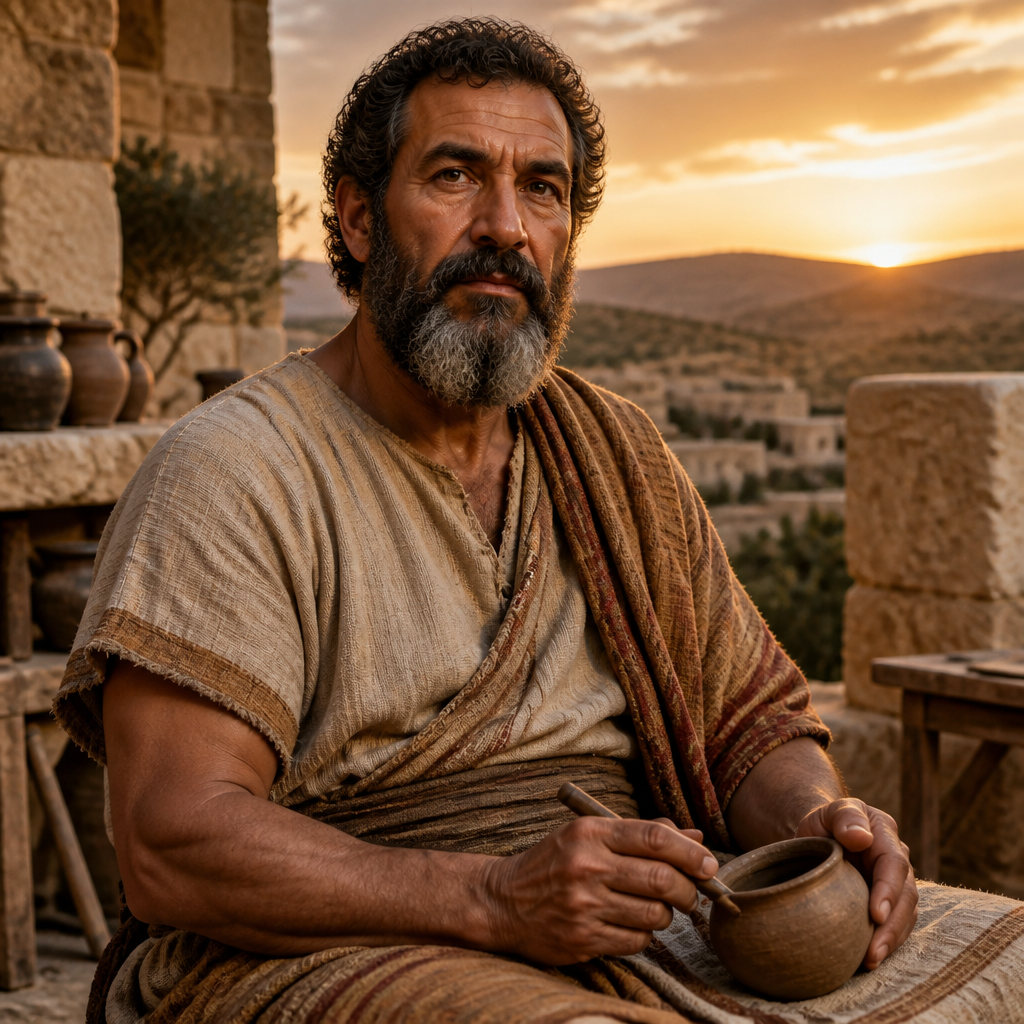
Meonothai was a member of the tribe of Judah during the era of the conquest and the judges, specifically identified within the lineage of Caleb. His genealogical record is preserved in the Chronicler’s account of the clans of Judah, where he is noted primarily for his role as a progenitor and his connection to the valley of craftsmen.
As a figure appearing within the early records of Israel’s settlement and tribal expansion, Meonothai represents the transition from the nomadic patriarchal traditions to the established professional guilds of ancient Palestine. His inclusion in the sacred text serves to validate the heritage of specific Judean families and their geographic holdings.
Background and Family
Meonothai emerges in the biblical text within the expansive genealogy of the tribe of Judah. According to the genealogical records found in 1 Chronicles 4, he is situated within the family of Caleb, the son of Jephunneh. The text identifies Meonothai as the son of Othniel (though some scholars note the phrasing in 1 Chronicles 4:13-14 can be interpreted as a parallel listing). He is also recorded as the child of Achsah, the daughter of Caleb, who famously requested springs of water from her father (Joshua 15:19). Meonothai had a brother named Hathath, and he himself became the father of Ophrah.
Major Life Events
The biblical record does not preserve specific narrative events or dialogues involving Meonothai. His primary contribution to the scriptural record is his status as a patriarch of a specific Judean line. His life is defined by the establishment of his household and the passing of his heritage to his son, Ophrah. The most significant historical marker associated with his immediate family line is the occupation of Ge-harashim, a location known as the "Valley of Craftsmen." This indicates that Meonothai belonged to a lineage that was instrumental in the early industrial or artisanal development of the Judean territory.
Relationship to Other Biblical Figures
Meonothai is closely linked to several prominent figures from the era of the conquest and early settlement. He is the grandson of Caleb, one of the two faithful spies who encouraged Israel to enter the Promised Land. His mother, Achsah, is noted for her wisdom and assertiveness in securing land and water rights for her family. If Othniel is accepted as his father, then Meonothai is the son of Israel’s first judge, a man who delivered the nation from the king of Mesopotamia. Through his son Ophrah, Meonothai’s name was carried forward into the geographical and social landscape of the tribe of Judah.
Spiritual Significance
In the context of 1 Chronicles, the inclusion of Meonothai serves a vital theological purpose: the affirmation of identity and belonging. His connection to the "Valley of Craftsmen" suggests a spiritual valuation of labor and skill. The text implies that the ability to create and build was a divinely sanctioned aspect of their tribal identity, tracing back to the patriarchs of the tribe of Judah who settled the land after the Exodus.
Meonothai’s significance lies in his preservation of the Davidic line and the tribe of Judah's heritage. As a descendant of Caleb and potentially Othniel, he represents the continuity of God's promises to the faithful leaders of the conquest. His name is eternally linked to the professional development of Israel, specifically the guild of craftsmen.
Furthermore, his presence in the genealogy underscores the importance of every individual within the covenant community. While his personal actions are not detailed, his role as a father and a link in the chain of the tribe of Judah ensures that the history of Israel is not merely one of great kings and prophets, but of families rooted in the land.
Frequently Asked Questions
Who was Meonothai's father?
According to the genealogical structure of 1 Chronicles 4:13-14, Meonothai is listed as the son of Othniel, though the phrasing is considered disputed by some scholars who view the names as related clan headings.
Which tribe did Meonothai belong to?
Meonothai belonged to the tribe of Judah, specifically within the clan of Caleb.
What does the name Meonothai mean?
The name Meonothai (H4587) is generally understood to mean 'my dwellings' or 'habitations' in Hebrew.
Who was Meonothai's son?
The Bible identifies Ophrah as the son of Meonothai.
What is the significance of the 'Valley of Craftsmen' related to Meonothai?
The text mentions Ge-harashim (Valley of Craftsmen) in immediate connection with Meonothai's family, indicating his descendants were known for their artisanal skills.
Family & Relationships
Parents
 Acsah, Daughter of CalebMother1 Chronicles 4:13
Inferred
No verse names Meonothai and Achsah together; the mother link is carried from the surrounding genealogy and is not stated in Scripture.Evidence: 1 Chronicles 4:13; Joshua 15:17; Judges 1:13
 OthnielFather1 Chronicles 4:13Stated
 MeonothaiThis page
 HathathBrother1 Chronicles 4:13Stated
Children
 OphrahSon1 Chronicles 4:14Stated
Extended family
 Caleb, Son of HezronGrandfatherJoshua 15:17
Inferred
Reconstructed through Othniel and Kenaz: 1 Chronicles 4:13 ties Meonothai to Othniel; Judges 3:11 ties Othniel to Kenaz; Joshua 15:17 ties Kenaz to Caleb. No verse states the grandfather link between Meonothai and Caleb directly.Evidence: Joshua 15:17
Connected Figures
Family
Mother · 1 Chronicles 4:13
Achsah was the daughter of the prominent leader Caleb and the wife of Othniel, the first Judge of Israel.
Conquest and JudgesFirst: Joshua 15:168 versesMatriarchJudah
Father · 1 Chronicles 4:13
The first of the biblical Judges and a heroic warrior from the clan of Kenaz who delivered Israel from Mesopotamian oppression.
Conquest and JudgesFirst: Joshua 15:177 versesJudge and Military LeaderJudah
Son · 1 Chronicles 4:14
Ophrah was a descendant of the tribe of Judah, specifically noted in the genealogical records as the son of Meonothai.
Brother · 1 Chronicles 4:13
Hathath was a descendant of the tribe of Judah, the son of the first judge of Israel, Othniel.
Grandfather · Joshua 15:17
A prominent descendant of Judah and son of Hezron, Caleb was a foundational figure in the genealogical expansion of the Tribe of Judah during the Egyptian and wilderness eras.
Categories
Mentions by Book
- Joshua1
- Judges1
- 1 Chronicles3
Scripture References
All 5 indexed verses, in canonical order, from the Berean Standard Bible.
Joshua · 1
- Joshua 15:17Partial
So Othniel son of Caleb’s brother Kenaz captured the city, and Caleb gave his daughter Acsah to him in marriage.
Cited as evidence on a family card; added so References, Key Verses and Mentions by Book share one index.
Judges · 1
- Judges 1:13Partial
So Othniel son of Caleb’s younger brother Kenaz captured the city, and Caleb gave his daughter Acsah to him in marriage.
Cited as evidence on a family card; added so References, Key Verses and Mentions by Book share one index.
1 Chronicles · 3
- 1 Chronicles 2:9Partial
The sons who were born to Hezron: Jerahmeel, Ram, and Caleb.
Cited as evidence on a family card; added so References, Key Verses and Mentions by Book share one index.
- 1 Chronicles 4:13
The sons of Kenaz: Othniel and Seraiah. The sons of Othniel: Hathath and Meonothai.
Cited as evidence on a family card; added so References, Key Verses and Mentions by Book share one index.
- 1 Chronicles 4:14
Meonothai was the father of Ophrah, and Seraiah was the father of Joab, the father of those living in Ge-harashim, which was given this name because its people were craftsmen.