Jarha
Who was Jarha in the Bible?
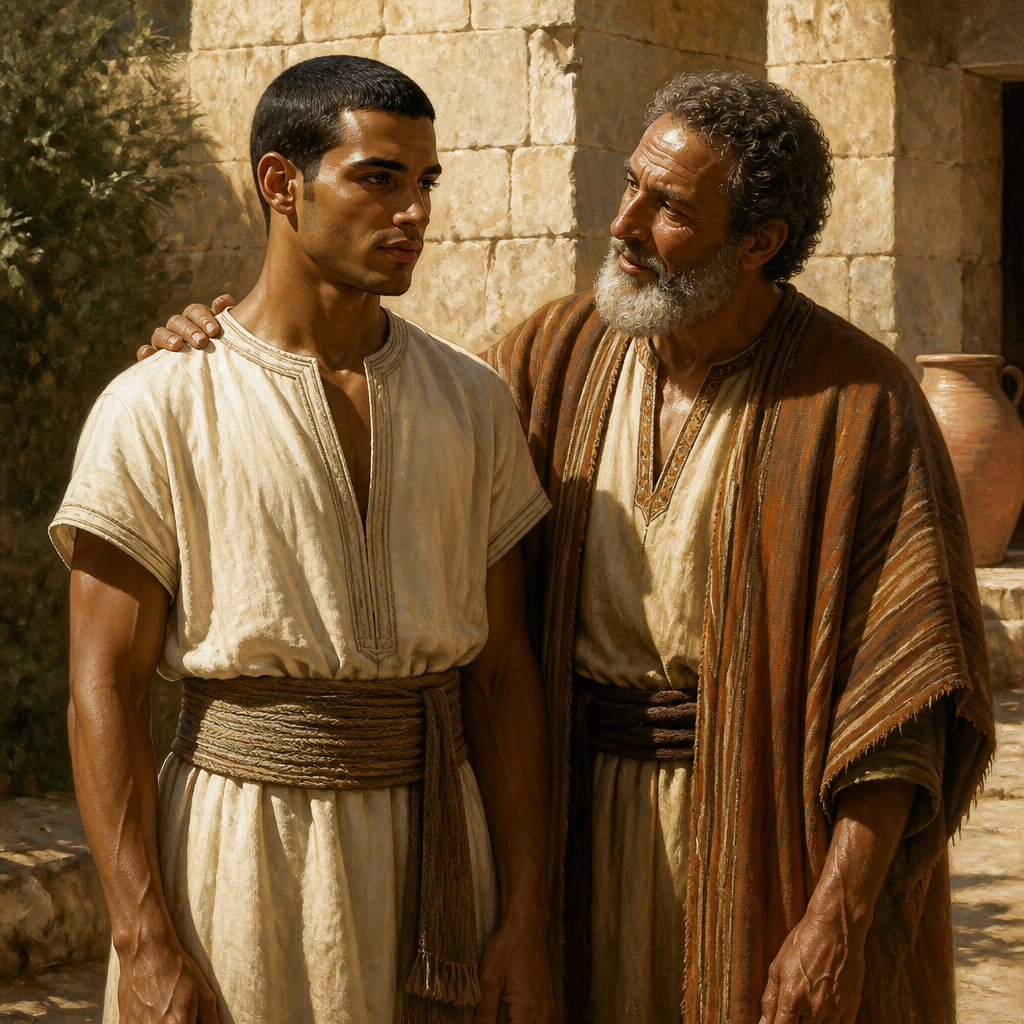
An Egyptian servant who married the daughter of his master, Sheshan, ensuring the continuation of a Judean lineage within the tribe of Judah.
His presence in the biblical record is brief but genealogically significant, appearing in the extensive records of 1 Chronicles. Jarha’s story is defined by his transition from a foreign servant to a son-in-law who preserved a specific branch of the Judean family tree.
Because Sheshan had no male heirs, the social and legal customs of the time allowed for a unique arrangement where Jarha was given Sheshan's daughter in marriage. This union allowed the family name and inheritance to continue through the offspring of an Egyptian man, demonstrating the occasional permeability of tribal boundaries in ancient Israel.
Background and Family
Jarha enters the biblical narrative in 1 Chronicles 2:34 within the genealogy of Judah. The text identifies him as an Egyptian servant belonging to Sheshan. Sheshan was a member of the Jerahmeelite branch of the tribe of Judah, tracing his lineage back through Puah, Jada, and Onam to Hezron. The Chronicler notes a specific domestic crisis facing Sheshan: he "had no sons, but only daughters" (1 Chronicles 2:34). In the patriarchal context of ancient Israel, the lack of a male heir posed a threat to the preservation of the family name and the retention of ancestral land holdings.
Jarha’s ethnic origin is explicitly stated as Egyptian. While the text does not detail how an Egyptian came to be a servant in a Judean household during the era of the conquest and the judges, it was not uncommon for foreigners to be integrated into Israeli society through service, war, or trade. Despite his status as a servant, Jarha was trusted enough by his master to be elevated to the status of a son-in-law.
Major Life Events
The defining event of Jarha’s life was his marriage to Sheshan’s daughter. While 1 Chronicles 2:34 mentions Sheshan had daughters, 1 Chronicles 2:35 clarifies that he gave his daughter specifically to Jarha. Though some interpretations suggest the daughter's name was Ahlai (based on verse 31), the text primarily focuses on the union itself as a legal mechanism for succession.
Through this marriage, Jarha fathered a son named Attai. By marrying into his master's family, Jarha effectively became the bridge that allowed Sheshan’s lineage to persist. The genealogical record continues through Attai, listing several generations of descendants including Nathan, Zabad, Ephlal, and others, eventually leading to Zaza and Alon. This long list of descendants serves as proof that the arrangement was successful and recognized by the community as a legitimate continuation of the Judean line.
Relationship to Other Biblical Figures
Jarha’s primary relationship is with his master and father-in-law, Sheshan. The relationship is one of mutual benefit: Jarha received freedom and status within the tribe of Judah, while Sheshan received a grandson to carry on his legacy. Jarha is also the father of Attai, who is listed as the biological son of Jarha but a legal descendant of Sheshan’s house.
Spiritual Significance
While Jarha is not a prophet or a king, his inclusion in the Chronicles serves a specific theological and historical purpose. The Chronicler wrote to the post-exilic community to remind them of their roots and the diverse ways God had preserved the tribes of Israel. Jarha represents the "proselyte" or the integrated foreigner who, through loyalty and marriage, becomes part of the covenant people. His story illustrates that the biological purity of a lineage was sometimes secondary to the legal preservation of the family unit and the inclusion of those willing to serve within the structures of Israel. Furthermore, Jarha’s presence in the genealogy of Judah—the tribe from which the Messiah would eventually come—highlights the inclusion of Gentile blood in the broader tapestry of Israel’s history.
Jarha's significance lies in his role as a genealogical link. He is a rare example of an Egyptian man being formally integrated into a Judean family to prevent the extinction of a lineage. His story provides evidence of the legal flexibility regarding inheritance when a father lacked male heirs, similar to the principles established by the daughters of Zelophehad, though achieved here through a servant rather than a direct female inheritance.
From a textual standpoint, Jarha’s inclusion in 1 Chronicles 2 validates the diverse backgrounds of those who made up the tribe of Judah. It demonstrates that the identity of 'Israel' was not solely defined by genetics but also by legal adoption and household belonging, reinforcing the idea that foreigners could find a permanent place within the community of God.
Frequently Asked Questions
Was Jarha an Israelite?
No, the Bible explicitly identifies Jarha as an Egyptian servant (1 Chronicles 2:34).
Why did Sheshan give his daughter to a servant?
Sheshan had no sons to carry on his name or inherit his property. By marrying his daughter to Jarha, he ensured that his lineage would continue through their children.
Who was Jarha's son?
Jarha's son was named Attai, as recorded in 1 Chronicles 2:35.
Is Jarha mentioned in any other books of the Bible?
No, Jarha is only mentioned in the genealogical records of 1 Chronicles 2.
Did Jarha become a member of the tribe of Judah?
Yes, through his marriage and the inclusion of his descendants in the Judean genealogy, he and his offspring were integrated into the tribe of Judah.
Family & Relationships
 Ahlai, Daughter of SheshanWife1 Chronicles 2:31
Inferred
No verse names Jarha and Ahlai together; the wife link is carried from the surrounding genealogy and is not stated in Scripture.Evidence: 1 Chronicles 2:31
 JarhaThis page
Children
 Attai, Grandson of SheshanSon1 Chronicles 2:35Stated
Extended family
 Nathan, Son of AttaiGreat-Grandson1 Chronicles 2:36
Inferred
Reconstructed through Attai: 1 Chronicles 2:36 ties Nathan to Attai; 1 Chronicles 2:35 ties Attai to Jarha. No verse states the great-grandfather link between Nathan and Jarha directly.Evidence: 1 Chronicles 2:36; 1 Chronicles 2:35
Connected Figures
Family
Wife · 1 Chronicles 2:31
A woman of the tribe of Judah whose lineage preserved her father Sheshan’s inheritance through her marriage to an Egyptian servant.
Son · 1 Chronicles 2:35
Attai was a descendant of Judah through the line of Hezron, born from the union of an Egyptian servant and his Hebrew master's daughter.
Great-Grandson · 1 Chronicles 2:36
A member of the tribe of Judah mentioned in the genealogical records of 1 Chronicles during the United Monarchy.
Mentions by Book
- 1 Chronicles6
Scripture References
All 6 indexed verses, in canonical order, from the Berean Standard Bible.
1 Chronicles · 6
- 1 Chronicles 2:31Partial
The son of Appaim: Ishi. The son of Ishi: Sheshan. The son of Sheshan: Ahlai.
Cited as evidence on a family card; added so References, Key Verses and Mentions by Book share one index.
- 1 Chronicles 2:32Partial
The sons of Jada the brother of Shammai: Jether and Jonathan. Jether died without children.
Cited as evidence on a family card; added so References, Key Verses and Mentions by Book share one index.
- 1 Chronicles 2:33Partial
The sons of Jonathan: Peleth and Zaza. These were the descendants of Jerahmeel.
Cited as evidence on a family card; added so References, Key Verses and Mentions by Book share one index.
- 1 Chronicles 2:34
Sheshan had no sons, but only daughters. He also had an Egyptian servant named Jarha.
- 1 Chronicles 2:35
Sheshan gave his daughter in marriage to his servant Jarha, and she bore to him Attai.
- 1 Chronicles 2:36Partial
Attai was the father of Nathan, Nathan was the father of Zabad,
Cited as evidence on a family card; added so References, Key Verses and Mentions by Book share one index.