Hashabiah, Son of Jeduthun
Who was Hashabiah, Son of Jeduthun, in the Bible?
A Levite musician and son of Jeduthun who was appointed by King David to lead the twelfth division of sanctuary music during the United Monarchy.
This is one of 10 people named Hashabiah in the Bible. See all 10 →
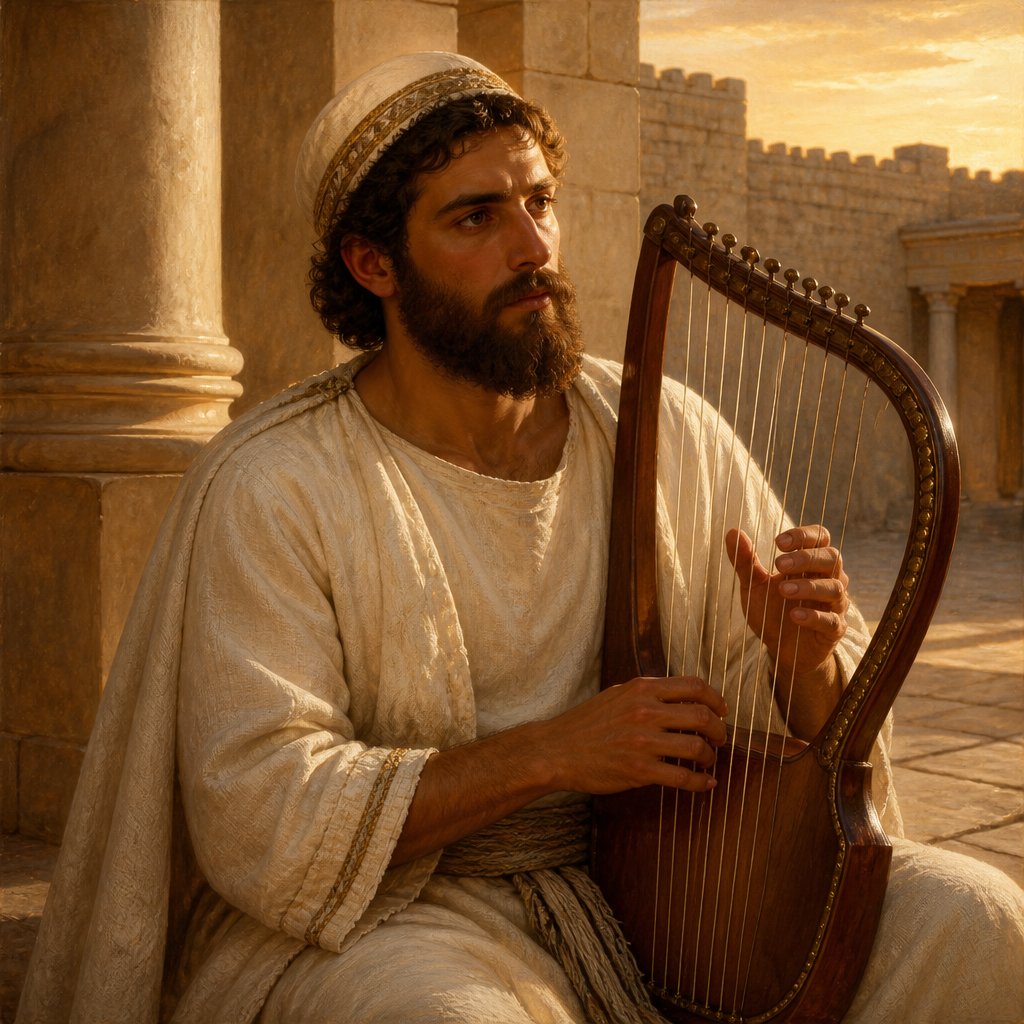
Hashabiah was a prominent Levite musician who served during the reign of King David (c. 1010–970 BC). As one of the six sons of Jeduthun, a chief musician of the king, Hashabiah belonged to a lineage specifically set apart for the ministry of music and prophecy within the Tabernacle and the planned Temple. His role was not merely artistic but deeply spiritual, involving the use of the harp to offer thanks and praise to God.
In the reorganization of Israel’s religious and civil administration under David, Hashabiah was assigned a leadership position through the casting of lots. He was designated to lead the twelfth division of the twenty-four groups of musicians established to ensure continual worship in the sanctuary. This organized system of liturgy reflects the height of the United Monarchy’s religious sophistication and the central role of the Levites in Israel’s spiritual life.
Background and Family
Hashabiah was a member of the tribe of Levi, the tribe designated for the service of the Lord. He is specifically identified as one of the six sons of Jeduthun (also known as Ethan in some contexts), who was one of the three primary directors of music appointed by King David, alongside Asaph and Heman. According to 1 Chronicles 25:3, Hashabiah’s brothers included Gedaliah, Zeri, Jeshaiah, Shimei, and Mattithiah.
The text notes that these six sons worked "under the direction of their father Jeduthun." This family structure was the backbone of the musical guilds in Israel. Growing up in the household of a chief musician, Hashabiah would have been trained from youth in both the technical skill of playing the harp and the spiritual discipline of "prophesying" through music—a term that suggests his musical service was inspired and directed toward the revelation of God’s character.
Major Life Events
The primary record of Hashabiah’s life occurs during the twilight of King David’s reign, as the monarch prepared the infrastructure for the future Temple in Jerusalem. David, along with the commanders of the army, set apart the sons of Asaph, Heman, and Jeduthun for the ministry of prophesying with harps, lyres, and cymbals (1 Chronicles 25:1).
To determine the order of service for these musicians, lots were cast without regard to age or status, ensuring that each group was selected by divine providence rather than human preference. The lot for the twelfth division fell to Hashabiah. As the leader of this division, he was responsible for a group of twelve men, consisting of his own sons and brothers. This structured rotation ensured that the sanctuary was never without a chorus of praise, maintaining a perpetual atmosphere of worship in the presence of the Ark of the Covenant.
Relationship to Other Biblical Figures
Hashabiah’s most significant relationship was with his father, Jeduthun. Jeduthun is described as the "king’s seer" (2 Chronicles 35:15), indicating that the family’s musical output was closely tied to the prophetic office. Hashabiah also worked in concert with his five brothers. This familial bond was the foundation of their professional service; the biblical record specifically counts the group as "six in all," highlighting the completeness of the family unit in their service to the LORD.
Furthermore, Hashabiah served under the authority of King David. The establishment of these musical divisions was part of David’s broader effort to institutionalize the worship of the LORD, moving it from the nomadic style of the Tabernacle to the permanent, grand liturgy of the United Monarchy.
Spiritual Significance
Although Hashabiah is mentioned only briefly, his presence in the biblical text underscores the importance of order and heritage in biblical worship. His life demonstrates that the "ministry of music" was considered a sacred duty on par with the work of the priests who offered sacrifices. By "prophesying with the harp," Hashabiah and his kin acted as intermediaries, using melody and lyric to give thanks and praise to the LORD.
His inclusion in the twelfth division also points to the biblical theme of God’s sovereignty in the distribution of tasks. Whether first or twelfth, Hashabiah’s role was essential to the collective worship of the nation. His legacy is one of faithful service within a family dedicated to the glory of God during Israel’s golden age.
Hashabiah represents the institutionalization of worship during the United Monarchy. His role illustrates that music in the biblical tradition was not merely a background element but a regulated, prophetic ministry essential to the spiritual health of the kingdom. By participating in the twelfth division, he contributes to the biblical model of organized, communal liturgy that would influence both the First and Second Temple periods.
Theologically, Hashabiah’s life reflects the principle of spiritual inheritance. As a son of Jeduthun, he carried forward a legacy of 'prophesying with the harp,' showing how gifts of the Spirit and roles of service were often nurtured within the family unit to serve the larger covenant community of Israel.
Frequently Asked Questions
Who was Hashabiah's father?
Hashabiah was the son of Jeduthun, who was one of the three chief musicians appointed by King David to lead the sanctuary music.
What instrument did Hashabiah play?
According to 1 Chronicles 25:3, Hashabiah and his brothers prophesied with the harp, giving thanks and praise to the LORD.
Which division of musicians did Hashabiah lead?
Hashabiah was chosen by lot to lead the twelfth division of the sanctuary musicians.
How many people were in Hashabiah's musical division?
There were 12 people in his division, consisting of his sons and his brothers.
During which era of Israel's history did Hashabiah live?
He lived during the United Monarchy, specifically during the reign of King David in the 10th century BC.
Family & Relationships
Parents
 Jeduthun, Chief Musician of DavidFather1 Chronicles 25:3Stated
 Hashabiah, Son of JeduthunThis page
 Obed-edomBrother1 Chronicles 16:38
Inferred
Reconstructed through Jeduthun: 1 Chronicles 16:38 ties Obed-edom to Jeduthun; 1 Chronicles 25:3 ties Jeduthun to Hashabiah. No verse states the brother link between Obed-edom and Hashabiah directly.Evidence: 1 Chronicles 16:38; 1 Chronicles 25:3
 Gedaliah, Levite of the United MonarchyBrother1 Chronicles 25:3Stated
 Jeshaiah, Levite of the United MonarchyBrother1 Chronicles 25:3Stated
 Mattithiah, Levite of the United MonarchyBrother1 Chronicles 25:3Stated
 ZeriBrother1 Chronicles 25:3Stated
Connected Figures
Family
Father · 1 Chronicles 25:3
A Levite of the United Monarchy who served as one of King David's three primary chief musicians and a royal seer.
United MonarchyFirst: 1 Chronicles 6:4414 versesChief Musician and King's SeerLevi
Brother · 1 Chronicles 16:38
A Levite during the United Monarchy who hosted the Ark of the Covenant and served as a musician and gatekeeper in the Tabernacle.
United MonarchyFirst: 2 Samuel 6:1019 versesGatekeeper, Musician, and Guardian of the ArkLevi
Brother · 1 Chronicles 25:3
A Levite musician and son of Jeduthun who was appointed by King David to lead the second division of temple singers in Jerusalem.
United MonarchyFirst: 1 Chronicles 25:33 versesMusician and Leader of the second division of Temple singersLevi
Brother · 1 Chronicles 25:3
A Levite musician and son of Jeduthun who served as the leader of the eighth division of sanctuary singers during the reign of King David.
United MonarchyFirst: 1 Chronicles 25:33 versesMusician and Levite LeaderLevi
Brother · 1 Chronicles 25:3
A Levite musician and gatekeeper during the reign of King David who played the lyre during the transport of the Ark of the Covenant.
United MonarchyFirst: 1 Chronicles 15:186 versesLevite musician and gatekeeperLevi
Brother · 1 Chronicles 25:3
A Levite musician and son of Jeduthun who served in the sanctuary during the reign of King David.
United MonarchyFirst: 1 Chronicles 25:33 versesLevite MusicianLevi
Categories
Mentions by Book
- 1 Chronicles3
Scripture References
All 3 indexed verses, in canonical order, from the Berean Standard Bible.
1 Chronicles · 3
- 1 Chronicles 16:38Partial
along with Obed-edom and his sixty-eight relatives. Obed-edom son of Jeduthun, and also Hosah, were to be gatekeepers.
Cited as evidence on a family card; added so References, Key Verses and Mentions by Book share one index.
- 1 Chronicles 25:3
From the sons of Jeduthun: Gedaliah, Zeri, Jeshaiah, Shimei, Hashabiah, and Mattithiah—six in all—under the direction of their father Jeduthun, who prophesied with the harp, giving thanks and praise to the LORD.
- 1 Chronicles 25:19
the twelfth to Hashabiah, his sons, and his brothers—12 in all;
Others Named Hashabiah
Compare all 10 bearers →Hashabiah, Hebronite Official1 Chronicles 26:30
A capable Hebronite official who oversaw 1,700 men in the administration of Israelite affairs west of the Jordan during the United Monarchy.
Hashabiah, Priest of HilkiahNehemiah 12:21
A priest and family head during the time of High Priest Joiakim, representing the ancestral house of Hilkiah in post-exilic Jerusalem.
Hashabiah, Ancestor of Shemaiah1 Chronicles 9:14
A Levite of the Merarite clan during the period of the Exile and Return whose lineage is recorded in the genealogical registers of post-exilic Jerusalem.
Hashabiah, Ancestor of UzziNehemiah 11:22
A Levite descendant of Asaph who lived during the period of the Exile and Return and served as an ancestor to the overseer of the Levites in Jerusalem.
Hashabiah, Levite Leader under EzraEzra 8:19
A prominent Levite leader and priest who assisted Ezra during the return to Jerusalem and participated in the covenant renewal under Nehemiah.
Hashabiah, Son of Amaziah1 Chronicles 6:45
A Levite of the Merarite clan during the era of the conquest and the judges, noted in the genealogies of the temple musicians.
Hashabiah, Son of Kemuel1 Chronicles 27:17
A Levite leader who served as the tribal chief over the tribe of Levi during the administrative reorganization of Israel under King David.
Hashabiah, Ruler of a Half-District of KeilahNehemiah 3:17
A local Judean leader who organized the reconstruction of a portion of Jerusalem's walls during the governorship of Nehemiah.
Hashabiah, Officer of the Levites2 Chronicles 35:9
A high-ranking Levite officer who donated significant livestock for King Josiah’s historic Passover celebration during the Divided Monarchy.