Zeri
Who was Zeri in the Bible?
A Levite musician and son of Jeduthun who served in the sanctuary during the reign of King David.
Zeri was a prominent Levite musician during the United Monarchy of Israel. As one of the six sons of Jeduthun, a chief musician appointed by King David, Zeri occupied a significant role in the formalization of Hebrew liturgical worship. His life and service are documented within the genealogical and administrative records of 1 Chronicles, specifically concerning the division of musical duties in the Tabernacle.
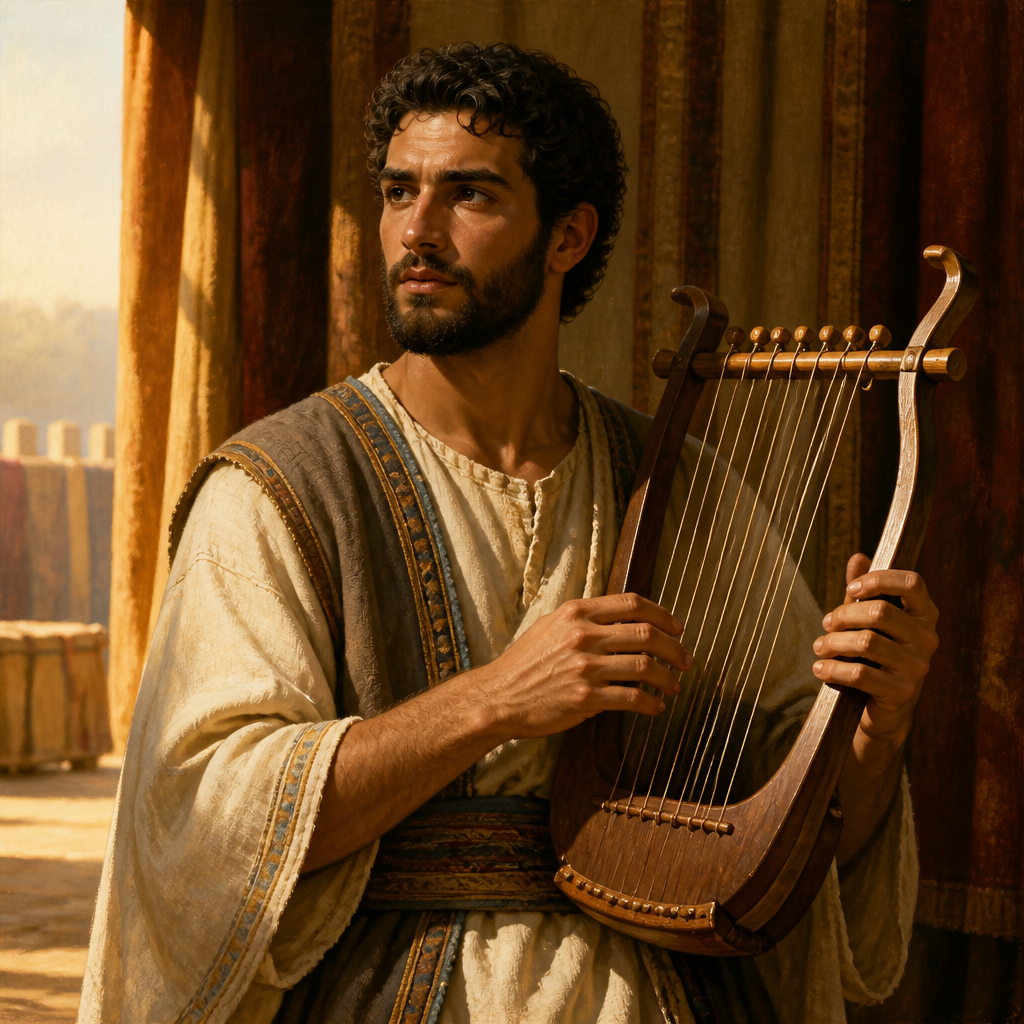
Zeri’s inclusion in the sacred musicians' roster highlights the transition of the Levites from mobile wilderness carriers to specialized ministers of music and prophecy. Along with his brothers, Zeri operated under his father's direct supervision, utilizing instruments like the harp to provide thanks and praise to the LORD. His service was not merely artistic but was described as prophetic in nature, emphasizing the spiritual weight carried by those who led the congregation in song.
Background and Family
Zeri was born into the tribe of Levi, the priestly tribe designated for the service of God in Israel. His father was Jeduthun, one of the three primary musical directors appointed by King David—alongside Asaph and Heman—to oversee the worship at the Tabernacle (and eventually the planned Temple).
Zeri was one of six brothers: Gedaliah, Jeshaiah, Shimei, Hashabiah, and Mattithiah. In the narrative of 1 Chronicles 25:3, Zeri is listed as the second son. This family unit was unique in that they were described as being "under the direction of their father Jeduthun," suggesting a rigorous apprenticeship and a hereditary commitment to the musical arts within the sanctuary.
Major Life Events
Zeri’s life is defined by his appointment to the fourth division of the twenty-four musical courses established by King David. As David reached the end of his reign, he reorganized the Levites to ensure a perpetual and orderly cycle of worship. According to 1 Chronicles 25:9-31, the musical duties were assigned by casting lots, ensuring that the selection was seen as divinely ordained rather than purely political.
"the fourth to Izri, his sons, and his brothers—12 in all;" (1 Chronicles 25:11)
In this passage, Zeri is referred to as "Izri," a common linguistic variation in Hebrew genealogies. As the leader of the fourth lot, Zeri was responsible for a group of twelve men—composed of his immediate sons and kinsmen—who performed their duties in a specific rotation. This structure ensured that professional-quality music and prophetic song were maintained throughout the year.
Relationship to Other Biblical Figures
Zeri’s primary relationship is to his father, Jeduthun. Jeduthun is noted for "prophesying with the harp," indicating that the music Zeri was trained to play was not merely for entertainment but was a vehicle for divine communication and praise. Zeri worked alongside his five brothers, creating a familial guild of musicians. Furthermore, as a Levite, Zeri would have been under the ultimate administrative authority of King David and the high priest, contributing to the cultural and spiritual golden age of the United Monarchy.
Spiritual Significance
Though his biblical record is brief, Zeri represents the biblical principle of orderly worship. The transition from the chaotic period of the Judges to the organized liturgical life of the United Monarchy required individuals like Zeri to dedicate their lives to technical mastery and spiritual sensitivity. The mention of his group "giving thanks and praise to the LORD" (1 Chronicles 25:3) serves as a template for the role of the levitical choir: to direct the hearts of the people toward the character and deeds of God. Zeri stands as a testament to the importance of the "minor" servants whose consistent, scheduled faithfulness maintained the spiritual atmosphere of Israel's national life.
Zeri's significance lies in his role as a foundational member of the Levitical guilds that established the traditions of the Psalms. By participating in the fourth division of musicians, he helped formalize a system of worship that would persist through the First Temple period. His life demonstrates the biblical value of craftsmanship and heritage in the service of the Tabernacle.
Furthermore, the association of Zeri and his family with 'prophesying' through music suggests a deep connection between the arts and the movement of the Holy Spirit. His inclusion in the biblical record underscores that every member of the organized worship structure, not just the high-profile leaders like Jeduthun, was essential for the spiritual health of the nation.
Frequently Asked Questions
Who was Zeri's father?
Zeri was the son of Jeduthun, who was one of the three chief musicians appointed by King David.
Is Zeri the same person as Izri?
Yes, biblical scholars generally identify Izri in 1 Chronicles 25:11 as the same person as Zeri mentioned in 1 Chronicles 25:3, representing a common spelling variation.
What instrument did Zeri play?
While Zeri is generally listed among the musicians, the text specifically mentions his father Jeduthun prophesied with the harp; as part of his father's choir, Zeri likely played stringed instruments such as the harp or lyre.
What was Zeri's specific role in the Tabernacle?
Zeri led the fourth division of musicians, overseeing a group of 12 Levites who were responsible for the musical liturgy in the sanctuary.
How many brothers did Zeri have?
Zeri had five brothers: Gedaliah, Jeshaiah, Shimei, Hashabiah, and Mattithiah, making six sons of Jeduthun in total.
Family & Relationships
Parents
 Jeduthun, Chief Musician of DavidFather1 Chronicles 25:3Stated
 ZeriThis page
 Obed-edomBrother1 Chronicles 16:38
Inferred
Reconstructed through Jeduthun: 1 Chronicles 25:3 ties Zeri to Jeduthun; 1 Chronicles 16:38 ties Jeduthun to Obed-edom. No verse states the brother link between Zeri and Obed-edom directly.Evidence: 1 Chronicles 16:38; 1 Chronicles 25:3
 Gedaliah, Levite of the United MonarchyBrother1 Chronicles 25:3Stated
 Hashabiah, Son of JeduthunBrother1 Chronicles 25:3Stated
 Jeshaiah, Levite of the United MonarchyBrother1 Chronicles 25:3Stated
 Mattithiah, Levite of the United MonarchyBrother1 Chronicles 25:3Stated
Connected Figures
Family
Father · 1 Chronicles 25:3
A Levite of the United Monarchy who served as one of King David's three primary chief musicians and a royal seer.
United MonarchyFirst: 1 Chronicles 6:4414 versesChief Musician and King's SeerLevi
Brother · 1 Chronicles 16:38
A Levite during the United Monarchy who hosted the Ark of the Covenant and served as a musician and gatekeeper in the Tabernacle.
United MonarchyFirst: 2 Samuel 6:1019 versesGatekeeper, Musician, and Guardian of the ArkLevi
Brother · 1 Chronicles 25:3
A Levite musician and son of Jeduthun who was appointed by King David to lead the second division of temple singers in Jerusalem.
United MonarchyFirst: 1 Chronicles 25:33 versesMusician and Leader of the second division of Temple singersLevi
Brother · 1 Chronicles 25:3
A Levite musician and son of Jeduthun who was appointed by King David to lead the twelfth division of sanctuary music during the United Monarchy.
United MonarchyFirst: 1 Chronicles 25:33 versesLevite Musician and Division LeaderLevi
Brother · 1 Chronicles 25:3
A Levite musician and son of Jeduthun who served as the leader of the eighth division of sanctuary singers during the reign of King David.
United MonarchyFirst: 1 Chronicles 25:33 versesMusician and Levite LeaderLevi
Brother · 1 Chronicles 25:3
A Levite musician and gatekeeper during the reign of King David who played the lyre during the transport of the Ark of the Covenant.
United MonarchyFirst: 1 Chronicles 15:186 versesLevite musician and gatekeeperLevi
Categories
Mentions by Book
- 1 Chronicles3
Scripture References
All 3 indexed verses, in canonical order, from the Berean Standard Bible.
1 Chronicles · 3
- 1 Chronicles 16:38Partial
along with Obed-edom and his sixty-eight relatives. Obed-edom son of Jeduthun, and also Hosah, were to be gatekeepers.
Cited as evidence on a family card; added so References, Key Verses and Mentions by Book share one index.
- 1 Chronicles 25:3
From the sons of Jeduthun: Gedaliah, Zeri, Jeshaiah, Shimei, Hashabiah, and Mattithiah—six in all—under the direction of their father Jeduthun, who prophesied with the harp, giving thanks and praise to the LORD.
- 1 Chronicles 25:11
the fourth to Izri, his sons, and his brothers—12 in all;