Gilead, Father of Jephthah
A man living during the era of the Judges in Israel and the father of the judge Jephthah by a prostitute.
Gilead was a resident of the region of Gilead during the turbulent Period of the Judges, approximately in the 12th or 11th century BC. He is primarily identified in the biblical record as the father of Jephthah, a man who would eventually rise to become one of Israel’s prominent deliverers. Gilead represents a complex household dynamic within the tribal structure of Israel, as he fathered children by both his legal wife and a prostitute.
While his individual actions are not detailed extensively, his presence in the text serves to establish the lineage and social standing of Jephthah. His household became a site of domestic conflict after his death, as his legitimate sons sought to protect their inheritance by ostracizing their half-brother. This family division set the stage for Jephthah's exile and eventual return as a 'mighty man of valor.'
Background and Family
Gilead lived during the Period of the Judges, a time characterized by cyclical apostasy and the rise of local charismatic leaders. The biblical text in Judges 11 provides a brief but specific window into his domestic life. Gilead was a man of some standing, as he possessed an inheritance that his sons were eager to protect. He is described explicitly as the biological father of Jephthah. However, Jephthah’s mother was a prostitute, a fact that would have significant social and legal ramifications for the family unit.
Beyond his relationship with Jephthah, Gilead was married to a woman whose name is not recorded. By this wife, he fathered several other sons. This created a fractured household where the distinctions between 'legitimate' heirs and the 'son of another woman' were sharply drawn by the culture of the time.
Major Life Events
The biblical record does not preserve the life events of Gilead beyond his role in fathering his sons. The text focuses on the consequences of his choices. During his lifetime, he apparently provided for Jephthah within the family home, as it was only after Gilead's death (or during the ascendancy of his other sons) that Jephthah was forcibly removed.
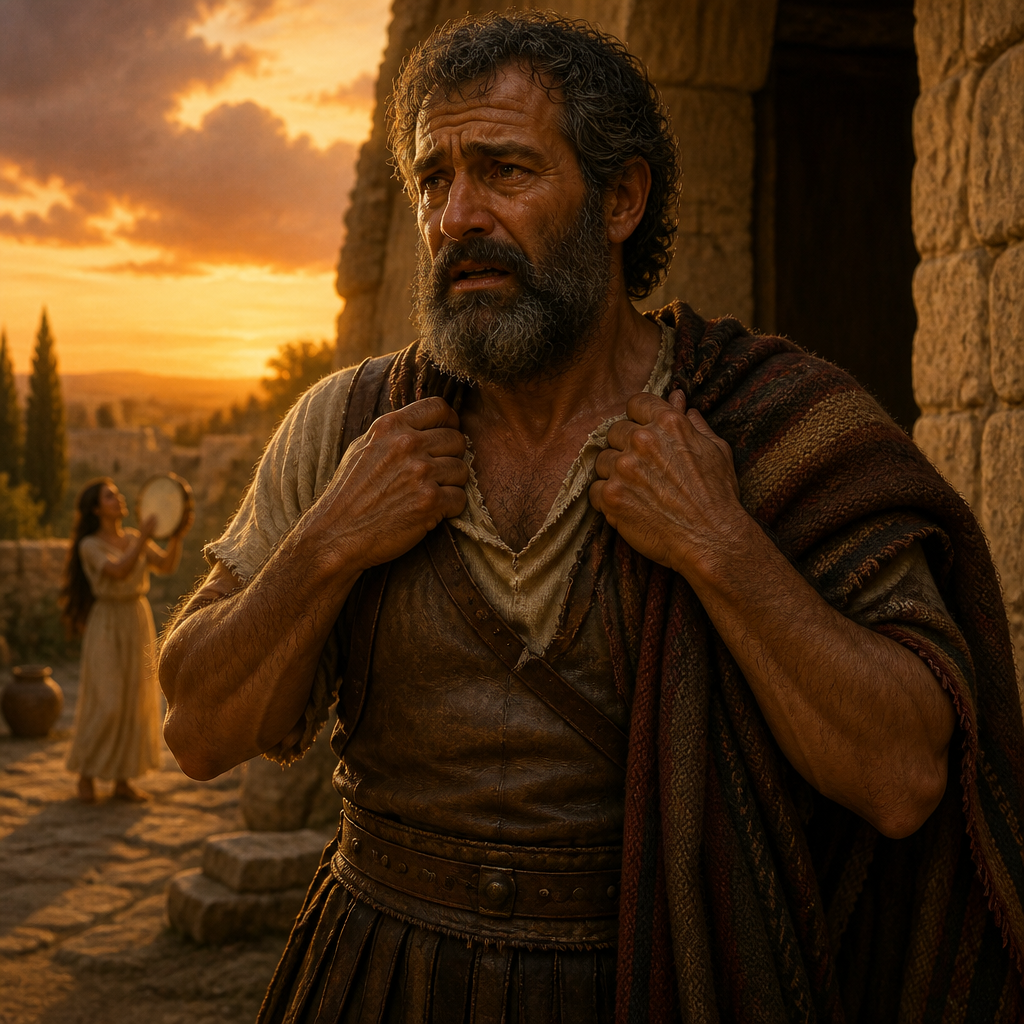
And Gilead’s wife bore him sons who grew up, drove Jephthah out, and said to him, “You shall have no inheritance in our father’s house, because you are the son of another woman.” (Judges 11:2)
This expulsion suggests that while Gilead was alive, his presence may have offered some measure of protection or recognition for Jephthah, despite the circumstances of his birth. Once Gilead was no longer the active head of the household, the social stigma associated with his choice to father a child with a prostitute resulted in the total fracturing of his lineage.
Relationship to Other Biblical Figures
Gilead’s primary relationship in the narrative is with his son, Jephthah. Jephthah is described as a "mighty man of valor," a title that reflects both his personal strength and his eventual status as a judge of Israel. The tension between Gilead’s legitimate sons and Jephthah defines the early narrative of Judges 11. The brothers’ rejection of Jephthah—based on their father’s actions—forced Jephthah into the land of Tob, where he gathered a following of rebels before being called back by the elders of Gilead to lead the defense against the Ammonites.
Spiritual Significance
The account of Gilead and his family highlights the recurring biblical theme of God using individuals from marginalized or complicated backgrounds to achieve national deliverance. Gilead’s decision to father a child with a prostitute created a social outcast, yet through that very child, God provided a savior for the region. The narrative serves as a bridge, explaining the origins of Jephthah and the domestic strife that shaped the character of one of Israel's most polarizing judges. It underscores the reality that even within the covenant community of the Judges era, family dynamics were often marred by the same social and moral complexities found in the surrounding cultures.
Spiritual Significance
Gilead’s inclusion in the book of Judges serves primarily to establish the pedigree and early hardships of Jephthah. His life illustrates the social tensions surrounding inheritance and legitimacy in early Israelite society. By recording Gilead as the father of both the judge and the brothers who expelled him, the text emphasizes the providence of God in raising a leader from a broken and divided family.
Theologically, the story of Gilead’s household demonstrates that God’s choice of a deliverer is not constrained by social standing or the moral purity of one's parentage. Gilead’s legacy is ultimately found in his son Jephthah, who, despite being rejected by his father's house, became the instrument of Israel's victory over the Ammonites.
Frequently Asked Questions
Who was Gilead’s most famous son?
Gilead’s most famous son was Jephthah, who became a mighty man of valor and a judge over Israel.
Who was the mother of Gilead’s son Jephthah?
The Bible states that Jephthah’s mother was a prostitute, distinguishing him from Gilead's other sons.
What happened to Gilead’s family after he died?
After Gilead's sons by his wife grew up, they drove Jephthah away to ensure he would not receive any of their father’s inheritance.
What tribe did Gilead belong to?
The Bible does not explicitly name his tribe, though he lived in the region of Gilead, which was occupied by the tribes of Gad, Reuben, and the half-tribe of Manasseh.
Connected Figures
Categories
Mentions by Book
- Judges2
Family & Relationships
Child
Judges 11:1
Others Named Gilead
Gilead, Member of the Tribe of Gad1 Chronicles 5:14
A descendant of Gad and an ancestor of the families living in the region of Bashan during the Divided Monarchy.
Gilead, Grandson of ManassehNumbers 26:29
A prominent tribal leader and grandson of Manasseh whose descendants formed the primary clans of the Machirite line during the Egyptian Sojourn and the Wilderness wanderings.