Uriah, Father of Meremoth
Who was Uriah, Father of Meremoth, in the Bible?
A member of the priestly family of Hakkoz who lived during the return from the Babylonian Exile and whose son assisted in rebuilding Jerusalem.
This is one of 5 people named Uriah in the Bible. See all 5 →
Uriah, son of Hakkoz, was a significant figure during the Post-Exilic Period, primarily recognized in the biblical record through the priestly service and architectural contributions of his son, Meremoth. Living during the era of the return from Babylon, Uriah represents the continuity of the Levitical and priestly lineages that were essential for the restoration of the Jewish religious system in Jerusalem.
Though Uriah's personal actions are not detailed extensively, his placement within the genealogy of Hakkoz marks him as a member of a prominent priestly house. His legacy is firmly established through his son's leadership in the rebuilding of the Jerusalem walls under Nehemiah and the administration of sacred treasures under Ezra, reflecting the high status and responsibility held by Uriah’s household in the community of the Return.
Background and Family
Uriah was the son of Hakkoz (Nehemiah 3:4). The name Hakkoz appears in the priestly rotations established during the time of King David (1 Chronicles 24:10), identifying Uriah’s family as part of the hereditary priesthood. Following the Babylonian Exile, the descendants of Hakkoz returned to Judah, though they initially faced challenges regarding their genealogical records (Ezra 2:61–62). By the time of Uriah’s prominence, however, the family was clearly reinstated to a position of trust and service within the Temple community.
Major Life Events
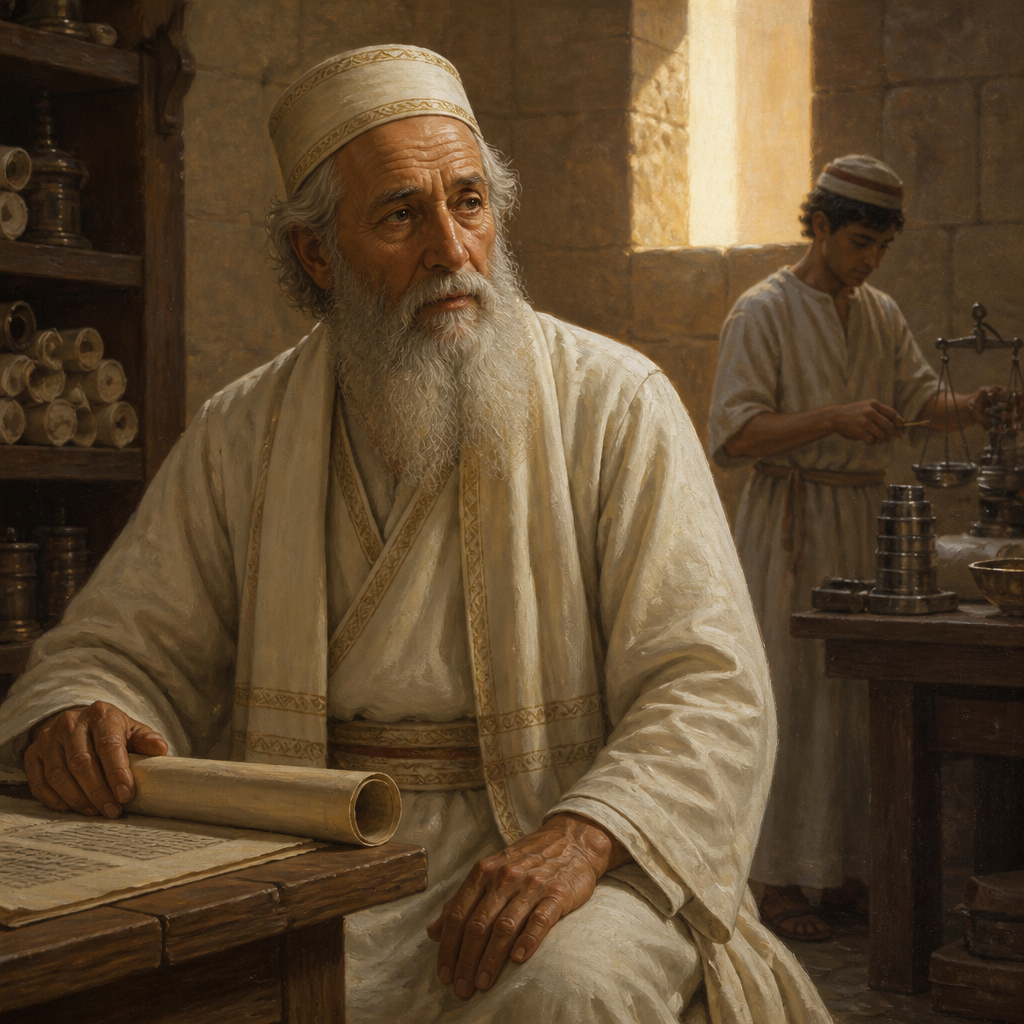
Uriah lived during the pivotal years of the Jewish restoration in the 5th century BC. While the biblical text does not record his specific tasks, his influence is felt through his son, Meremoth. In the fourth day after Ezra’s arrival in Jerusalem (c. 458 BC), Uriah is identified as the father of the priest Meremoth, who was entrusted with the heavy responsibility of weighing and securing the gold, silver, and sacred vessels brought from Babylon (Ezra 8:33). This indicates that Uriah’s household was considered among the most reliable in the priesthood.
In 444 BC, during the rebuilding of the walls of Jerusalem under Nehemiah, Uriah’s family played a vital role. His son Meremoth repaired two distinct sections of the wall. The first section was adjacent to the fish gate (Nehemiah 3:4), and the second was a significant stretch spanning from the doorway of the house of Eliashib the high priest to its very end (Nehemiah 3:21). The fact that Uriah’s son was assigned a section near the High Priest’s residence further underscores the prestige and proximity to power that Uriah’s branch of the family maintained.
Relationship to Other Biblical Figures
Uriah is defined primarily by his relationship to his son, Meremoth, and his father, Hakkoz. He worked alongside other returning families such as the descendants of Berechiah and Baana. His family functioned in close coordination with Ezra the Scribe and the High Priest Eliashib. These relationships place Uriah at the center of the sociopolitical and religious reconstruction of the Second Temple period.
Spiritual Significance
In the context of the Post-Exilic Period, Uriah serves as a symbol of restoration. The preservation of his name and lineage demonstrates the fulfillment of the prophetic promise that the priesthood would endure and return to Zion. His life represents the quiet but essential bridge between the generations that suffered in exile and the generations that physically rebuilt the holy city. By maintaining his family’s identity and priestly calling, Uriah ensured that his son was prepared to handle the most sacred elements of the Temple and the defense of Jerusalem's walls.
Uriah’s importance lies in the preservation of the priestly lineage during a time of national upheaval. As a son of Hakkoz, he belongs to a family that had to prove its legitimacy after the exile, and his son’s eventual prominence proves the family's successful reintegration into the heart of Jewish worship and civic duty.
Furthermore, Uriah is a key figure in the administrative history of the Second Temple. The mention of his name in relation to the weighing of silver and gold (Ezra 8:33) serves as a historical marker for the integrity of the returning exiles. He represents the faithful remnant who kept the traditions and genealogies alive under Persian rule.
Frequently Asked Questions
Who was Uriah's son?
Uriah's son was Meremoth, a prominent priest who assisted Ezra and Nehemiah in the restoration of Jerusalem.
What tribe did Uriah belong to?
Uriah belonged to the tribe of Levi, specifically the priestly line of Hakkoz.
What is the meaning of the name Uriah?
The name Uriah (Uriyah) in Hebrew means 'Yahweh is my light' or 'The light of the LORD'.
When did Uriah live?
Uriah lived during the Exile and Return era, specifically during the 5th century BC, spanning the time of Ezra and Nehemiah.
Did Uriah help rebuild the wall of Jerusalem?
While the Bible records his son Meremoth repairing the wall, Uriah is mentioned as the father and head of the household that provided the labor and leadership for the task.
Family & Relationships
Parents
 Hakkoz, Grandfather of MeremothFatherNehemiah 3:4Stated
 Uriah, Father of MeremothThis page
Children
 Meremoth, Priest of the ReturnSonEzra 8:33Stated
Connected Figures
Family
Father · Nehemiah 3:4
A Jewish man of the post-exilic period whose grandson, Meremoth, played a significant role in rebuilding the walls of Jerusalem under Nehemiah.
Son · Ezra 8:33
A prominent post-exilic priest who served as a royal treasurer and played a vital role in rebuilding Jerusalem's walls under Nehemiah.
Exile and ReturnFirst: Ezra 8:336 versesPriest, Treasurer, BuilderLevi
Categories
Mentions by Book
- Ezra1
- Nehemiah2
Scripture References
All 3 indexed verses, in canonical order, from the Berean Standard Bible.
Ezra · 1
- Ezra 8:33
On the fourth day, in the house of our God, we weighed out the silver and gold and sacred articles into the hand of Meremoth son of Uriah, the priest. Eleazar son of Phinehas was with him, along with the Levites Jozabad son of Jeshua and Noadiah son of Binnui.
Nehemiah · 2
- Nehemiah 3:4
Next to them, Meremoth son of Uriah, the son of Hakkoz, made repairs. Next to him, Meshullam son of Berechiah, the son of Meshezabel, made repairs; and next to him, Zadok son of Baana made repairs as well.
- Nehemiah 3:21
Next to him, Meremoth son of Uriah, the son of Hakkoz, repaired another section, from the doorway of the house of Eliashib to the end of the house.
Others Named Uriah
Compare all 5 bearers →Uriah the Hittite2 Samuel 11:3
A loyal elite soldier in King David’s army whose integrity served as a foil to the king's adultery and eventual plot to have him killed in battle.
Uriah, Companion of EzraNehemiah 8:4
A Jewish leader who stood beside Ezra the scribe during the public reading of the Law in post-exilic Jerusalem.
Uriah, son of ShemaiahJeremiah 26:20
A prophet from Kiriath-jearim who was martyred by King Jehoiakim for prophesying the destruction of Jerusalem and Judah during the Divided Monarchy.
Uriah the Priest2 Kings 16:10
A high priest in Jerusalem during the reign of King Ahaz who facilitated the introduction of a foreign Syrian-style altar into the Temple of the LORD.