Shemaiah, Son of Delaiah
Who was Shemaiah, Son of Delaiah, in the Bible?
A false prophet and conspirator who attempted to intimidate Nehemiah into violating the sanctity of the Temple during the restoration of Jerusalem.
This is one of 26 people named Shemaiah in the Bible. See all 26 →
Shemaiah, son of Delaiah and grandson of Mehetabel, was a figure residing in Jerusalem during the Post-Exilic Period under the governorship of Nehemiah. Though his name appears briefly in the biblical record, his role was pivotal in the psychological warfare waged against the Jewish leadership during the reconstruction of the city's walls. Unlike many of his contemporaries who worked toward the restoration of Israel, Shemaiah was secretly in the employ of foreign adversaries, specifically Tobiah and Sanballat.
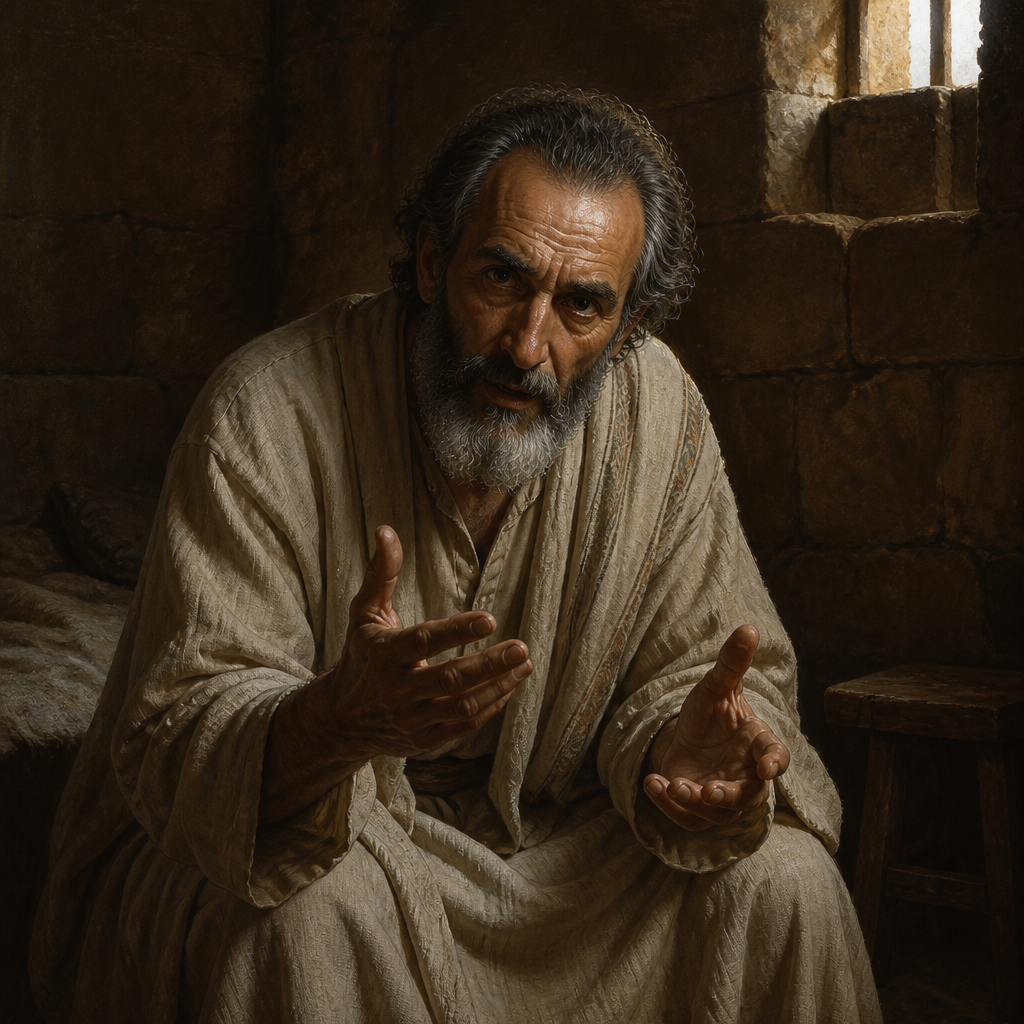
He is primarily identified by his act of self-imposed confinement, which he used as a theatrical backdrop to deliver a deceptive prophecy to Nehemiah. By presenting himself as a man in danger and suggesting that the Temple be used as a sanctuary for hiding, Shemaiah sought to compromise Nehemiah’s integrity and legal standing as a leader. His actions highlight the internal religious and political tensions that plagued the returnees from the Babylonian exile.
Background and Family
Shemaiah was the son of Delaiah and the grandson of Mehetabel. While his specific tribal affiliation is not explicitly stated in the Masoretic Text of Nehemiah 6, his access to the Temple precincts and his proposal to enter the inner sanctuary suggest he may have possessed priestly or Levite heritage, as common laypeople were strictly forbidden from entering the holy places of the Temple. He lived in Jerusalem during the critical months when the city walls were being rebuilt following the return from Babylon in the 5th century BC.
Major Life Events
During the final stages of the wall's construction, Nehemiah’s enemies—Tobiah the Ammonite and Sanballat the Horonite—sought various ways to halt the project. When physical threats and invitations to diplomatic traps failed, they turned to internal subversion. Shemaiah became the instrument of this plot.
Nehemiah visited Shemaiah at his home, where Shemaiah was 'confined' or 'shut up' (Nehemiah 6:10). The nature of this confinement is debated by scholars; it may have been a ritual impurity, a feigned illness, or a symbolic act meant to suggest that he, too, was in mortal danger from the foreign governors. Shemaiah delivered a seemingly urgent message, claiming that assassins were coming by night to kill Nehemiah. He urged Nehemiah to flee with him into the Temple and shut the doors for safety.
Nehemiah immediately recognized the deception. As a layman, entering the Temple to save his life would have been a direct violation of the Mosaic Law (Numbers 18:7) and a sign of cowardice. Nehemiah famously responded, 'Should such a man as I flee? And who is there such as I who would go into the temple to save his life? I will not go in!' (Nehemiah 6:11).
Relationship to Other Biblical Figures
Shemaiah’s primary relationship in the text is his antagonistic interaction with Nehemiah. Although he posed as a concerned colleague or prophet, he was actually a 'hired hand.' Nehemiah later realized that God had not sent Shemaiah; rather, Tobiah and Sanballat had hired him to discredit Nehemiah’s leadership. He worked in concert with other false prophets, including a prophetess named Noadiah, to instill fear in the governor and the Jewish people.
Spiritual Significance
The account of Shemaiah serves as a warning against the 'enemy within.' In the Post-Exilic Period, the greatest threats to the community were often not the surrounding nations, but those within the covenant community who were willing to compromise spiritual laws for political or financial gain. Shemaiah’s misuse of the prophetic office and his attempt to lead a righteous man into sin illustrates the danger of false spirituality. Nehemiah’s discernment in identifying Shemaiah’s false prophecy emphasizes the importance of weighing all 'revelations' against the established Word of God and the requirements of one's specific calling.
Shemaiah represents the challenge of discerning false prophecy during times of national and spiritual crisis. His attempt to manipulate Nehemiah through fear and the subversion of Temple law highlights the ongoing conflict between authentic spiritual leadership and politically motivated religious deception. The episode serves as a testament to Nehemiah's discernment and his unwavering commitment to the Law over personal safety.
Furthermore, the mention of Shemaiah’s lineage (son of Delaiah, son of Mehetabel) adds a layer of formal identification that contrasts his high social or religious standing with his moral failure. His actions underscore the reality that not all who returned from the Exile were devoted to the singular cause of God's glory, necessitating constant vigilance among the faithful.
Frequently Asked Questions
Why did Shemaiah want Nehemiah to go into the Temple?
Shemaiah claimed it was for Nehemiah's safety from assassins, but his true motive was to make Nehemiah commit a sin by entering a restricted area, thereby ruining his reputation and authority.
Was Shemaiah a real prophet?
Nehemiah 6:12 explicitly states that God had not sent him. While he functioned in the role of a prophet, he was a 'hired' false prophet working for Nehemiah's enemies.
What does it mean that Shemaiah was 'confined to his house'?
The text does not specify the reason, but it was likely a ruse to draw Nehemiah to him and to create a sense of shared danger to make his false prophecy more believable.
Who hired Shemaiah to trick Nehemiah?
He was hired by Tobiah the Ammonite and Sanballat the Horonite, the primary political opponents of the Jerusalem wall project.
How did Nehemiah know Shemaiah was lying?
Nehemiah realized the suggestion to hide in the Temple contradicted God's Law for a layman and sensed that the fear-based message did not align with a true word from God.
Family & Relationships
Parents
 Delaiah, Father of ShemaiahFatherNehemiah 6:10Stated
 Shemaiah, Son of DelaiahThis page
Extended family
 Mehetabel, Father of DelaiahGrandfatherNehemiah 6:10Stated
Connected Figures
Family
Father · Nehemiah 6:10
A man of the post-exilic period whose son, Shemaiah, attempted to intimidate Nehemiah through a false prophecy during the rebuilding of Jerusalem's walls.
Grandfather · Nehemiah 6:10
Mehetabel was a Jewish man of the post-exilic period, identified as the grandfather of the false prophet Shemaiah who opposed Nehemiah.
Categories
Mentions by Book
- Nehemiah2
Scripture References
All 2 indexed verses, in canonical order, from the Berean Standard Bible.
Nehemiah · 2
- Nehemiah 6:10
Later, I went to the house of Shemaiah son of Delaiah, the son of Mehetabel, who was confined to his house. He said: “Let us meet at the house of God inside the temple. Let us shut the temple doors because they are coming to kill you—by night they are coming to kill you!”
- Nehemiah 6:12Partial
I realized that God had not sent him, but that he had uttered this prophecy against me because Tobiah and Sanballat had hired him.
Cited as a key verse; added so References, Key Verses and Mentions by Book share one index.
Others Named Shemaiah
Compare all 26 bearers →Shemaiah, Priest of the House of HarimEzra 10:21
A descendant of Harim who was among those recorded during the post-exilic reforms led by Ezra.
Shemaiah, Levite of the Post-Exilic Period1 Chronicles 9:14
A descendant of Merari and son of Hasshub, Shemaiah was a prominent Levite who resettled in Jerusalem during the post-exilic restoration.
Shemaiah, Levite of the Josiah Passover2 Chronicles 35:9
A prominent Levite officer during the Divided Monarchy who provided thousands of livestock for King Josiah’s historic Passover celebration.
Shemaiah, Leader of the ReturnEzra 8:16
A Jewish leader summoned by Ezra during the journey from Babylon to Jerusalem to help secure ministers for the house of God.
Shemaiah, Chief of the Elizaphanites1 Chronicles 15:8
A Levite leader and chief of the Elizaphanites who assisted King David in transporting the Ark of the Covenant to Jerusalem.
Shemaiah, Layman of the House of HarimEzra 10:31
Shemaiah was a Judean returnee from the Babylonian exile who is listed among the descendants of Harim in the genealogical records of Ezra 10.
Shemaiah, Descendant of Joel1 Chronicles 5:4
A member of the tribe of Reuben and a descendant of Joel, Shemaiah was the father of Gog in the line of Reubenite tribal leadership.
Shemaiah, Descendant of Jeduthun1 Chronicles 9:16
A Levite of the post-exilic period and a descendant of Jeduthun, recognized as the father of Obadiah (also known as Abda) who returned to Jerusalem.
Shemaiah, Guard of the East GateNehemiah 3:29
A faithful Levite or official who served as the guard of the East Gate and assisted in repairing the walls of Jerusalem under Nehemiah.
Shemaiah, Father of Uriah the ProphetJeremiah 26:20
A resident of Kiriath-jearim during the Divided Monarchy and the father of the martyr-prophet Uriah.
Shemaiah the NehelamiteJeremiah 29:24
A false prophet among the Judean exiles in Babylon who opposed Jeremiah and was condemned by God for preaching rebellion.
Shemaiah, Levite of the Hezekian Reforms2 Chronicles 31:15
A faithful Levite assistant who managed the distribution of consecrated offerings to priestly families during the religious reforms of King Hezekiah.
Shemaiah, Simeonite of the Divided Monarchy1 Chronicles 4:37
A member of the tribe of Simeon and the father of Shimri, identified in the post-conquest genealogical records of 1 Chronicles.
Shemaiah, Son of Obed-edom1 Chronicles 26:4
The firstborn son of Obed-edom and a Levite gatekeeper known for his great strength and the leadership of his capable family during the United Monarchy.
Shemaiah, Priest of the ReturnNehemiah 10:8
A prominent priest who returned from the Babylonian exile and signed the renewed covenant under Nehemiah.
Shemaiah, Descendant of David1 Chronicles 3:22
A member of the Davidic royal line and the father of six sons listed in the post-exilic genealogies of Judah.
Shemaiah, Levite of the Jeduthunites2 Chronicles 29:14
A Levite descendant of Jeduthun who participated in the sanctification of the temple during the reforms of King Hezekiah.
Shemaiah, Father of DelaiahJeremiah 36:12
A prominent man of the late Divided Monarchy whose son served as a high-ranking official in the court of King Jehoiakim of Judah.
Shemaiah, Father of Jonathan the PriestNehemiah 12:35
A Levite priest of the post-exilic period and the father of Jonathan, serving as a vital link in the lineage of the Asaphite singers during the restoration of Jerusalem.
Shemaiah, Musician at the Wall DedicationNehemiah 12:36
A Levite musician and associate of Ezra who participated in the joyful dedication of the rebuilt walls of Jerusalem.
Shemaiah, Post-Exilic SingerNehemiah 12:42
A singer and member of the musical ensembles that participated in the formal dedication of the rebuilt walls of Jerusalem during the time of Nehemiah.
Shemaiah, Levite of the Teaching Mission2 Chronicles 17:8
A Levite commissioned by King Jehoshaphat to travel throughout the cities of Judah and teach the Book of the Law to the people.
Shemaiah, Levite Scribe of the United Monarchy1 Chronicles 24:6
A Levite scribe during the United Monarchy responsible for recording the official divisions and assignments of the priesthood under the administration of King David.
Shemaiah, Descendant of AdonikamEzra 8:13
A descendant of Adonikam who was among the third group of his family to return from the Babylonian exile under the leadership of Ezra.
Shemaiah the Prophet of the United Monarchy1 Kings 12:22
A prophet during the reign of Rehoboam who prevented a civil war and later prophesied during the invasion of Pharaoh Shishak.