Sallu, Son of Meshullam
Who was Sallu, Son of Meshullam, in the Bible?
A prominent Benjamite who was among the first of the returning exiles to resettle in Jerusalem after the Babylonian captivity.
This is one of 2 people named Sallu in the Bible. See all 2 →
Sallu, the son of Meshullam, was a member of the tribe of Benjamin who played a role in the restoration of Jerusalem following the Babylonian Exile. His lineage is meticulously preserved in the records of the chronicler, tracing his ancestry back through Hodaviah and Hassenuah. This genealogical record serves to establish his legal and ancestral right to reside within the holy city during a period of fragile reconstruction.
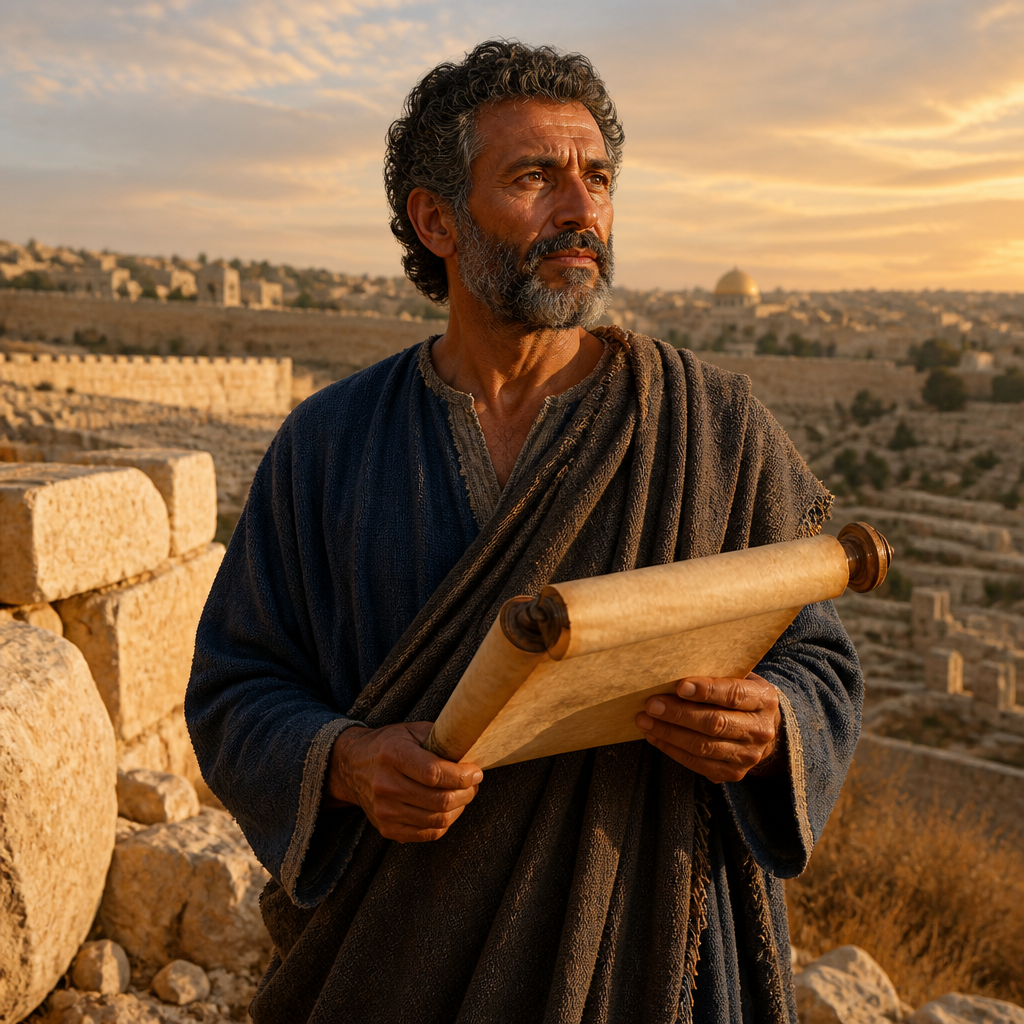
His presence in Jerusalem is recorded in the context of the repatriation of the Jewish people, a time when the city was being repopulated by those returning from Persia. As a representative of the tribe of Benjamin, Sallu was part of a select group of laypeople who chose to dwell in the ruins of Jerusalem to facilitate its physical and spiritual revival.
Background and Family
Sallu is identified in the biblical record through his specific patriarchal descent. He is the son of Meshullam, the grandson of Hodaviah, and the great-grandson of Hassenuah. This four-generation lineage is significant because it anchors him firmly within the tribe of Benjamin. During the Post-Exilic Period, demonstrating one’s tribal heritage was essential for maintaining social order, land rights, and participation in the religious life of the community. The mention of his family indicates that his household was among the notable Benjamite families who survived the exile and maintained their identity.
Major Life Events
The primary event associated with Sallu is his resettlement in Jerusalem. According to 1 Chronicles 9, the first inhabitants to return to their possessions in their own cities included Israelites, priests, Levites, and temple servants. Sallu is listed among the Benjamites who took up residence in Jerusalem itself, rather than settling in the outlying rural territories. This decision was often a matter of both courage and duty, as Jerusalem remained a vulnerable and partially ruined site during the early years of the return.
Relationship to Other Biblical Figures
Sallu’s primary recorded relationships are strictly genealogical. He is linked to his father, Meshullam, and his ancestors Hodaviah and Hassenuah. Within the broader narrative of the return, he is grouped with other tribal leaders from Judah and Benjamin who coordinated the repopulation of the city. While the text does not record specific interactions between Sallu and the governors or high priests of the time, his inclusion in the list of 1 Chronicles 9 places him in the company of those working under the administrative era of the restoration.
Spiritual Significance
While Sallu is mentioned only briefly, his spiritual significance lies in his commitment to the restoration of the covenant community. By returning to Jerusalem, Sallu participated in the fulfillment of prophetic promises regarding the end of the exile. The preservation of his name in the sacred record highlights the biblical emphasis on individual identity within the corporate body of Israel. He represents the "remnant"—those who were willing to leave the relative security of Babylon to rebuild the center of Jewish worship and life.
The inclusion of Sallu in the post-exilic genealogies underscores the importance of tribal continuity in the restoration of Israel. His presence in Jerusalem signifies the fulfillment of God's promise to return His people to their land, specifically highlighting that the tribe of Benjamin remained an integral part of the southern kingdom's identity alongside Judah. In the theological framework of the Chronicler, Sallu represents the faithful commoner whose presence was necessary for the city to function once again as a holy site.
Frequently Asked Questions
Which tribe did Sallu belong to?
Sallu was a member of the tribe of Benjamin, as specified in 1 Chronicles 9:7.
Who was Sallu's father?
Sallu was the son of Meshullam.
When did Sallu live?
Sallu lived during the Exile and Return period (Post-Exilic Period), specifically when the Jewish people were returning from Babylon to Jerusalem.
Where did Sallu live after the exile?
Sallu was among those who chose to reside in the city of Jerusalem.
What is the meaning of the name Sallu?
The name Sallu (H5543D) is derived from a root meaning 'weighed' or 'exalted'.
Family & Relationships
Parents
 Meshullam, Son of HodaviahFather1 Chronicles 9:7Stated
 Sallu, Son of MeshullamThis page
Extended family
 HassenuahGreat-Grandparent1 Chronicles 9:7Stated
Connected Figures
Family
Father · 1 Chronicles 9:7
A Benjamite who returned from the Babylonian exile and settled in Jerusalem as a head of a household.
Great-Grandparent · 1 Chronicles 9:7
A patriarch of the tribe of Benjamin whose descendants served as civic and religious leaders in Jerusalem during the Post-Exilic period.
Exile and ReturnFirst: 1 Chronicles 9:73 versesPatriarchal tribal headBenjamin
Categories
Mentions by Book
- 1 Chronicles1
Scripture References
All 1 indexed verse, in canonical order, from the Berean Standard Bible.
1 Chronicles · 1
- 1 Chronicles 9:7
From the Benjamites: Sallu son of Meshullam, the son of Hodaviah, the son of Hassenuah;
Others Named Sallu
Compare all 2 bearers →Sallu, Priest of the ReturnNehemiah 12:7
A prominent head of a priestly family who returned to Jerusalem from the Babylonian exile during the leadership of Zerubbabel and Jeshua.