Daughter of Shecaniah
Who was Daughter of Shecaniah in the Bible?
A woman of the Judean aristocracy during the Post-Exilic Period whose marriage to Tobiah the Ammonite created a political alliance that complicated Nehemiah's efforts to rebuild Jerusalem.
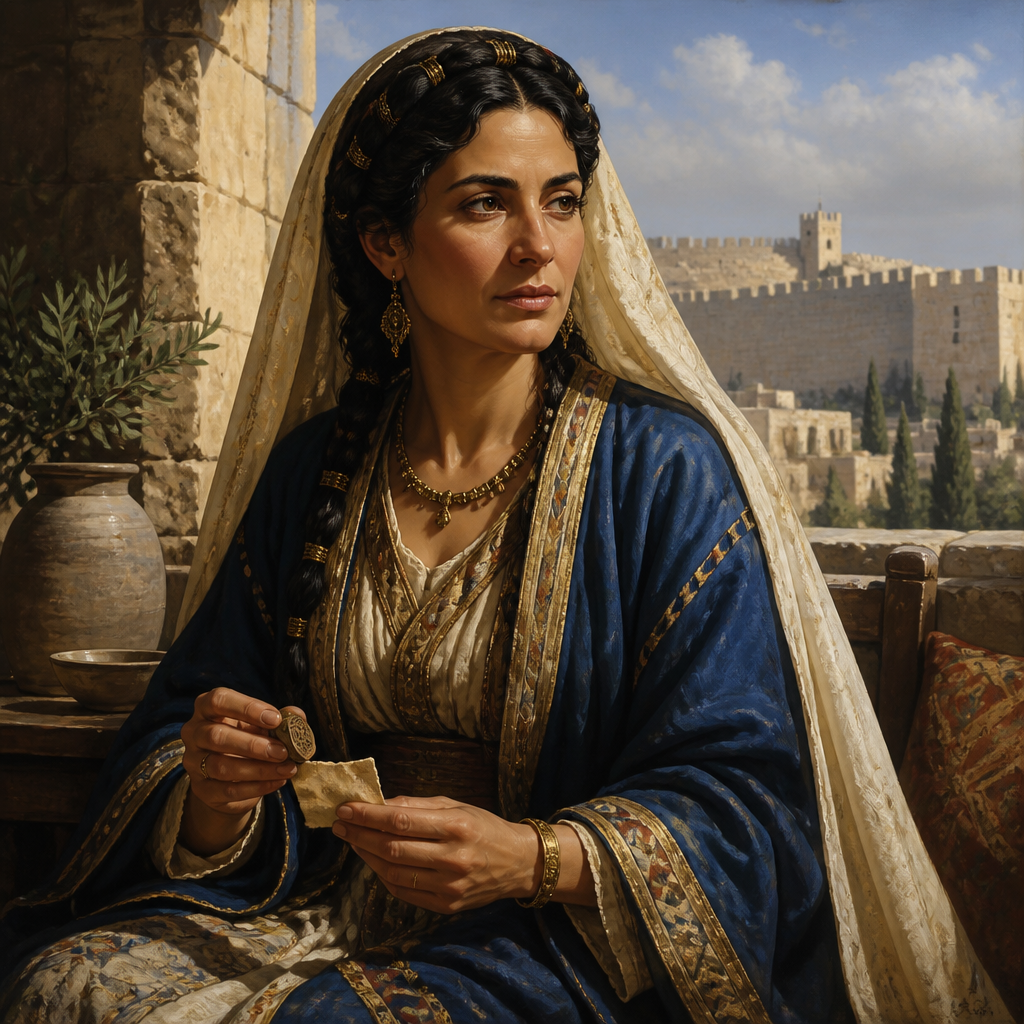
The daughter of Shecaniah was a Jewish woman living in Jerusalem during the mid-5th century BC, following the return of the Jewish exiles from Babylon. She is mentioned exclusively in the Book of Nehemiah in the context of political intrigue and social compromise among the Judean nobility. As the daughter of Shecaniah son of Arah, she belonged to a prominent family within the community of returnees.
Her historical significance is defined by her marriage to Tobiah the Ammonite, a high-ranking official who served as one of the primary antagonists to Nehemiah’s reconstruction of the city walls. This union was part of a broader pattern of intermarriage between the Jewish elite and foreign leaders, which created conflicting loyalties that threatened the religious and structural integrity of the Jewish restoration project.
Background and Family
The daughter of Shecaniah lived during the Post-Exilic Period, specifically during the governorship of Nehemiah (c. 444 BC). While her personal name is not recorded in the biblical text, her lineage identifies her as a member of the Judean upper class. Her father, Shecaniah son of Arah, was a man of significant standing in Jerusalem. The family of Arah is listed among those who returned from Babylon with Zerubbabel (Ezra 2:5), numbering 775 members, which suggests a large and influential clan.
Marriage and Alliance
The primary mention of this woman in Scripture occurs in Nehemiah 6:18, which explains the social pressure Nehemiah faced while trying to secure Jerusalem. She was married to Tobiah the Ammonite, an official who is frequently described as "the servant" or "the Ammonite official." This marriage was not merely a domestic arrangement but a strategic political alliance. Through this union, Tobiah—a foreigner who opposed the fortification of Jerusalem—became the son-in-law of Shecaniah, effectively embedding himself into the heart of Jewish society.
Major Life Events
Because she is mentioned only in a genealogical and political context, the specific events of her life are largely unknown. However, her marriage served as a catalyst for the internal opposition Nehemiah encountered. Nehemiah 6:18 notes that "many in Judah were bound by oath" to Tobiah because of his familial ties through her and her father. This suggest that her presence in Tobiah's life provided him with a legal and social standing that he used to subvert Nehemiah’s authority.
Furthermore, the text notes that her son, Jehohanan, continued this trend by marrying the daughter of Meshullam son of Berechiah, another prominent leader. This indicates that the daughter of Shecaniah was a central figure in a network of intermarriages that linked the Ammonite leadership with several high-ranking Jewish families.
Relationship to Other Biblical Figures
Her most significant relationships were with the men who defined the politics of the restoration. As the wife of Tobiah, she was tied to a man who mocked the building of the wall (Nehemiah 4:3) and conspired to harm Nehemiah (Nehemiah 6:1-14). As the daughter of Shecaniah, she represented the willingness of some Jewish families to assimilate with neighboring nations for political or economic advantage. Her son, Jehohanan, further solidified these ties, showing that her influence extended into the next generation of the Judean aristocracy.
Spiritual Significance
In the narrative of Nehemiah, the daughter of Shecaniah serves as an unnamed but pivotal example of the "unholy alliances" that the prophets and leaders of the return warned against. Her marriage illustrates the complexity of the "mixed marriages" issue addressed in both Ezra and Nehemiah. She represents the internal threat to the community—not through open warfare, but through the quiet erosion of distinctiveness through social and familial compromise. Her role highlights the difficulty Nehemiah faced: he was not just fighting enemies outside the walls, but a web of kinship inside the walls that favored his enemies.
The daughter of Shecaniah represents the social and political complexities of the post-exilic community in Jerusalem. Her marriage to Tobiah the Ammonite is cited as a specific reason why the Judean nobles were hesitant to fully support Nehemiah, as they were 'bound by oath' to a man who was technically an enemy of the state but a relative by marriage. This underscores the biblical theme of the dangers of compromising religious and national identity through strategic alliances with surrounding pagan cultures.
Frequently Asked Questions
Who was the daughter of Shecaniah?
She was a Judean woman of the post-exilic period, the daughter of Shecaniah son of Arah, and the wife of Tobiah the Ammonite.
Why is she important in the Book of Nehemiah?
Her marriage to Tobiah created a conflict of interest for the Jewish nobility, making it difficult for Nehemiah to oppose Tobiah's interference in the rebuilding of Jerusalem.
Who was her husband?
Her husband was Tobiah the Ammonite, a prominent official and adversary of Nehemiah.
Did she have children?
Yes, the Bible mentions her son, Jehohanan, who also married into a prominent Jewish family (the daughter of Meshullam).
What does her marriage represent in the Bible?
It represents the issue of intermarriage and the compromise of Jewish identity during the restoration of Jerusalem after the Babylonian exile.
Family & Relationships
Parents
 Shecaniah, Son of ArahFatherNehemiah 6:18Stated
 Tobiah the Ammonite officialHusbandNehemiah 2:10
Inferred
No verse names Daughter of Shecaniah and Tobiah together; the husband link is carried from the surrounding genealogy and is not stated in Scripture.Evidence: Nehemiah 2:10
 Daughter of ShecaniahThis page
Children
 Jehohanan, Son of TobiahSonNehemiah 6:18Stated
Connected Figures
Family
Father · Nehemiah 6:18
A prominent Judean whose familial ties to Tobiah the Ammonite created significant political challenges for Nehemiah during the reconstruction of Jerusalem.
Exile and ReturnFirst: Nehemiah 6:181 versesProminent Judean leader / Aristocrat
Husband · Nehemiah 2:10
An Ammonite official and influential adversary who persistently opposed Nehemiah’s efforts to rebuild the walls of Jerusalem during the Post-Exilic Period.
Exile and ReturnFirst: Nehemiah 2:1013 versesAmmonite official
Son · Nehemiah 6:18
An Ammonite-Judahite noble whose marriage into a prominent Jewish family facilitated his father's subversive influence in Jerusalem during the time of Nehemiah.
Exile and ReturnFirst: Nehemiah 6:182 versesNoble / Political Liaison
Categories
Mentions by Book
- Nehemiah2
Scripture References
All 2 indexed verses, in canonical order, from the Berean Standard Bible.
Nehemiah · 2
- Nehemiah 2:10Partial
But when Sanballat the Horonite and Tobiah the Ammonite official heard about this, they were deeply disturbed that someone had come to seek the well-being of the Israelites.
Cited as evidence on a family card; added so References, Key Verses and Mentions by Book share one index.
- Nehemiah 6:18
For many in Judah were bound by oath to him, since he was a son-in-law of Shecaniah son of Arah, and his son Jehohanan had married the daughter of Meshullam son of Berechiah.