Ephah, Son of Jahdai
Who was Ephah, Son of Jahdai, in the Bible?
Ephah was a member of the tribe of Judah mentioned in the genealogical records of Caleb, specifically listed as one of the six sons of Jahdai.
This is one of 3 people named Ephah in the Bible. See all 3 →
Ephah is a biblical figure belonging to the tribe of Judah during the Egypt and Wilderness era's genealogical reconstruction. He is recorded in the first book of Chronicles, a text primarily concerned with the lineage of the Davidic line and the preservation of the tribal heritage of Israel. Ephah is identified as one of the six sons of Jahdai, who was himself part of the complex and extensive family of Caleb, the son of Hezron.
His inclusion in the biblical narrative serves to document the expansion of the clans of Judah.
Background and Family
Ephah appears in the genealogical records of 1 Chronicles 2, a chapter dedicated to the descendants of Judah. According to the text, Ephah was the son of Jahdai. The identity of Jahdai himself is somewhat obscured by the surrounding text, but he is situated within the lineage of Caleb (the son of Hezron). Ephah is listed alongside five brothers: Regem, Jotham, Geshan, Pelet, and Shaaph.
The sons of Jahdai: Regem, Jotham, Geshan, Pelet, Ephah, and Shaaph. (1 Chronicles 2:47, BSB)
The family tree of Caleb is particularly detailed in 1 Chronicles 2, emphasizing the strength and proliferation of his descendants. Ephah belongs to this prestigious line, which was known for its faithfulness during the initial conquest of Canaan and its later prominence in the territory of Judah.
Major Life Events
The biblical record does not provide specific biographical details or major life events for Ephah beyond his birth and parentage. In the context of 1 Chronicles, his "event" is his inclusion in the sacred record. During the Egypt and Wilderness era, these genealogies were crucial for establishing land claims, social standing, and religious duties. As a son of Jahdai and a descendant of Caleb, Ephah represented a specific branch of the Judean aristocracy or landed gentry.
Relationship to Other Biblical Figures
Ephah is primarily defined by his relationships to his father, Jahdai, and his siblings. His brothers—Regem, Jotham, Geshan, Pelet, and Shaaph—form a significant fraternal group within the tribe. The text also suggests broader connections to the house of Caleb, linking Ephah to other notable figures such as Mesha, Haran, and Achsah, though the exact nature of these relationships (whether as direct siblings or more distant cousins) is a subject of scholarly discussion due to the dense and occasionally overlapping nature of the chronicler's lists.
Spiritual Significance
The spiritual significance of Ephah lies in the theology of the Chronicler. By recording the name of Ephah, the Bible affirms that every member of the covenant community is known to God. In the post-exilic period when 1 Chronicles was compiled, remembering individuals like Ephah helped the returning Jews reclaim their identity. Ephah serves as a testament to the fulfillment of the promise to Abraham that his descendants would be numerous, specifically through the line of Judah from which the Messiah would eventually come.
Ephah’s significance is found in the preservation of the tribe of Judah's lineage. As part of the Calebite branch, he represents the fulfillment of God's promise to increase the strength of Judah.
Theologically, Ephah exemplifies the 'quiet' members of the faith community. Though he performed no recorded miracles and gave no recorded speeches, his placement in the Word of God highlights the importance of the family unit and the preservation of a godly heritage within the chosen nation.
Frequently Asked Questions
Who was Ephah's father?
According to 1 Chronicles 2:47, Ephah was the son of Jahdai.
Which tribe did Ephah belong to?
Ephah belonged to the tribe of Judah, specifically within the lineage of Caleb.
How many brothers did Ephah have?
Ephah is listed with five brothers: Regem, Jotham, Geshan, Pelet, and Shaaph.
In which book of the Bible is Ephah mentioned?
This specific Ephah is mentioned only once in the Bible, in 1 Chronicles 2:47.
What does the name Ephah mean?
The Hebrew name Ephah (עֵיפָה) generally means 'darkness' or 'obscurity,' though in a genealogical context, it serves as a standard personal name.
Family & Relationships
Parents
 JahdaiFather1 Chronicles 2:47Stated
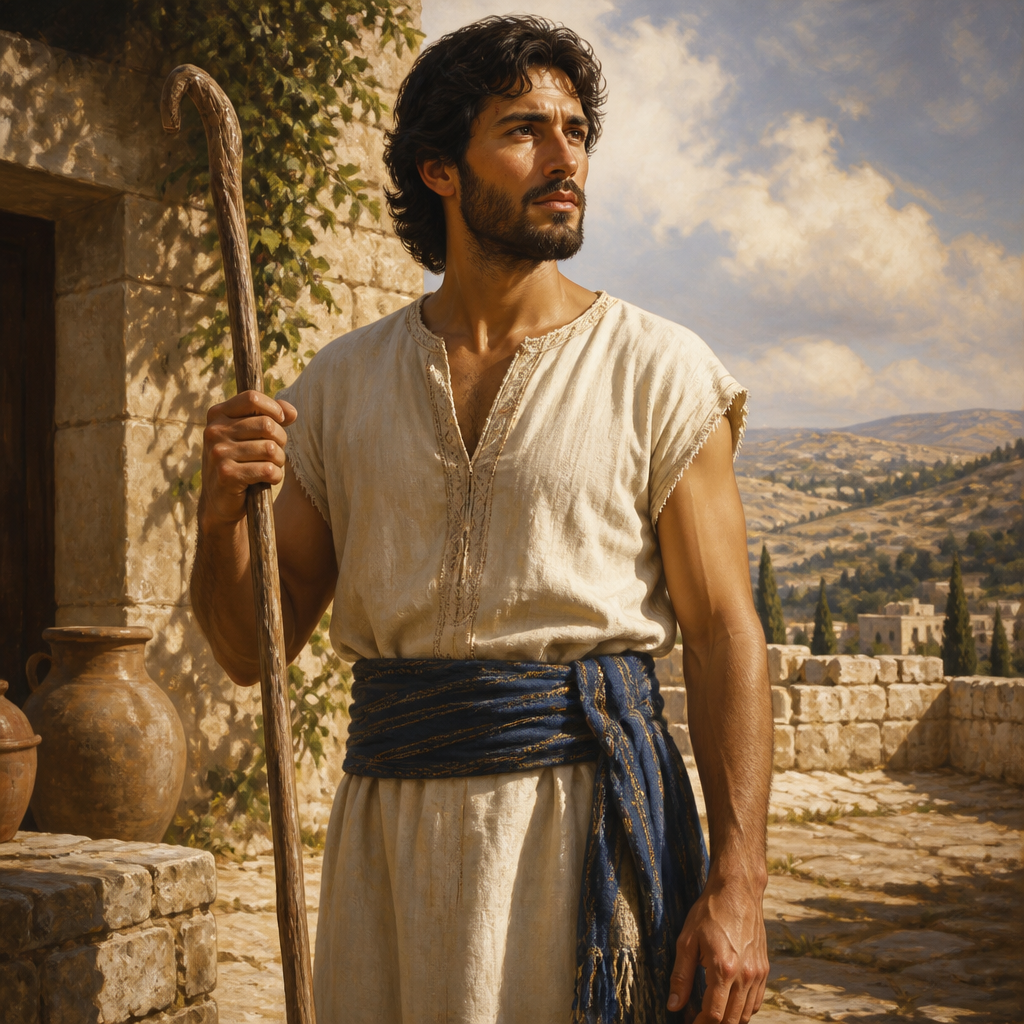 Ephah, Son of JahdaiThis page
 GeshanBrother1 Chronicles 2:47Stated
 Jotham, Son of JahdaiBrother1 Chronicles 2:47Stated
 Pelet, Son of JahdaiBrother1 Chronicles 2:47Stated
 RegemBrother1 Chronicles 2:47Stated
 Shaaph, Son of JahdaiBrother1 Chronicles 2:47Stated
Connected Figures
Family
Father · 1 Chronicles 2:47
A member of the tribe of Judah mentioned in the genealogies of 1 Chronicles, known as the father of six sons.
Egypt and WildernessFirst: 1 Chronicles 2:472 versespatriarchJudah
Brother · 1 Chronicles 2:47
A descendant of the tribe of Judah listed among the sons of Jahdai in the genealogical records of 1 Chronicles.
Egypt and WildernessFirst: 1 Chronicles 2:4710 versesTribal leader or head of householdJudah
Brother · 1 Chronicles 2:47
A member of the tribe of Judah and descendant of Caleb, listed as the second son of Jahdai in the genealogical records of the Egypt and Wilderness era.
Brother · 1 Chronicles 2:47
A descendant of Judah through the line of Caleb who is listed among the six sons of Jahdai in the genealogical records of 1 Chronicles.
Brother · 1 Chronicles 2:47
A member of the Tribe of Judah listed in the genealogical records of 1 Chronicles during the Egypt and Wilderness era.
Brother · 1 Chronicles 2:47
A descendant of Judah through the line of Caleb, identified as the son of Jahdai in the genealogical records of 1 Chronicles.
Mentions by Book
- Exodus1
- 1 Chronicles9
Scripture References
All 10 indexed verses, in canonical order, from the Berean Standard Bible.
Exodus · 1
- Exodus 17:10Partial
Joshua did as Moses had instructed him and fought against the Amalekites, while Moses, Aaron, and Hur went up to the top of the hill.
Cited as evidence on a family card; added so References, Key Verses and Mentions by Book share one index.
1 Chronicles · 9
- 1 Chronicles 2:18Partial
Caleb son of Hezron had children by his wife Azubah and by Jerioth. These were the sons of Azubah: Jesher, Shobab, and Ardon.
Cited as evidence on a family card; added so References, Key Verses and Mentions by Book share one index.
- 1 Chronicles 2:42Partial
The sons of Caleb the brother of Jerahmeel: Mesha his firstborn, who was the father of Ziph, and Mareshah his second son, who was the father of Hebron.
Cited as evidence on a family card; added so References, Key Verses and Mentions by Book share one index.
- 1 Chronicles 2:43Partial
The sons of Hebron: Korah, Tappuah, Rekem, and Shema.
Cited as evidence on a family card; added so References, Key Verses and Mentions by Book share one index.
- 1 Chronicles 2:44Partial
Shema was the father of Raham the father of Jorkeam, and Rekem was the father of Shammai.
Cited as evidence on a family card; added so References, Key Verses and Mentions by Book share one index.
- 1 Chronicles 2:45Partial
The son of Shammai was Maon, and Maon was the father of Beth-zur.
Cited as evidence on a family card; added so References, Key Verses and Mentions by Book share one index.
- 1 Chronicles 2:46
Caleb’s concubine Ephah was the mother of Haran, Moza, and Gazez. Haran was the father of Gazez.
Cited as evidence on a family card; added so References, Key Verses and Mentions by Book share one index.
- 1 Chronicles 2:47
The sons of Jahdai: Regem, Jotham, Geshan, Pelet, Ephah, and Shaaph.
- 1 Chronicles 2:48Partial
Caleb’s concubine Maacah was the mother of Sheber and Tirhanah.
Cited as evidence on a family card; added so References, Key Verses and Mentions by Book share one index.
- 1 Chronicles 2:49Partial
She was also the mother of Shaaph father of Madmannah, and of Sheva father of Machbenah and Gibea. Caleb’s daughter was Acsah.
Cited as evidence on a family card; added so References, Key Verses and Mentions by Book share one index.
Others Named Ephah
Compare all 3 bearers →Ephah, Concubine of Caleb1 Chronicles 2:46
Ephah was a concubine of Caleb within the tribe of Judah who mothered three sons and contributed to the genealogical expansion of the Hezronite line.
Ephah, Son of MidianGenesis 25:4
Ephah was the firstborn son of Midian and a grandson of Abraham through his wife Keturah, serving as a patriarchal figure in the Sinai region.