Shemed
Who was Shemed in the Bible?
A Benjamite of the Divided Monarchy period credited with the founding or reconstruction of the cities of Ono and Lod.
Shemed was a member of the tribe of Benjamin during the period of the Divided Monarchy. He is identified in the genealogical records of 1 Chronicles as a son of Elpaal and a brother to several notable heads of Benjamite households. His inclusion in the biblical record is brief but specific, highlighting his role as a builder and expander of territorial settlements in the tribal lands of Benjamin.
Historically, Shemed is distinguished by his civil contributions rather than military or religious leadership. While many figures in the Chronicles genealogies are listed solely to establish lineage, Shemed is specifically noted for his labor in establishing two significant towns. His legacy is tied to the geographical and structural development of the region, ensuring the survival and growth of his family line through urban fortification.
Background and Family
Shemed was a descendant of Benjamin, the youngest son of the patriarch Jacob. He was born into the house of Elpaal, a prominent figure within the tribal structure during the Divided Monarchy. The genealogical record provided in 1 Chronicles 8:12 places Shemed within a large family of brothers, including Eber and Misham, as well as several others such as Beriah, Shema, Zebadiah, and Meshullam. The extensive list of Elpaal’s sons suggests a family of significant social standing and influence within the Benjamite territory.
Major Life Events
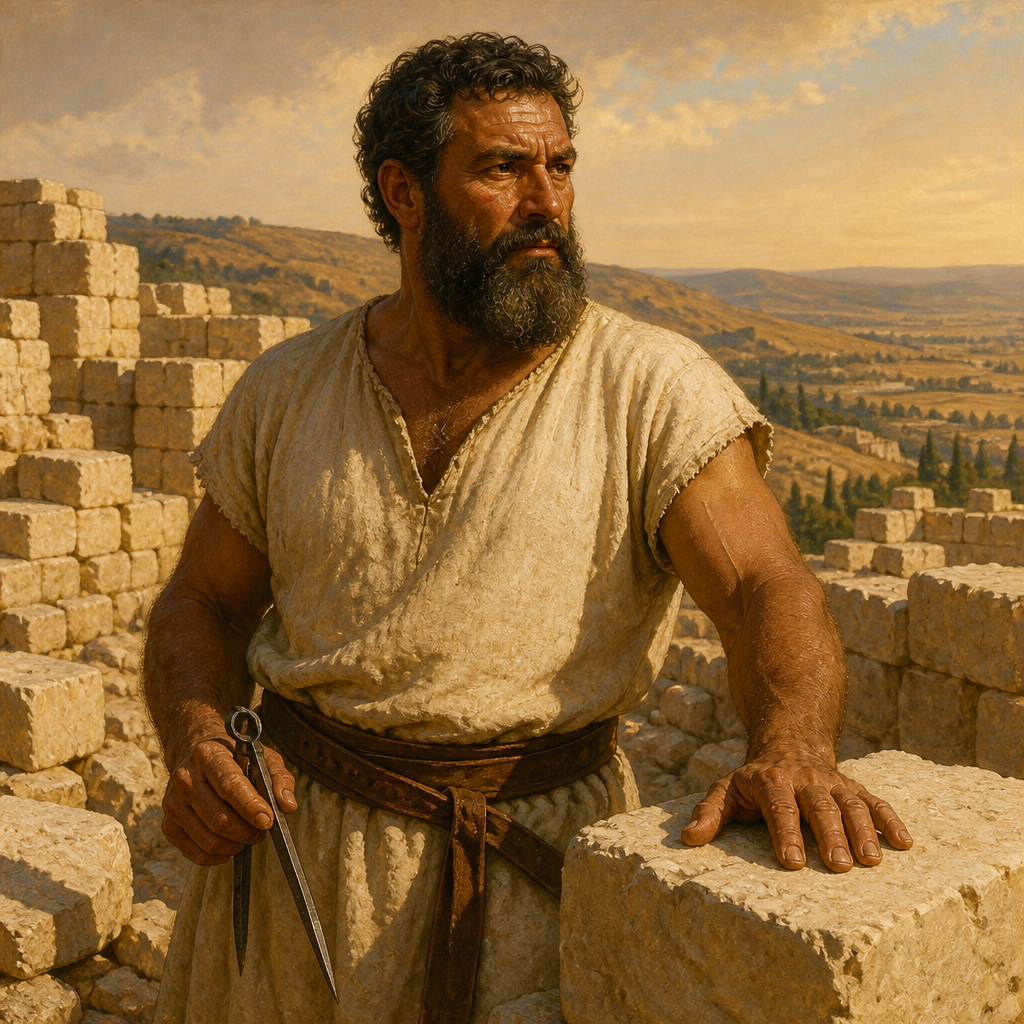
The primary biographical detail recorded for Shemed is his role as an architect and builder. The biblical text explicitly credits him with the construction of Ono and Lod, along with their surrounding villages (1 Chronicles 8:12). While the term "built" in Hebrew (banah) can refer to the initial founding of a city, in the context of the Divided Monarchy, it often implies the reconstruction, fortification, or expansion of existing settlements.
By establishing these sites, Shemed secured strategic locations for the tribe of Benjamin. Lod and Ono were situated in the Shephelah, or the coastal plain, which was vital for agricultural production and trade routes. The mention of "its villages" indicates that Shemed did not merely build isolated outposts but developed integrated rural-urban hubs that supported larger populations.
Relationship to Other Biblical Figures
Shemed’s identity is defined largely by his fraternal relationships and his father, Elpaal. He is listed alongside Eber and Misham as the primary sons of Elpaal, though the wider genealogy connects him to a network of brothers who served as heads of fathers' houses. One of his brothers, Shema, is specifically identified as a head of the inhabitants of Aijalon, suggesting that Shemed’s family held a concerted interest in the development and defense of the western Benjamite border.
Spiritual Significance
In the context of 1 Chronicles, Shemed represents the fulfillment of the divine mandate to occupy and steward the Promised Land. While he is not credited with prophetic or priestly duties, his work in building cities like Lod—which would remain significant throughout Israel's history and into the New Testament period (as Lydda)—demonstrates the importance of civil labor in the preservation of the covenant community. His inclusion in the sacred text honors the practical builders who provided the physical infrastructure necessary for the tribal life of Israel to flourish.
Shemed is significant as a representative of the civil development within the tribe of Benjamin. His specific mention as the builder of Lod and Ono connects the genealogical records of the Old Testament to the physical geography of the land, illustrating how individual families contributed to the enduring presence of Israel in their allotted territories.
Furthermore, by documenting Shemed's work, the Chronicler emphasizes that the restoration of Israel involves both a spiritual return and a physical rebuilding. The cities Shemed established became long-lasting landmarks that survived through the exile and remained relevant in the post-exilic and early Christian eras.
Frequently Asked Questions
Which cities did Shemed build?
Shemed is credited with building the cities of Ono and Lod, as well as their surrounding villages.
Which tribe did Shemed belong to?
Shemed was a member of the tribe of Benjamin.
Who was Shemed’s father?
Shemed was the son of Elpaal.
In which book of the Bible is Shemed mentioned?
Shemed is mentioned in the book of 1 Chronicles, specifically in chapter 8, verse 12.
What era did Shemed live in?
Shemed lived during the period of the Divided Monarchy.
Family & Relationships
Parents
 ElpaalFather1 Chronicles 8:12Stated
 ShemedThis page
 Beriah, Son of ElpaalBrother1 Chronicles 8:12–13Stated
 Eber, Son of ElpaalBrother1 Chronicles 8:12Stated
 Heber, Son of ElpaalBrother1 Chronicles 8:12–17Stated
 HizkiBrother1 Chronicles 8:12Stated
 IshmeraiBrother1 Chronicles 8:12–18Stated
 IzliahBrother1 Chronicles 8:12–18Stated
 Jobab, Son of ElpaalBrother1 Chronicles 8:12–18Stated
 Meshullam, Son of ElpaalBrother1 Chronicles 8:12Stated
 MishamBrother1 Chronicles 8:12Stated
 Shema, Head of AijalonBrother1 Chronicles 8:12–13Stated
 Zebadiah, Son of ElpaalBrother1 Chronicles 8:12–15Stated
Connected Figures
Family
Father · 1 Chronicles 8:12
A prominent Benjamite leader and patriarch during the Divided Monarchy whose descendants were responsible for the construction of the cities of Ono and Lod.
Brother · 1 Chronicles 8:12–13
A leader in the tribe of Benjamin known for securing the territory of Aijalon by defeating the inhabitants of Gath.
Divided MonarchyFirst: 1 Chronicles 8:137 versesTribal Chieftain and WarriorBenjamin
Brother · 1 Chronicles 8:12
A member of the Tribe of Benjamin during the Divided Monarchy, Eber was the eldest son of Elpaal and a brother to the builders of Ono and Lod.
Brother · 1 Chronicles 8:12–17
Heber was a prominent member of the tribe of Benjamin and a son of Elpaal, listed within the post-exilic genealogical records of the Divided Monarchy.
Brother · 1 Chronicles 8:12
Hizki was a Benjamite leader and one of the sons of Elpaal, listed in the genealogical records of the Divided Monarchy period.
Brother · 1 Chronicles 8:12–18
Ishmerai was a descendant of the tribe of Benjamin and a son of Elpaal, listed in the genealogical records of 1 Chronicles.
Divided MonarchyFirst: 1 Chronicles 8:187 versesTribal leader or head of householdBenjamin
Brother · 1 Chronicles 8:12–18
A Benjamite descendant and one of the many sons of Elpaal, recorded in the genealogical records of 1 Chronicles.
Divided MonarchyFirst: 1 Chronicles 8:187 versesTribal leader or head of householdBenjamin
Brother · 1 Chronicles 8:12–18
Jobab was a Benjamite leader and the son of Elpaal, identified in the genealogical records of the Divided Monarchy period.
Brother · 1 Chronicles 8:12
A member of the tribe of Benjamin and son of Elpaal mentioned within the genealogical records of the Divided Monarchy.
Divided MonarchyFirst: 1 Chronicles 8:1711 versesHead of a Benjamite householdBenjamin
Brother · 1 Chronicles 8:12
Misham was a descendant of Benjamin and the son of Elpaal, noted in the post-exilic genealogies for his family's role in the development of Ono and Lod.
Divided MonarchyFirst: 1 Chronicles 8:127 versesBuilder (Clan associate)Benjamin
Brother · 1 Chronicles 8:12–13
A leader of the tribe of Benjamin and head of a household in Aijalon who famously drove out the inhabitants of Gath.
Brother · 1 Chronicles 8:12–15
A Benjamite descendant and one of the nine sons of Elpaal, recorded in the genealogical records of the Tribe of Benjamin.
Categories
Mentions by Book
- 1 Chronicles7
Scripture References
All 7 indexed verses, in canonical order, from the Berean Standard Bible.
1 Chronicles · 7
- 1 Chronicles 8:12
The sons of Elpaal: Eber, Misham, Shemed (who built Ono and Lod with its villages),
- 1 Chronicles 8:13Partial
and Beriah and Shema (who were the heads of families living in Aijalon and who drove out the inhabitants of Gath).
Cited as evidence on a family card; added so References, Key Verses and Mentions by Book share one index.
- 1 Chronicles 8:14Partial
Ahio, Shashak, Jeremoth,
Cited as evidence on a family card; added so References, Key Verses and Mentions by Book share one index.
- 1 Chronicles 8:15Partial
Zebadiah, Arad, Eder,
Cited as evidence on a family card; added so References, Key Verses and Mentions by Book share one index.
- 1 Chronicles 8:16Partial
Michael, Ishpah, and Joha were the sons of Beriah.
Cited as evidence on a family card; added so References, Key Verses and Mentions by Book share one index.
- 1 Chronicles 8:17Partial
Zebadiah, Meshullam, Hizki, Heber,
Cited as evidence on a family card; added so References, Key Verses and Mentions by Book share one index.
- 1 Chronicles 8:18Partial
Ishmerai, Izliah, and Jobab were the sons of Elpaal.
Cited as evidence on a family card; added so References, Key Verses and Mentions by Book share one index.