Pekahiah
Who was Pekahiah in the Bible?
Pekahiah was the son of Menahem and the seventeenth king of the northern kingdom of Israel, whose brief two-year reign ended in a violent military coup.
Pekahiah was a monarch of the northern kingdom of Israel during the turbulent period of the Divided Monarchy. He was the son and successor of King Menahem, representing a rare moment of hereditary stability in a kingdom otherwise characterized by frequent dynastic overthrows. His reign is dated by biblical scholars to approximately 742–740 BC.
His brief tenure as king was marked by spiritual continuity with his predecessors, specifically in the maintenance of the golden calf cult established by Jeroboam I. Pekahiah’s rule came to an abrupt and violent end when he was assassinated by one of his own military officers, leading to the collapse of the House of Menahem and further destabilization of the northern kingdom.
Background and Family
Pekahiah was the son of Menahem, a king who had seized the throne of Israel by force from Shallum. The biblical record in 2 Kings 15:22 notes that when Menahem "rested with his fathers," Pekahiah ascended to the throne. This succession is significant because the northern kingdom of Israel rarely saw dynasties last beyond two generations during this era of political volatility. Pekahiah inherited a kingdom that his father had managed to hold through brutal internal suppression and the payment of heavy tribute to Tiglath-Pileser III of Assyria.
Major Life Events
The reign of Pekahiah began in the fiftieth year of King Azariah (also known as Uzziah) of Judah. His capital was Samaria, the traditional seat of power for the northern kings. According to 2 Kings 15:23, his reign lasted only two years. This short duration suggests a lack of broad political or military support, despite his hereditary claim to the throne.
His reign was defined by the typical summary given to the kings of Israel: "he did evil in the eyes of the Lord" (2 Kings 15:24). Specifically, he did not depart from the sins of Jeroboam son of Nebat, which involved the state-sponsored worship of golden calves at Dan and Bethel. This spiritual compromise remained a constant throughout his short administration.
The Coup and Death
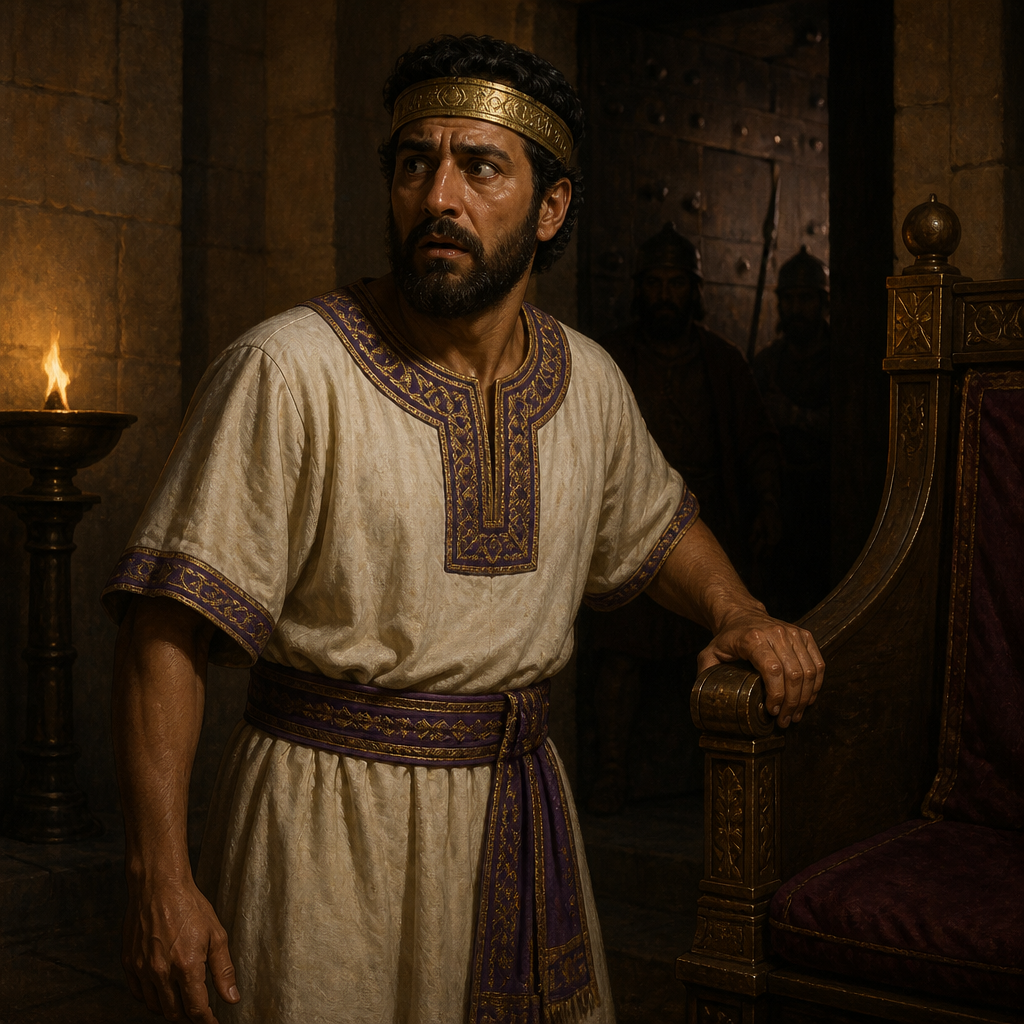
The end of Pekahiah’s life was marked by treachery within his own ranks. Pekah, the son of Remaliah, served as an officer (or adjutant) in Pekahiah’s army. In the second year of Pekahiah's reign, Pekah conspired against the king. Taking fifty men from Gilead with him, Pekah attacked the king within the citadel of the royal palace in Samaria.
Pekahiah was assassinated alongside two men named Argob and Arieh, whose specific roles are not detailed but were likely high-ranking officials or bodyguards. With the king’s death, the line of Menahem ended, and Pekah seized the throne for himself.
Spiritual Significance
While Pekahiah’s biographical details are sparse, his life serves as a case study in the rapid decline of the northern kingdom of Israel. His inability to secure his throne despite his father's efforts illustrates the biblical theme that stability for the kings of Israel was tied to spiritual fidelity. By continuing the idolatry of Jeroboam, Pekahiah remained under the prophetic judgment that plagued the northern monarchy until its eventual destruction by Assyria. The lack of recorded "accomplishments"—though the text mentions they were recorded in the lost Chronicles of the Kings of Israel—highlights the relative insignificance of his reign in the broader scope of redemptive history.
Pekahiah’s significance lies in his role as the penultimate king of a distinct dynasty during Israel's final decades of existence. His reign demonstrates the inherent instability of the northern kingdom when removed from the Davidic line and the worship of Yahweh. His assassination by Pekah accelerated the political chaos that eventually led to the Assyrian captivity.
Theologically, Pekahiah represents the tragic cycle of the northern kings who prioritized political expediency and inherited tradition (the sins of Jeroboam) over the commands of God. His short reign is a fulfillment of the general biblical pattern where departure from God results in national and personal insecurity.
Frequently Asked Questions
Who was Pekahiah's father?
Pekahiah was the son of King Menahem of Israel.
How long did Pekahiah reign?
He reigned for two years in Samaria, from approximately 742 to 740 BC.
How did Pekahiah die?
He was assassinated in the citadel of his palace in Samaria by Pekah son of Remaliah, one of his own chief officers, who was supported by fifty men of Gilead.
What kind of king was Pekahiah spiritually?
The Bible describes him as an evil king who did not depart from the sins of Jeroboam, maintaining the idolatrous worship of golden calves.
Who succeeded Pekahiah as king?
He was succeeded by Pekah son of Remaliah, the man who assassinated him.
Family & Relationships
Parents
 MenahemFather2 Kings 15:22Stated
 PekahiahThis page
Connected Figures
Family
Father · 2 Kings 15:22
Menahem, son of Gadi, was a brutal and politically shrewd King of Israel who seized the throne by force and secured his ten-year reign by paying tribute to the Assyrian Empire.
Divided MonarchyFirst: 2 Kings 15:148 versesKing of Israel
Categories
Mentions by Book
- 2 Kings4
Scripture References
All 4 indexed verses, in canonical order, from the Berean Standard Bible.
2 Kings · 4
- 2 Kings 15:22
And Menahem rested with his fathers, and his son Pekahiah reigned in his place.
- 2 Kings 15:23
In the fiftieth year of Azariah’s reign over Judah, Pekahiah son of Menahem became king of Israel and reigned in Samaria two years.
- 2 Kings 15:25
Then his officer, Pekah son of Remaliah, conspired against him along with Argob, Arieh, and fifty men of Gilead. And at the citadel of the king’s palace in Samaria, Pekah struck down and killed Pekahiah and reigned in his place.
Cited as a key verse; added so References, Key Verses and Mentions by Book share one index.
- 2 Kings 15:26
As for the rest of the acts of Pekahiah, along with all his accomplishments, they are indeed written in the Book of the Chronicles of the Kings of Israel.