Mattan, Father of Shephatiah
Who was Mattan, Father of Shephatiah, in the Bible?
Mattan was an official in Jerusalem during the final years of the Kingdom of Judah, known as the father of Shephatiah, an adversary of the prophet Jeremiah.
This is one of 2 people named Mattan in the Bible. See all 2 →
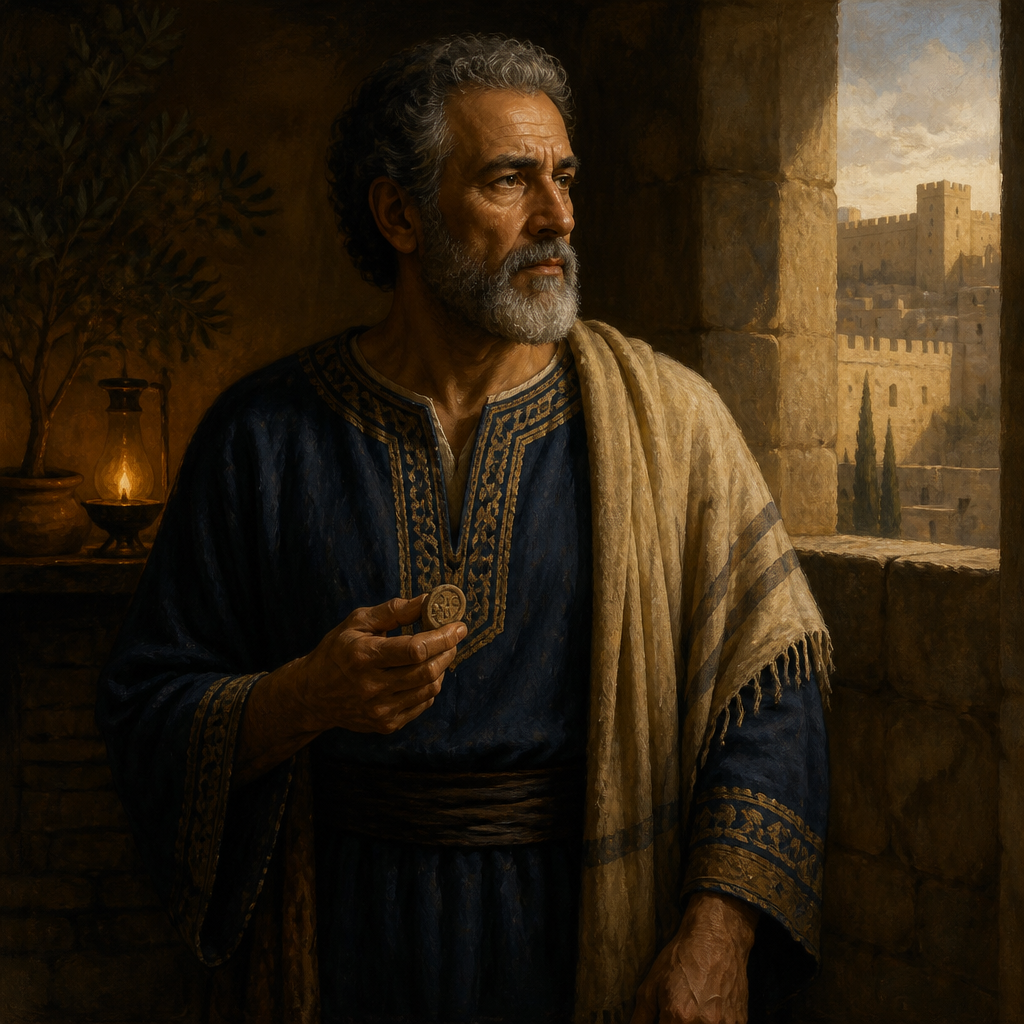
Mattan is a figure mentioned in the Old Testament during the twilight of the Divided Monarchy. His identity is preserved through his son, Shephatiah, who was a prominent official under King Zedekiah of Judah. The era in which Mattan lived was one of intense political and spiritual upheaval, as the Babylonian Empire under Nebuchadnezzar II tightened its siege on Jerusalem.
While the biblical text does not provide specific details regarding Mattan’s personal career or religious convictions, his inclusion in the lineage of a high-ranking official suggests he belonged to the Judean aristocracy or the courtly class. His name appears in the context of the political opposition against the prophet Jeremiah’s message of surrender to Babylon.
Background and Family
Mattan appears in the biblical record as the father of Shephatiah, one of the four Judean officials who sought the death of the prophet Jeremiah (Jeremiah 38:1). While the Bible does not explicitly state Mattan's tribe or specific occupation, the social standing of his son implies that Mattan was a man of status within Jerusalem. The name Mattan itself means "gift" or "giving" in Hebrew, a common name element in the Semitic world of the late 7th and early 6th centuries BC.
The Era of the Divided Monarchy
Mattan’s life corresponds with the final decades of the Divided Monarchy, specifically the period leading up to the fall of Jerusalem in 586 BC. This was a time when the Davidic dynasty struggled to maintain sovereignty while caught between the warring interests of Egypt and Babylon. As a father of an influential official, Mattan would have witnessed the moral and political decline that characterized the reigns of Jehoiakim and Zedekiah.
Relationship to Other Biblical Figures
The primary biblical significance of Mattan is his genealogical link to Shephatiah. In Jeremiah 38, Shephatiah is grouped with Gedaliah son of Pashhur, Jucal son of Shelemiah, and Pashhur son of Malchijah. These men represented the "war party" in Jerusalem—officials who viewed Jeremiah’s prophecies of Babylonian victory as treasonous and demoralizing to the soldiers remaining in the city.
Because Shephatiah was active during the eleventh year of King Zedekiah (c. 588–587 BC), Mattan likely belonged to the preceding generation. If he was still alive during the events of Jeremiah 38, he would have been an elder during the catastrophic final siege of the city. However, the text uses his name primarily as an identifier for his son, a common practice in ancient Near Eastern records to distinguish specific individuals in the royal court.
Spiritual Significance
Though Mattan is mentioned only once, his presence in the text serves a historical and narrative purpose. He provides the ancestral context for those who opposed the divine word delivered through Jeremiah. In the broader theological narrative of the Book of Jeremiah, Mattan represents the established Judean families whose descendants rejected prophetic warnings in favor of political nationalism. The lack of further detail regarding Mattan highlights the biblical focus on his son’s actions, yet his name remains a permanent part of the record of Jerusalem’s final days.
Mattan's significance lies in his role as a progenitor of the Judean leadership during the Babylonian crisis. He is a representative of the upper-class families of Jerusalem whose lineage is documented to provide historical authenticity to the account of Jeremiah’s imprisonment. His inclusion confirms that the opposition to Jeremiah was led by specific, identifiable members of the Judean elite.
Theological reflection on Mattan often centers on the legacy of families in Jerusalem. As the father of Shephatiah, Mattan is associated with a faction that resisted the word of the Lord, illustrating the systemic rejection of the covenant that led to the eventual destruction of the Temple and the city.
Frequently Asked Questions
Who was Mattan’s son?
Mattan’s son was Shephatiah, an official in the court of King Zedekiah who opposed the prophet Jeremiah.
When did Mattan live?
Mattan lived during the late Divided Monarchy, likely in the late 7th or early 6th century BC, prior to the Babylonian Exile.
What does the name Mattan mean?
The name Mattan (מַתָּן) is a Hebrew word meaning 'gift'.
Is Mattan mentioned in books other than Jeremiah?
No, this specific Mattan, the father of Shephatiah, is only mentioned in Jeremiah 38:1.
Family & Relationships
 Mattan, Father of ShephatiahThis page
Children
 Shephatiah, Son of MattanSonJeremiah 38:1Stated
Connected Figures
Family
Son · Jeremiah 38:1
A Judean official who opposed the prophet Jeremiah during the final siege of Jerusalem.
Divided MonarchyFirst: Jeremiah 38:12 versesPrince and court official of Judah
Categories
Mentions by Book
- Jeremiah1
Scripture References
All 1 indexed verse, in canonical order, from the Berean Standard Bible.
Jeremiah · 1
- Jeremiah 38:1
Now Shephatiah son of Mattan, Gedaliah son of Pashhur, Jucal son of Shelemiah, and Pashhur son of Malchijah heard that Jeremiah had been telling all the people:
Others Named Mattan
Compare all 2 bearers →Mattan, Priest of Baal2 Kings 11:18
A prominent priest of Baal in Jerusalem during the reign of Queen Athaliah who was killed during the religious reforms of Jehoiada the high priest.