Jehoaddah
Who was Jehoaddah in the Bible?
A Benjaminite descendant of King Saul and the son of Ahaz, Jehoaddah was a central link in the preservation of the Saulide genealogy during the Divided Monarchy.
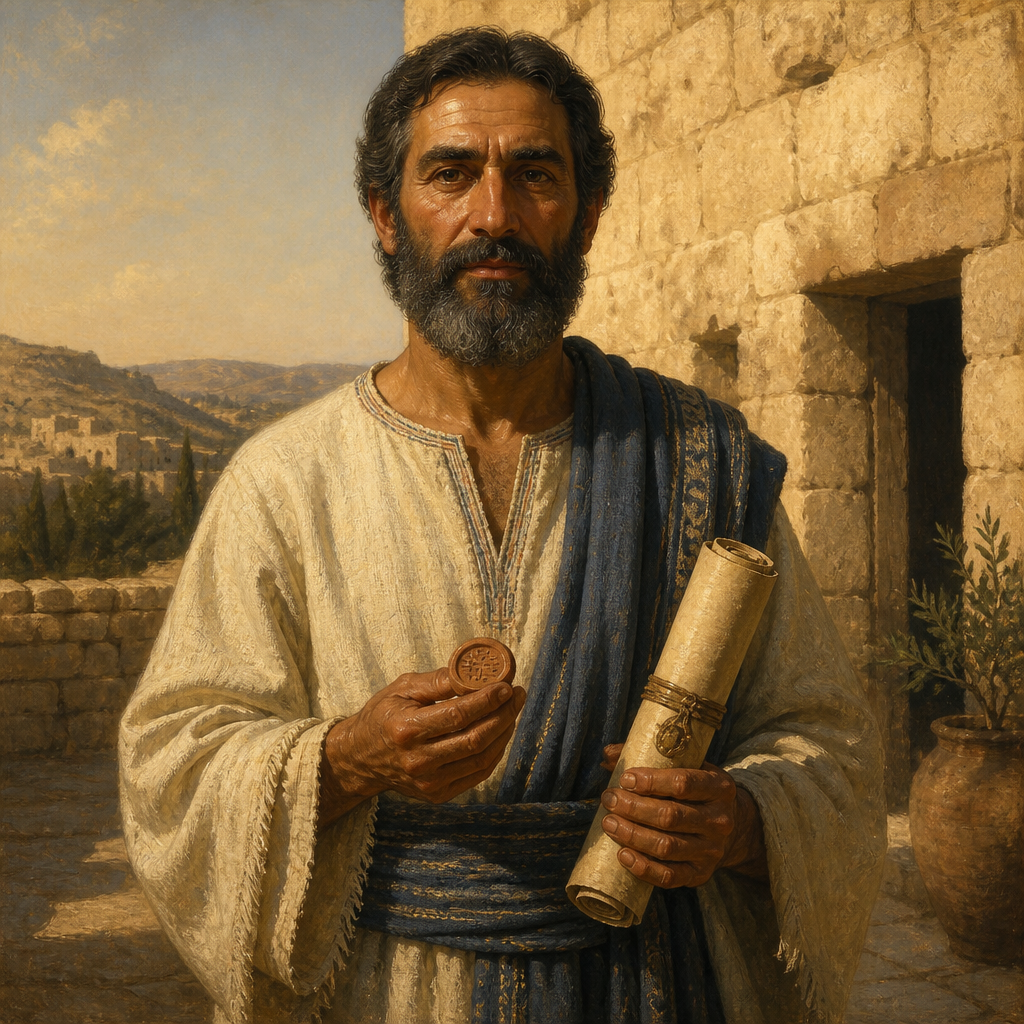
Jehoaddah was a member of the Tribe of Benjamin who lived during the era of the Divided Monarchy. He is identified in the biblical record as a direct descendant of King Saul, the first monarch of Israel. Specifically, Jehoaddah was the son of Ahaz and the father of three sons: Alemeth, Azmaveth, and Zimri. His placement in the genealogies of the Chronicler serves to bridge the gap between the early monarchic period and the surviving remnants of Saul’s house in later generations.
While he does not appear in the narrative accounts of the Books of Kings, his inclusion in 1 Chronicles is critical for establishing the long-term survival of Saul's line. In the variant listing found in 1 Chronicles 9:42, he is referred to by the name 'Jarah,' a common occurrence in Hebrew genealogies where individuals were known by multiple names or where orthographic variations occurred over time during the transmission of the text.
Background and Family
Jehoaddah belongs to the post-Saulide lineage of the Tribe of Benjamin. His ancestry is traced directly back to Jonathan, the son of King Saul, through Merib-baal (Mephibosheth). According to the genealogical records in 1 Chronicles 8, Jehoaddah was the son of Ahaz. The text establishes him as a father of significant progeny, specifically naming three sons: Alemeth, Azmaveth, and Zimri.
The historical context of Jehoaddah is the Divided Monarchy, a period following the schism of the ten northern tribes from the southern tribes of Judah and Benjamin. As a Benjaminite, Jehoaddah remained part of the territory that largely stayed loyal to the Davidic throne in Jerusalem, yet his lineage remained distinct as the biological heirs of the first royal house of Israel.
Major Life Events
The biblical record for Jehoaddah is strictly genealogical rather than narrative. There are no recorded speeches, specific deeds, or political actions attributed to him. However, his life is defined by the preservation of his family line. The transition from his father, Ahaz, to his own sons represents the continued survival of the house of Saul several centuries after the Battle of Mount Gilboa.
In 1 Chronicles 9:42, he is identified as 'Jarah.' Scholars generally agree that Jarah and Jehoaddah are the same individual, as the list of sons (Alemeth, Azmaveth, and Zimri) and the father (Ahaz) are identical in both 1 Chronicles 8 and 9. This duplication across two chapters underscores the importance the Chronicler placed on documenting the Benjaminite families who returned to or remained in the land.
Relationship to Other Biblical Figures
Jehoaddah’s primary significance lies in his relationships. He is the grandson of Micah (1 Chronicles 8:34–35) and the great-great-grandson of Mephibosheth. This connects him to the famous friendship between David and Jonathan. By the time of Jehoaddah, the animosity between the house of David and the house of Saul had long since faded into a settled ancestral heritage within the tribe of Benjamin.
His sons also bear names that reflect the culture of the time. For example, his son Azmaveth shares a name with one of David’s mighty men (2 Samuel 23:31), suggesting that these names were prominent within Benjaminite circles during the monarchic period.
Spiritual Significance
The inclusion of Jehoaddah in the Holy Scripture serves a specific theological purpose: the demonstration of God’s providence in preserving lineages. Despite the downfall of King Saul and the subsequent rise of the Davidic covenant, the house of Saul was not entirely blotted out. Jehoaddah stands as a witness to the fact that God remembered the descendants of Jonathan. For the post-exilic community reading the Chronicles, figures like Jehoaddah provided a sense of continuity and identity, proving that the ancient families of Israel had survived the shifts of power and the judgments of the exile.
Jehoaddah’s presence in the Bible highlights the meticulous nature of Hebrew record-keeping and the theological emphasis on tribal heritage. As a descendant of Saul, his lineage proves that the promise made by David to show 'the kindness of God' to Jonathan’s descendants (2 Samuel 9:3) extended through multiple generations.
Furthermore, the variation of his name (Jehoaddah vs. Jarah) provides an important case study for biblical scholars regarding the transmission of genealogical lists. It emphasizes that while names might vary, the historical reality of the individual's role as a link in a generational chain remains the priority of the biblical author.
Frequently Asked Questions
Who was Jehoaddah's father?
Jehoaddah was the son of Ahaz, a descendant of King Saul's son Jonathan.
Which tribe did Jehoaddah belong to?
He belonged to the Tribe of Benjamin.
Why is Jehoaddah called Jarah in 1 Chronicles 9?
Jarah is considered a variant name or a scribal variation of Jehoaddah. Both names refer to the same individual, as they share the same father (Ahaz) and the same three sons.
Who were the children of Jehoaddah?
According to 1 Chronicles 8:36, his children were Alemeth, Azmaveth, and Zimri.
Is Jehoaddah related to King Saul?
Yes, he is a multi-generational descendant of King Saul through Saul's son Jonathan and grandson Mephibosheth.
Family & Relationships
Parents
 Ahaz, Descendant of SaulFather1 Chronicles 8:36Stated
 JehoaddahThis page
Children
 Alemeth, Descendant of SaulSon1 Chronicles 8:36Stated
 Azmaveth, Descendant of SaulSon1 Chronicles 8:36Stated
 Zimri, Descendant of SaulSon1 Chronicles 8:36Stated
Connected Figures
Family
Father · 1 Chronicles 8:36
A Benjamite descendant of King Saul and Jonathan, mentioned in the genealogical records of the United Monarchy as a son of Micah and father of Jehoaddah.
Son · 1 Chronicles 8:36
Alemeth was a descendant of King Saul belonging to the tribe of Benjamin during the Divided Monarchy, listed in the post-exilic genealogies of Israel.
Son · 1 Chronicles 8:36
Azmaveth was a Benjaminite nobleman and a direct descendant of King Saul, appearing in the genealogical records of the chronicler to document the persistence of the house of Saul.
Divided MonarchyFirst: 1 Chronicles 8:363 versesTribal NoblemanBenjamin
Son · 1 Chronicles 8:36
A Benjamite descendant of King Saul and son of Jehoaddah, recorded in the genealogies of the tribe of Benjamin.
Categories
Mentions by Book
- 1 Chronicles2
Scripture References
All 2 indexed verses, in canonical order, from the Berean Standard Bible.
1 Chronicles · 2
- 1 Chronicles 8:36Partial
Ahaz was the father of Jehoaddah, Jehoaddah was the father of Alemeth, Azmaveth, and Zimri, and Zimri was the father of Moza.
- 1 Chronicles 9:42Partial
Ahaz was the father of Jarah; Jarah was the father of Alemeth, Azmaveth, and Zimri; and Zimri was the father of Moza.