Hiel
Who was Hiel in the Bible?
A Bethelite who rebuilt the city of Jericho during the reign of King Ahab, fulfilling a centuries-old curse through the loss of his two sons.
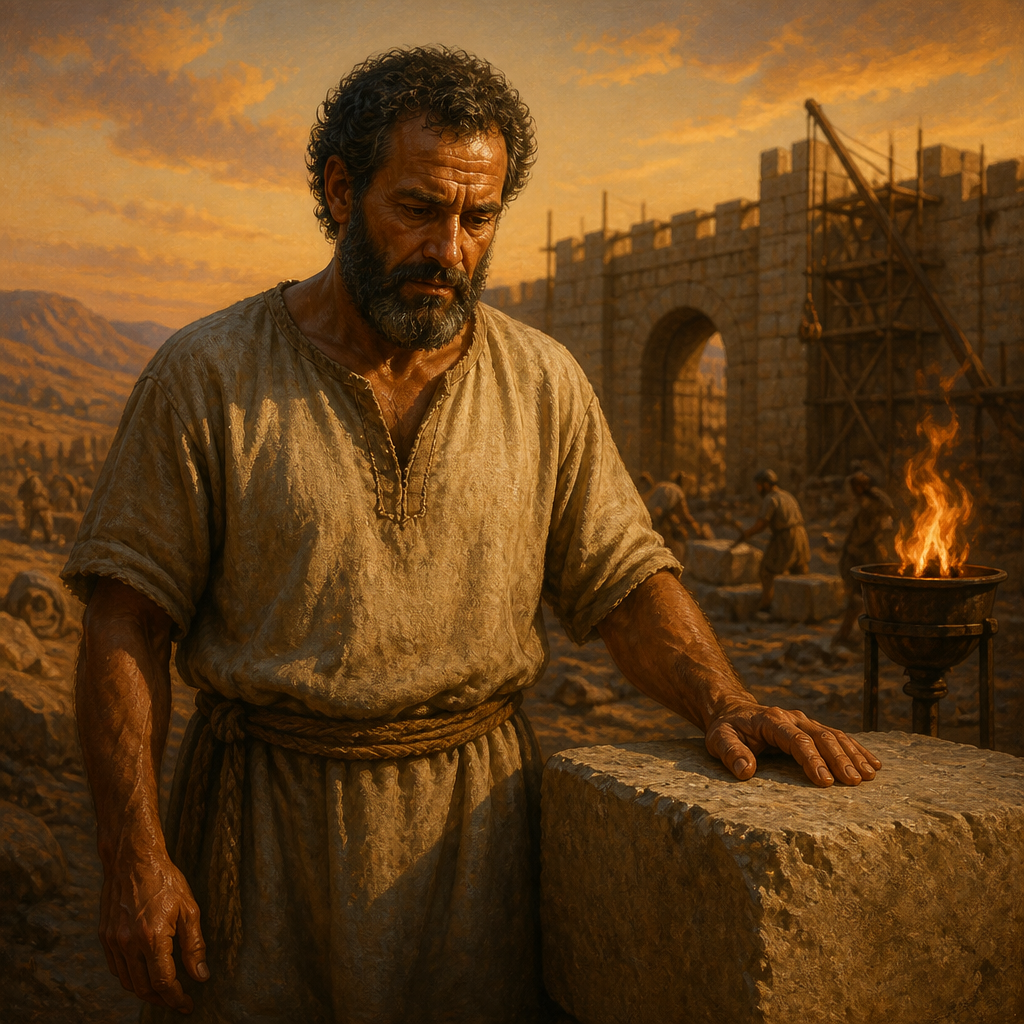
Hiel, a native of Bethel, is a figure mentioned briefly in the Old Testament during the period of the Divided Monarchy. He is exclusively known for his attempt to fortify and rebuild the ancient city of Jericho during the mid-ninth century BC. His actions took place under the reign of King Ahab, an era characterized by widespread spiritual apostasy in the Northern Kingdom of Israel.
His story serves as a historical fulfillment of a specific prophetic curse uttered centuries earlier by Joshua. The biblical record links Hiel’s construction project directly to the deaths of his two sons, Abiram and Segub, illustrating the high cost of defying divine prohibitions.
Background and Family
Hiel is identified as a Bethelite, indicating he hailed from Bethel, a city that had become a center for calf-worship under Jeroboam I. Nothing is known of Hiel’s lineage beyond the mention of his children. He was the father of at least two sons: Abiram, his firstborn, and Segub, his youngest. His appearance in the biblical narrative is confined to a single verse (1 Kings 16:34), which situates his activity during the reign of King Ahab of Israel (c. 874–853 BC).
Major Life Events
The defining event of Hiel’s life was the reconstruction of Jericho. Following the miraculous destruction of the city during the Israelite conquest, Joshua had pronounced a solemn oath: "Cursed before the Lord is the one who undertakes to rebuild this city, Jericho: At the cost of his firstborn son will he lay its foundations; at the cost of his youngest will he set up its gates" (Joshua 6:26).
Centuries later, Hiel ignored or defied this warning. The text states that he laid the foundations of Jericho at the cost of Abiram, his firstborn. As the construction reached its conclusion, he set up the city gates at the cost of Segub, his youngest son. The phrasing "at the cost of" indicates that both sons died as a direct consequence of the project, precisely matching the parameters of Joshua’s curse.
Relationship to Other Biblical Figures
Hiel’s actions are framed within the context of King Ahab's rebellion against God. The biblical author places Hiel’s story immediately after describing Ahab’s promotion of Baal worship, suggesting that Hiel’s disregard for the words of Joshua was a symptom of the general spiritual decay of the time. The primary "relationship" in Hiel’s narrative is not with a living person, but with the word of God spoken through Joshua son of Nun. His life serves as a bridge between the era of the Conquest and the era of the Prophets, specifically Elijah, who appears in the very next verse.
Spiritual Significance
In biblical theology, Hiel represents the danger of spiritual amnesia and the certainty of divine judgment. His story demonstrates that the passage of time—roughly five centuries between Joshua and Ahab—does not diminish the authority or validity of God’s word. For the original readers of 1 Kings, Hiel was a cautionary tale: if a centuries-old curse on a city could be fulfilled so precisely, then the contemporary warnings regarding Israel’s idolatry would surely come to pass as well.
Hiel’s significance lies in his role as the historical fulfiller of the curse placed upon Jericho by Joshua. His story is strategically placed in the text to demonstrate that God's word remains active and binding across generations. By rebuilding a city that God had ordered to remain a ruin, Hiel exhibited the hubris and spiritual blindness that defined the Northern Kingdom under the Omride dynasty.
The death of his sons, Abiram and Segub, serves as a grim validation of prophetic authority. This event immediately precedes the ministry of Elijah the Tishbite, acting as a literary 'sign' to the reader that the prophetic word is absolute. Hiel stands as a representative figure of those who prioritize material or political gain over divine instruction.
Frequently Asked Questions
What did Hiel do that was forbidden?
Hiel rebuilt the city of Jericho, which had been placed under a divine curse by Joshua centuries earlier, forbidding its reconstruction.
Who were Hiel's children?
Hiel had two named sons: Abiram, his firstborn, and Segub, his youngest son.
When did Hiel live?
Hiel lived during the Divided Monarchy, specifically during the reign of King Ahab of Israel in the 9th century BC.
How did Hiel's sons die?
The Bible states they died 'at the cost' of the rebuilding of Jericho—Abiram when the foundation was laid and Segub when the gates were set up—fulfilling Joshua's prophecy.
Where was Hiel from?
Hiel was from Bethel, a city in the Northern Kingdom of Israel known for its association with unauthorized worship.
Family & Relationships
 HielThis page
Children
 Abiram, Son of HielSon1 Kings 16:34Stated
 Segub, Son of HielSon1 Kings 16:34Stated
Connected Figures
Family
Son · 1 Kings 16:34
The firstborn son of Hiel the Bethelite, whose death occurred during the reconstruction of Jericho's foundations in fulfillment of a curse by Joshua.
Divided MonarchyFirst: 1 Kings 16:341 versesFirstborn son of Hiel
Son · 1 Kings 16:34
The youngest son of Hiel the Bethelite, whose death occurred during the reconstruction of the gates of Jericho as a fulfillment of Joshua's ancient curse.
Divided MonarchyFirst: 1 Kings 16:341 versesSon of a builder
Categories
Mentions by Book
- 1 Kings1
Scripture References
All 1 indexed verse, in canonical order, from the Berean Standard Bible.
1 Kings · 1
- 1 Kings 16:34
In Ahab’s days, Hiel the Bethelite rebuilt Jericho. At the cost of Abiram his firstborn he laid its foundation, and at the cost of Segub his youngest he set up its gates, according to the word that the LORD had spoken through Joshua son of Nun.