Elizabeth
Who was Elizabeth in the Bible?
The mother of John the Baptist, a daughter of Aaron, and a kinswoman of Mary who recognized the lordship of the unborn Christ.
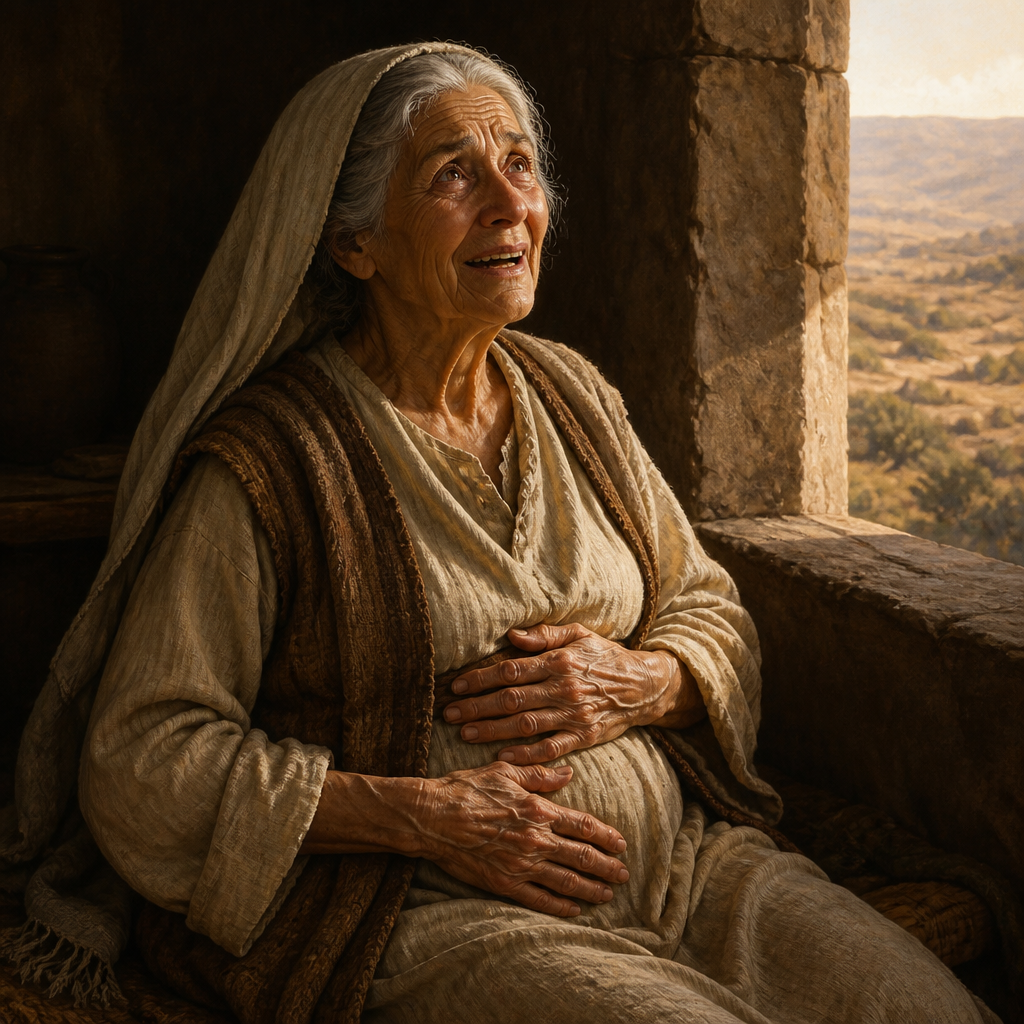
Elizabeth was a woman of noble priestly lineage during the late 1st century BC, hailing from the hill country of Judea. Married to the priest Zechariah, she is described by the physician Luke as being 'righteous before God,' walking blamelessly in all the commandments and ordinances of the Lord. Despite her virtuous life, she suffered the social stigma of barrenness until her old age, mirroring the stories of matriarchs like Sarah and Hannah.
Her role in the biblical narrative is pivotal as she becomes the mother of John the Baptist, the forerunner of Jesus Christ. Elizabeth is uniquely recognized in the New Testament tradition for her prophetic insight; filled with the Holy Spirit, she was the first human to acknowledge Mary as the 'mother of my Lord.' Her speech during the Visitation serves as a significant prophetic utterance that links the Old Testament expectations of the Messiah with the New Testament fulfillment.
Background and Family
Elizabeth’s pedigree was one of significant religious prestige. She was a 'daughter of Aaron,' meaning her lineage traced back through the priestly line of the tribe of Levi. This background placed her within the highest levels of Jewish religious society. Her marriage to Zechariah, a priest belonging to the division of Abijah, created a household deeply rooted in the liturgical and ethical traditions of the Second Temple period. The couple lived in the hill country of Judea, an area often associated with the priestly classes.
Despite their impeccable standing and 'blameless' adherence to the Mosaic Law, Elizabeth remained childless into her later years. In the cultural context of 1st-century BC Judea, barrenness was often unjustly viewed as a sign of divine disfavor or a deep personal tragedy. This long period of waiting and societal reproach forms the emotional backdrop to her subsequent miraculous pregnancy.
Major Life Events
The most documented event in Elizabeth’s life begins with the angelic visitation to her husband, Zechariah, in the Temple. The archangel Gabriel announced that Elizabeth would bear a son named John, who would be filled with the Holy Spirit from his mother's womb. Following this encounter, Elizabeth conceived and withdrew into seclusion for five months, stating, 'Thus the Lord has done to me in the days when he looked on me, to take away my reproach among people' (Luke 1:25).
In her sixth month of pregnancy, Elizabeth was visited by her relative Mary, who had recently received the Annunciation. This meeting, known as the Visitation, is the climax of Elizabeth’s prophetic ministry. Upon hearing Mary’s greeting, the unborn John leaped in Elizabeth's womb. Simultaneously, Elizabeth was filled with the Holy Spirit and cried out with a loud voice, pronouncing a blessing that has become central to Christian liturgy:
'Blessed are you among women, and blessed is the fruit of your womb! And why is this granted to me that the mother of my Lord should come to me?' (Luke 1:42–43)
Following the birth of her son, Elizabeth played a decisive role in the naming ceremony. Despite pressure from neighbors and relatives to name the child Zechariah after his father, Elizabeth insisted, 'No; he shall be called John.' This act of obedience to the angelic instruction (communicated to her by her husband) preceded the restoration of Zechariah’s speech.
Relationship to Other Biblical Figures
Elizabeth’s most significant relationships were with Mary, the mother of Jesus, and her own son, John the Baptist. As a kinswoman to Mary, she served as a mentor and a safe harbor. Her reaction to Mary’s arrival provided the young virgin with immediate confirmation of the miraculous nature of her own pregnancy.
Elizabeth's relationship with her son was defined by his ascetic and prophetic calling. Born to elderly parents, John was a 'child of promise.' The biblical text implies that Elizabeth’s influence was instrumental in fostering the spiritual environment in which the forerunner of the Messiah was raised, emphasizing her role as a bridge between the priestly tradition of her ancestors and the new prophetic era initiated by her son.
Spiritual Significance
Elizabeth is theologically significant as the first person recorded in the New Testament to be filled with the Holy Spirit for the purpose of identifying the Messiah. Her prophetic greeting to Mary establishes the Christological foundation of the Gospel of Luke. She serves as a link between the Levitical priesthood and the prophetic ministry of the New Covenant, showing that God's plan of salvation honors and fulfills the ancient promises made to the house of Aaron.
Luke does not call Elizabeth a prophetess — that title belongs to Anna (Luke 2:36) — but says she was filled with the Holy Spirit and spoke aloud at the Visitation (Luke 1:41–45). She is the first person in the Gospel of Luke to declare who Jesus is. Her recognition of Mary as the 'mother of my Lord' (Kyrios) is a profound theological statement, identifying the fetus in Mary's womb as the Sovereign Lord.
Theologically, Elizabeth represents the faithful remnant of Israel. She embodies the transition from the Old Covenant to the New. As a daughter of Aaron, she represents the old priestly order; as the mother of John and the first to hail the Messiah, she ushers in the New Testament era. Her life demonstrates the theme of 'divine reversal,' where the barren and the reproached are elevated by God to fulfill His redemptive purposes in history.
Frequently Asked Questions
How was Elizabeth related to Mary?
The Gospel of Luke describes them as 'kinswomen' or 'relatives.' While some traditions suggest they were cousins, the exact degree of biological relationship is not specified by the Greek text.
Why is Elizabeth considered a prophetess?
She is described as being 'filled with the Holy Spirit' and speaking under divine inspiration to reveal the hidden truth of Jesus's identity while He was still in the womb.
What does the name Elizabeth mean?
The name is derived from the Hebrew 'Elisheva,' which means 'My God is an oath' or 'God is my abundance.'
Was Elizabeth from a specific tribe?
Yes, as a 'daughter of Aaron,' she belonged to the tribe of Levi, the tribe designated for priestly service in Israel.
How long did Elizabeth stay in seclusion after conceiving?
She remained in seclusion for five months before she was visited by Mary in her sixth month of pregnancy.
Family & Relationships
 Zechariah, Father of John the BaptistHusbandLuke 1:5Stated
 ElizabethThis page
Children
 John the Baptist, Son of ZechariahSonLuke 1:13Stated
Connected Figures
Family
Husband · Luke 1:5
A righteous priest of the division of Abijah who could not speak from the day he doubted Gabriel's message until his son, John the Baptist, was born and named.
Son · Luke 1:13
The last and greatest prophet of the old covenant era, who lived as an ascetic in the wilderness to prepare the way for the Messiah.
The GospelsFirst: Matthew 3:191 versesProphet / AsceticLevi
Categories
Mentions by Book
- Luke14
Scripture References
All 14 indexed verses, in canonical order, from the Berean Standard Bible.
Luke · 14
- Luke 1:5
In the time of Herod king of Judea there was a priest named Zechariah, who belonged to the priestly division of Abijah, and whose wife Elizabeth was a descendant of Aaron.
- Luke 1:7
But they had no children, because Elizabeth was barren, and they were both well along in years.
- Luke 1:13
But the angel said to him, “Do not be afraid, Zechariah, because your prayer has been heard. Your wife Elizabeth will bear you a son, and you are to give him the name John.
- Luke 1:24
After these days, his wife Elizabeth became pregnant and for five months remained in seclusion. She declared,
- Luke 1:36
Look, even Elizabeth your relative has conceived a son in her old age, and she who was called barren is in her sixth month.
- Luke 1:40
where she entered the home of Zechariah and greeted Elizabeth.
- Luke 1:41Partial
When Elizabeth heard Mary’s greeting, the baby leaped in her womb, and Elizabeth was filled with the Holy Spirit.
- Luke 1:42Partial
In a loud voice she exclaimed, “Blessed are you among women, and blessed is the fruit of your womb!
Cited as a key verse; added so References, Key Verses and Mentions by Book share one index.
- Luke 1:43Partial
And why am I so honored, that the mother of my Lord should come to me?
Cited as a key verse; added so References, Key Verses and Mentions by Book share one index.
- Luke 1:44Partial
For as soon as the sound of your greeting reached my ears, the baby in my womb leaped for joy.
Cited as a key verse; added so References, Key Verses and Mentions by Book share one index.
- Luke 1:45Partial
Blessed is she who has believed that the Lord’s word to her will be fulfilled.”
Cited as a key verse; added so References, Key Verses and Mentions by Book share one index.
- Luke 1:57
When the time came for Elizabeth to have her child, she gave birth to a son.
- Luke 1:60Partial
But his mother replied, “No! He shall be called John.”
Cited as a key verse; added so References, Key Verses and Mentions by Book share one index.
- Luke 3:2Partial
during the high priesthood of Annas and Caiaphas, the word of God came to John son of Zechariah in the wilderness.
Cited as evidence on a family card; added so References, Key Verses and Mentions by Book share one index.