James son of Alphaeus
Who was James son of Alphaeus in the Bible?
One of the twelve original apostles of Jesus Christ, distinguished by his parentage to Alphaeus and often identified as 'James the Less' or 'the younger.'
This is one of 3 people named James in the Bible. See all 3 →
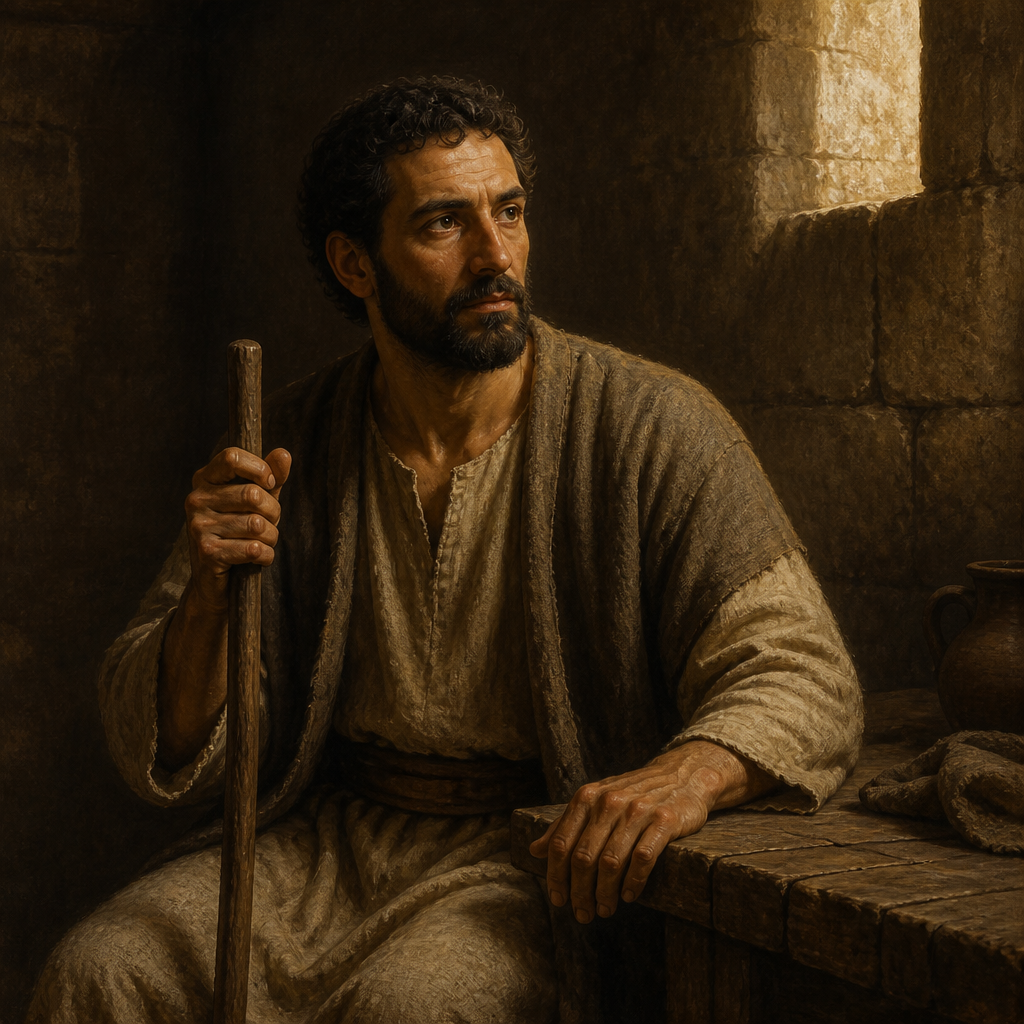
James son of Alphaeus was a member of the twelve apostles chosen by Jesus Christ during His earthly ministry. While he is consistently listed in the synoptic Gospels and the Book of Acts as one of the inner circle of disciples, he remains one of the more elusive figures among the Twelve, as the biblical record provides little detail regarding his specific words or individual actions. He is primarily defined by his lineage, serving to distinguish him from other prominent figures of the same name within the early Christian community.
In the lists of the apostles found in Matthew, Mark, and Luke, James son of Alphaeus is typically grouped in the third quartet of names, often appearing alongside Thaddaeus, Simon the Zealot, and Matthew. His presence in the upper room following the ascension of Christ confirms his status as a faithful witness to the resurrection and a foundation stone of the early church in Jerusalem.
Background and Family
The most definitive characteristic of this James provided by the New Testament is his parentage. He is explicitly identified as the "son of Alphaeus" in every apostolic catalog (Matthew 10:3; Mark 3:18; Luke 6:15; Acts 1:13). This patronymic serves as his primary identifier. The name Alphaeus suggests a Jewish background, though the specific tribe or geographic origin of the family is not recorded in the biblical text.
Scriptural cross-referencing suggests several possible familial ties, though these remain subjects of scholarly debate due to the brevity of the mentions. In Mark 15:40, a woman named Mary is identified as the mother of "James the younger and of Joses." If this Mary is the same woman who accompanied the other women to the tomb of Jesus, then James son of Alphaeus likely had a brother named Joses (or Joseph). Additionally, because the apostle Matthew is also called the "son of Alphaeus" in Mark 2:14, some interpreters suggest that James and Matthew were brothers, though the Gospel accounts never explicitly group them as siblings in the same manner they do for Peter and Andrew or the sons of Zebedee.
Major Life Events
James son of Alphaeus first enters the biblical narrative during the formal appointment of the Twelve. After a night of prayer, Jesus selected him from the larger group of disciples to be an apostle, a role that involved being with Jesus and being sent out to preach and cast out demons. As one of the Twelve, James would have been a witness to the entirety of Jesus’ public ministry, from His baptism to His ascension.
Following the crucifixion, James is listed among the faithful who gathered in the upper room in Jerusalem (Acts 1:13). He participated in the election of Matthias to replace Judas Iscariot and was present during the outpouring of the Holy Spirit on the day of Pentecost. Beyond these communal milestones, the canonical scriptures do not record specific travels, sermons, or the manner of his death, leaving his later ministry to the realm of ecclesiastical tradition rather than biblical fact.
Relationship to Other Biblical Figures
Within the apostolic college, James son of Alphaeus is often associated with the "minor" apostles, not because his contribution was lesser, but because the Gospel writers focused more heavily on the "inner circle" of Peter, James son of Zebedee, and John. In the lists provided by Matthew and Mark, he is paired with Thaddaeus, while Luke pairs him with Simon the Zealot.
His most vital relationship is his tie to the "holy women" who supported Jesus’ ministry. The Markan account refers to him as "James the younger" (Mark 15:40), a title likely used to denote either his physical stature or his age relative to the other James in the group. His mother, Mary, is noted as one of the faithful witnesses of the crucifixion and one of the first to hear the news of the resurrection (Luke 24:10), placing James in a family deeply committed to the Messianic movement.
Spiritual Significance
The significance of James son of Alphaeus lies primarily in his calling and his quiet faithfulness. As an apostle, he represents one of the twelve pillars of the New Jerusalem, a man hand-picked by Christ to carry the Gospel to the ends of the earth. His presence in the biblical text, though lacking in personal dialogue, underscores the diversity of the apostolic group. Christ called men of varying backgrounds—some whose voices are heard throughout the centuries, and others like James, who served in the shadows of the more prominent leaders.
His inclusion in the Acts 1:13 list confirms that he remained steadfast through the trauma of the crucifixion and the confusion of the post-resurrection period. For the modern reader, James son of Alphaeus serves as a representative of the many unnamed or quietly named saints who are foundational to the work of the Kingdom of God, known fully to God even if their individual exploits are not detailed in the historical record.
James son of Alphaeus holds biblical significance as a chosen apostle and a foundational witness to the life, death, and resurrection of Jesus. His inclusion in the apostolic lists across all three synoptic Gospels and the book of Acts validates his authority within the early church and his role in the transition from the ministry of Jesus to the mission of the Apostles.
Theologically, he represents the 'quiet' servant. His presence in the upper room (Acts 1:13) demonstrates the continuity of the faith from the pre-Easter discipleship to the post-Pentecost church. While his personal biography is sparse, his identity as one of the 'Twelve' ensures his place in the biblical narrative as a recipient of the Great Commission and a steward of the Christian faith.
Frequently Asked Questions
Why is he called 'James the Less'?
The term (Greek: ho mikros) is found in Mark 15:40. It is traditionally translated as 'the Less' or 'the Younger,' likely to distinguish him from James the son of Zebedee, either because he was younger in age or shorter in physical stature.
Was James son of Alphaeus related to the apostle Matthew?
It is possible but not confirmed. Mark 2:14 identifies Levi (Matthew) as the son of Alphaeus, and James is also called the son of Alphaeus. However, the Bible never explicitly calls them brothers.
What happened to James son of Alphaeus after the Book of Acts?
The Bible does not record his later life or death. According to church tradition, he may have preached in Egypt or Persia and suffered martyrdom, but these details are not found in the biblical text.
Who was his mother?
According to Mark 15:40 and 16:1, his mother was a woman named Mary, who was among those who witnessed the crucifixion and visited the tomb of Jesus.
Is he the author of the Book of James?
Most biblical scholars attribute the Epistle of James to James the brother of Jesus, rather than James son of Alphaeus, though his apostolic authority would have made him a candidate.
Family & Relationships
Parents
 AlphaeusFatherMatthew 10:3Stated
 Mary, Mother of James and JosesMotherMatthew 27:56Stated
 James son of AlphaeusThis page
 MatthewBrotherMatthew 10:3
Inferred
Matthew 10:3 names James son of Alphaeus and Mark 2:14 names Levi son of Alphaeus; the brotherhood follows only if the two patronymics name the same Alphaeus.Evidence: Matthew 10:3; Mark 2:14
 Joses, Son of MaryBrotherMark 15:40Stated
Connected Figures
Family
Father · Matthew 10:3
Alphaeus is named as the father of the apostle James, and Levi the tax collector's father is also called Alphaeus; Scripture never says whether they were the same man.
Mother · Matthew 27:56
A dedicated follower of Jesus, called “Mary of Clopas” in John 19:25, who witnessed His crucifixion, prepared for His burial, and was among the first to witness the empty tomb.
The GospelsFirst: Matthew 27:5612 versesFollower of Jesus
Brother · Matthew 10:3
A Galilean tax collector turned apostle of Jesus Christ, traditionally identified as the author of the First Gospel.
The GospelsFirst: Matthew 9:911 versesTax Collector, Apostle, Evangelist
Brother · Mark 15:40
Joses was the son of Mary (a follower of Jesus) and the brother of James the Younger, mentioned in the context of the crucifixion and burial of Jesus Christ.
The GospelsFirst: Mark 15:405 versesAssociate of the early Christian movementJudah
Categories
Mentions by Book
- Matthew2
- Mark3
- Luke2
- Acts1
Scripture References
All 8 indexed verses, in canonical order, from the Berean Standard Bible.
Matthew · 2
- Matthew 10:3
Philip and Bartholomew; Thomas and Matthew the tax collector; James son of Alphaeus, and Thaddaeus;
- Matthew 27:56
Among them were Mary Magdalene, Mary the mother of James and Joseph, and the mother of Zebedee’s sons.
Mark · 3
- Mark 3:18
Andrew, Philip, Bartholomew, Matthew, Thomas, James son of Alphaeus, Thaddaeus, Simon the Zealot,
- Mark 15:40
And there were also women watching from a distance. Among them were Mary Magdalene, Mary the mother of James the younger and of Joses, and Salome.
- Mark 16:1
When the Sabbath was over, Mary Magdalene, Mary the mother of James, and Salome bought spices so they could go and anoint the body of Jesus.
Luke · 2
- Luke 6:15
Matthew and Thomas; James son of Alphaeus and Simon called the Zealot;
- Luke 24:10
It was Mary Magdalene, Joanna, Mary the mother of James, and the other women with them who told this to the apostles.
Acts · 1
- Acts 1:13Partial
When they arrived, they went to the upper room where they were staying: Peter and John, James and Andrew, Philip and Thomas, Bartholomew and Matthew, James son of Alphaeus, Simon the Zealot, and Judas son of James.
Others Named James son of Alphaeus
Compare all 3 bearers →James, Father of Judas (not Iscariot)Luke 6:16
A man identified in the New Testament as the father of Judas (not Iscariot), one of the twelve apostles of Jesus Christ.
James son of ZebedeeMatthew 4:21
One of the twelve apostles and part of Jesus' inner circle, James was a fisherman by trade and the first of the apostles to suffer martyrdom for the Christian faith.