Ikkesh
Who was Ikkesh in the Bible?
Ikkesh was a man of Tekoa whose son, Ira, served as one of King David’s elite 'Thirty' mighty men and as a monthly divisional commander.
Ikkesh (meaning "crooked" or "perverse" in Hebrew) was a resident of the Judean town of Tekoa during the 10th century BC. He is primarily identified in the biblical record through his son, Ira, who achieved high military distinction within the administration of King David. While Ikkesh's personal actions are not recorded, his lineage is firmly established within the context of the United Monarchy’s elite military circles.
His status is underscored by his son’s dual role as both a member of the 'Gibborim' (the King’s Mighty Men) and a leader over a massive division of 24,000 soldiers. This indicates that Ikkesh likely belonged to a family of significant standing or military heritage within the tribe of Judah, specifically in the rugged region surrounding Tekoa.
Background and Family
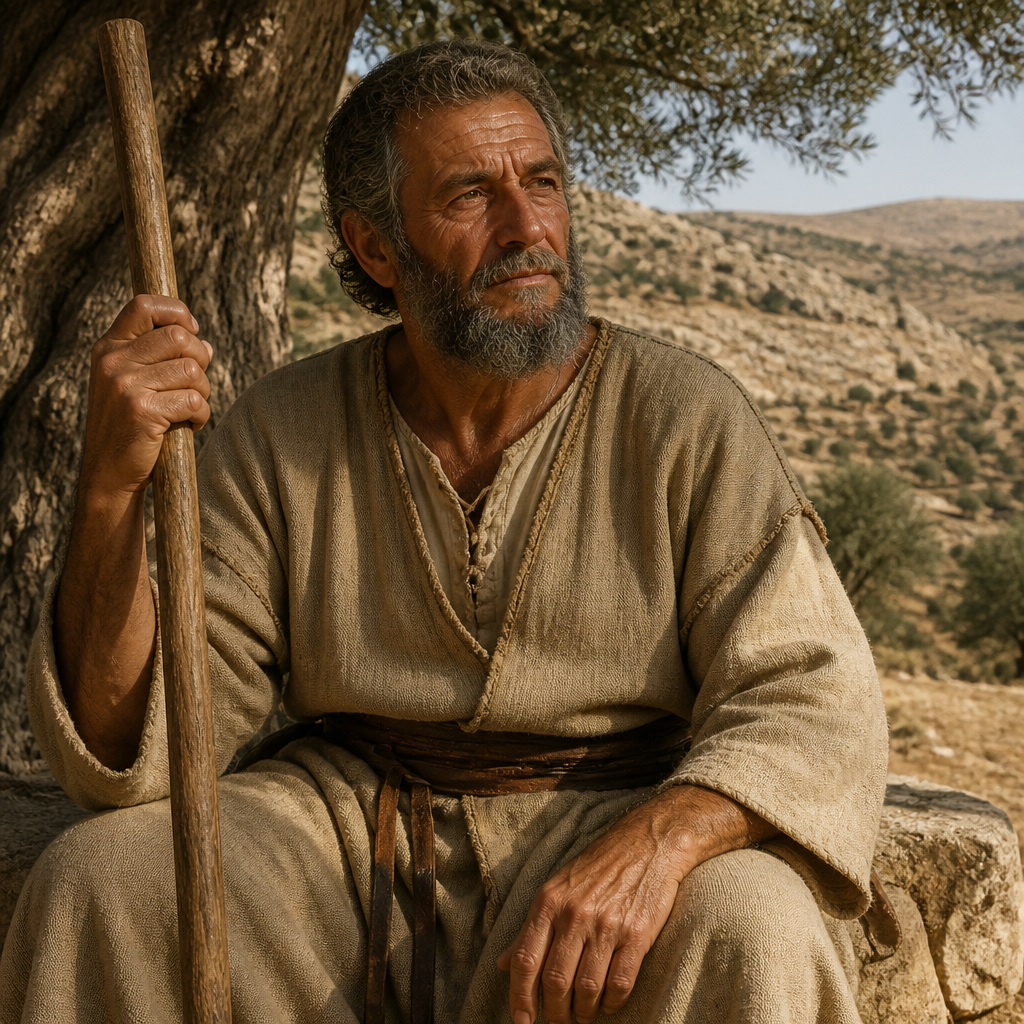
Ikkesh is identified as a 'Tekoite,' meaning he hailed from Tekoa. Tekoa was a town situated on the edge of the Judean wilderness, approximately five miles south of Bethlehem. The region was known for its rugged terrain and its production of olive oil and livestock. In the biblical narrative, Tekoites are often depicted as having a distinct character—notably the 'wise woman' of Tekoa who intervened for Absalom and, in later centuries, the prophet Amos.
Though Ikkesh’s own tribe is not explicitly stated in the text, Tekoa was located within the territory of Judah. Therefore, it is highly probable that Ikkesh was a member of the tribe of Judah. His name, ‘Iqqēš, is an unusual one, translating literally to "perverse," "twisted," or "crooked." In the wisdom literature of the Old Testament, this word is frequently used to describe the moral condition of the wicked (e.g., Proverbs 11:20). However, as a personal name in the 10th century BC, it may have carried a different idiomatic meaning or served as a descriptor unrelated to the moral connotations found in the later Book of Proverbs.
Major Life Events
The biblical text provides no specific details regarding the events of Ikkesh’s life, his occupation, or his death. His presence in the scriptures serves primarily as a genealogical marker to identify his son, Ira. In the ancient Near East, a man's identity was inextricably linked to his father's name (the patronymic), and the repetition of "Ira son of Ikkesh" across three separate lists suggests that Ikkesh was a recognized figure in his community, or at least that his name was essential for distinguishing this Ira from others in David’s service.
Relationship to Other Biblical Figures
Ikkesh’s primary biblical connection is to his son, Ira the Tekoite. Ira was one of the elite warriors known as the "Thirty" (Shaloshim), a group of specialized officers who served as the backbone of King David's military strength (2 Samuel 23:26, 1 Chronicles 11:28).
Furthermore, 1 Chronicles 27:9 reveals that Ira was appointed as the commander of the sixth division of David’s army. This division consisted of 24,000 men and was responsible for serving the king during the sixth month of every year. As the father of such a high-ranking official, Ikkesh would have been part of the social and familial fabric that supported the early years of the Davidic dynasty.
Spiritual Significance
In the lists of the Mighty Men, every name recorded is a testament to the diverse groups of people—from various towns and families—who were galvanized by David’s leadership.
Ikkesh represents the generation that produced the defenders of the United Monarchy. His legacy is carried through his son, whose faithfulness and military prowess were crucial to the security of the nation. For the chronicler, recording the name of the father alongside the hero ensured that the honor of the son reflected back upon the household and the town of Tekoa.
Ikkesh serves as a genealogical link identifying one of King David’s most prominent military leaders, Ira the Tekoite. His presence in the lists of the 'Mighty Men' and the 'Divisional Commanders' highlights the organized military structure of the United Monarchy and the importance of specific Judean families in stabilizing David's throne. The reference to his home of Tekoa also situates him within a geographical area known for producing notable biblical figures of wisdom and strength.
Frequently Asked Questions
Who was Ikkesh's most famous relative?
His son, Ira the Tekoite, who was one of King David’s 'Thirty' mighty men.
Where was Ikkesh from?
He was from Tekoa, a town in the territory of Judah, south of Bethlehem.
What does the name Ikkesh mean?
In Hebrew, the name means 'crooked,' 'twisted,' or 'perverse.'
What was Ikkesh’s role in the Bible?
He is not recorded as having a specific role himself; he is mentioned strictly as the father of Ira, a military leader under King David.
In which books of the Bible is Ikkesh mentioned?
He is mentioned in 2 Samuel and 1 Chronicles.
Family & Relationships
 IkkeshThis page
Children
 Ira son of Ikkesh the TekoiteSon2 Samuel 23:26Stated
Connected Figures
Family
Son · 2 Samuel 23:26
A high-ranking military officer in King David’s elite forces who commanded a division of 24,000 men during the United Monarchy.
United MonarchyFirst: 2 Samuel 23:263 versesMilitary CommanderJudah
Categories
Mentions by Book
- 2 Samuel1
- 1 Chronicles2
Scripture References
All 3 indexed verses, in canonical order, from the Berean Standard Bible.
2 Samuel · 1
- 2 Samuel 23:26
Helez the Paltite, Ira son of Ikkesh the Tekoite,
1 Chronicles · 2
- 1 Chronicles 11:28
Ira son of Ikkesh the Tekoite, Abiezer the Anathothite,
- 1 Chronicles 27:9
The sixth, for the sixth month, was Ira son of Ikkesh the Tekoite. There were 24,000 men in his division.