Uzai
Who was Uzai in the Bible?
A father during the Post-Exilic period whose son, Palal, assisted Nehemiah in the reconstruction of Jerusalem's walls.
Uzai was a man of the Post-Exilic period, active during the era of the Jewish return from the Babylonian captivity. While his personal lineage and specific occupation are not detailed in the biblical text, he is established in the historical record through the actions of his son, Palal. Uzai lived during the mid-5th century BC, a pivotal time when the Jewish remnant sought to re-establish their religious and national identity in Judea.
He is mentioned exclusively in the Book of Nehemiah, specifically within the list of those who labored to rebuild the fortifications of Jerusalem. Although Uzai is not credited with physical labor on the wall himself, his inclusion serves as a genealogical marker to identify his son, Palal, who was a significant participant in the reconstruction of a strategically sensitive section of the city near the royal palace.
Background and Family
The biblical record concerning Uzai is restricted to a single mention in Nehemiah 3:25. His name, derived from the Hebrew Uzai (H0186), is of uncertain meaning, though some scholars suggest it may be a shortened form of Uzziah, meaning "Yahweh is my strength." Uzai belonged to the generation of Israelites who had either returned from Babylon under the decrees of Cyrus or Artaxerxes, or were part of the community already residing in the province of Yehud (Judea) during the Persian period.
Uzai is identified primarily as the father of Palal. In the context of the Genealogies and registers found in Nehemiah, being listed as a father often suggests a level of household prominence or that the individual was a head of a family unit within the community of the returnees. There is no specific tribal affiliation mentioned for Uzai, though the location of his son’s work—near the royal palace—might suggest a connection to the social or administrative circles of Jerusalem.
Major Life Events
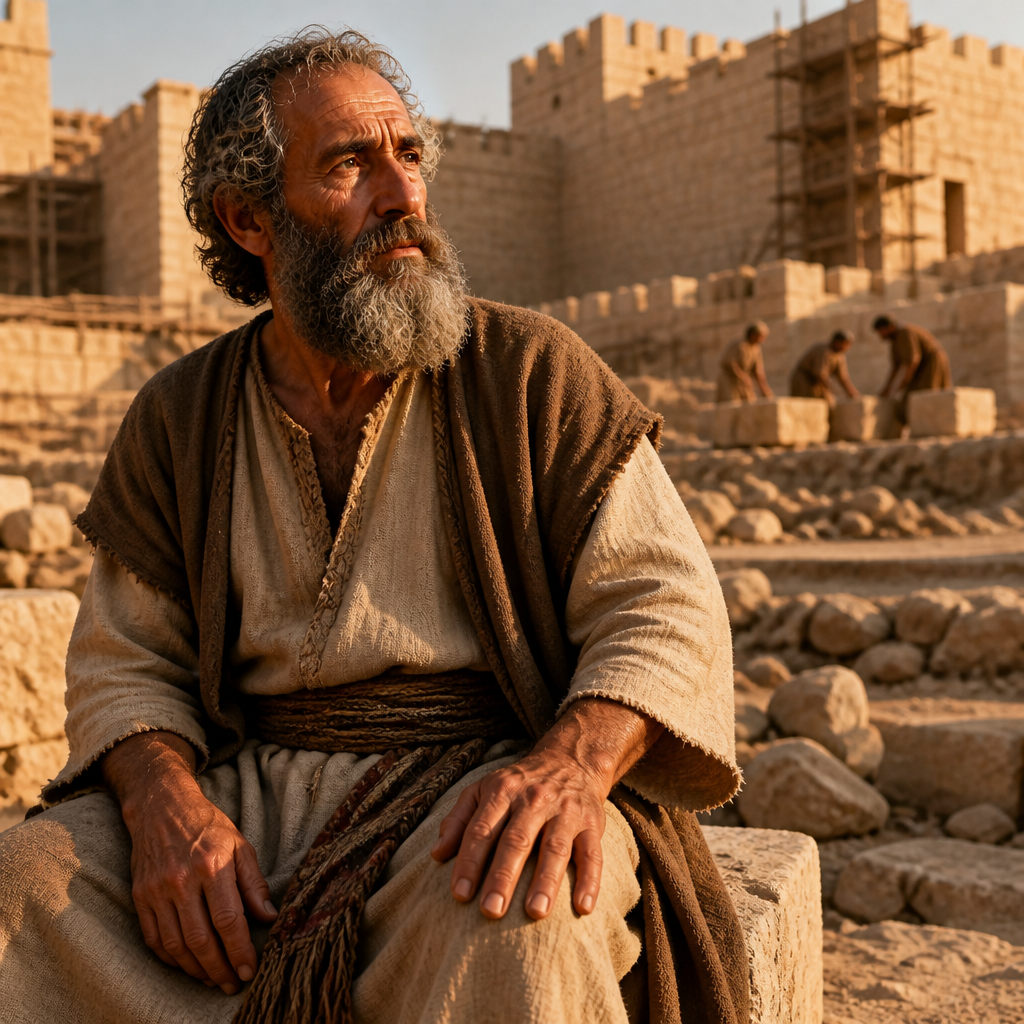
While the Bible does not record the personal actions of Uzai, he is central to the identification of his son's contribution to the restoration of Jerusalem in 444 BC. According to Nehemiah 3:25, "Palal son of Uzai made repairs opposite the angle and the tower that juts out from the upper palace of the king near the courtyard of the guard."
The work site associated with Uzai's family was one of great tactical and symbolic importance. The "upper palace" and the "courtyard of the guard" were areas associated with the Davidic monarchy and the defense of the city. By extension, Uzai’s family was responsible for securing a section of the wall that protected the administrative heart of Jerusalem. This implies that Uzai's household was part of the dedicated workforce that braved the opposition of Sanballat and Tobiah to restore the city’s dignity.
Relationship to Other Biblical Figures
Uzai’s primary relationship is with his son, Palal. In the verse following the mention of Palal, Nehemiah identifies Pedaiah son of Parosh as the next individual in the line of repairers. This placement provides a geographical and social context for Uzai’s family, positioning them among the faithful remnant of the Exile and Return era who responded to Nehemiah's call for civic and spiritual renewal.
Spiritual Significance
Although Uzai is a minor figure in the biblical narrative, his inclusion in Nehemiah 3 underscores a significant theological theme of the Post-Exilic period: the importance of individual families in the communal work of God. The meticulous recording of names like Uzai reflects the biblical emphasis on heritage and the continuity of the covenant people. In the eyes of the chronicler, the restoration of Jerusalem was not merely the work of Nehemiah, but the collective effort of fathers like Uzai and sons like Palal, each contributing to the preservation of the holy city for future generations.
Uzai represents the many individuals of the Post-Exilic period whose primary legacy was the faithfulness of their children. By being listed in the Nehemiah 3 register, Uzai is preserved in the canon as a constituent member of the community that rebuilt the foundations of post-captivity Judaism. His presence in the text affirms the value of every household in the spiritual and physical restoration of Israel.
Theologically, Uzai serves as a link in the chain of the restoration of Jerusalem. His name is etched into the history of the wall's reconstruction, serving as a testament to the fact that the renewal of the covenant community involved specific, named individuals who supported the labor of their kin.
Frequently Asked Questions
Who was Uzai in the Bible?
Uzai was an Israelite in the Post-Exilic period, known as the father of Palal, who helped rebuild the walls of Jerusalem under Nehemiah's leadership.
What does the name Uzai mean?
The exact meaning is uncertain, but it is often linked to the Hebrew root for 'strength' or considered a shortened form of Uzziah ('Yahweh is my strength').
In which book of the Bible is Uzai mentioned?
Uzai is mentioned only in the Book of Nehemiah, specifically in chapter 3, verse 25.
What specific part of Jerusalem did Uzai's son repair?
His son Palal repaired the section of the wall opposite the angle and the tower jutting out from the upper palace, near the courtyard of the guard.
What tribe did Uzai belong to?
The Bible does not specify the tribe of Uzai, identifying him only by his son and his connection to the reconstruction efforts.
Family & Relationships
 UzaiThis page
Children
 PalalSonNehemiah 3:25Stated
Connected Figures
Family
Son · Nehemiah 3:25
Palal was a post-exilic Israelite who assisted in Nehemiah’s reconstruction of the walls of Jerusalem, working on a strategic section near the royal palace.
Exile and ReturnFirst: Nehemiah 3:251 versesWall builder
Categories
Mentions by Book
- Nehemiah1
Scripture References
All 1 indexed verse, in canonical order, from the Berean Standard Bible.
Nehemiah · 1
- Nehemiah 3:25
and Palal son of Uzai made repairs opposite the angle and the tower that juts out from the upper palace of the king near the courtyard of the guard. Next to him, Pedaiah son of Parosh