Paseah, Father of Joiada
Who was Paseah, Father of Joiada, in the Bible?
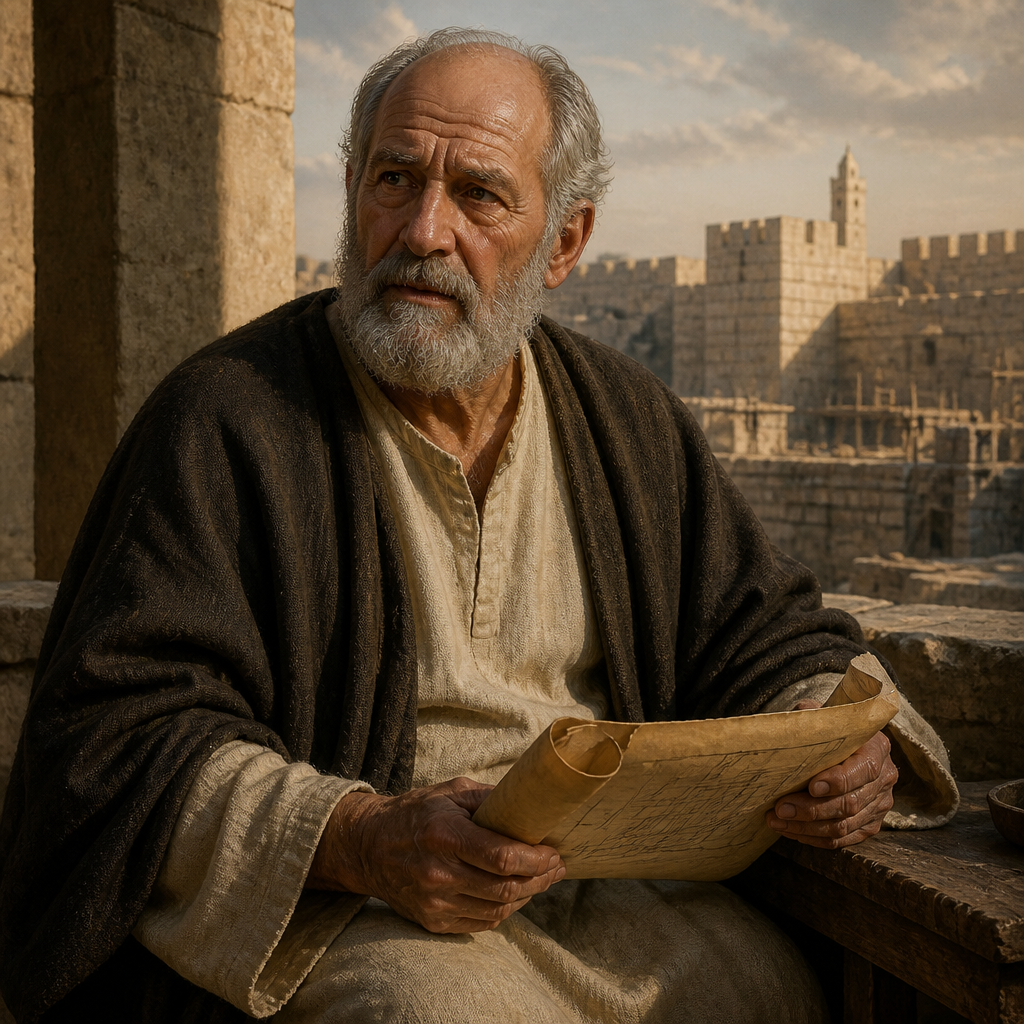
Paseah was a man of the Post-Exilic period whose son, Joiada, was a prominent leader in the restoration of Jerusalem's walls under Nehemiah.
This is one of 3 people named Paseah in the Bible. See all 3 →
Paseah is a figure identified in the Hebrew Bible during the era of the Exile and Return. He is primarily known through the genealogical identification of his son, Joiada, who participated in the massive public works project of rebuilding the walls of Jerusalem under the governorship of Nehemiah. The name Paseah translates to "limping" or "lame" in Hebrew, though in this context, it serves as a patronymic identifier for a family involved in the restoration of the holy city.
While Paseah himself is not recorded as performing the physical labor on the wall, his inclusion in the text signifies his status as a head of a household or a man of some standing among the returning exiles. His son Joiada is credited with repairing one of the most vital gateways of the city, indicating that Paseah’s lineage was instrumental in the physical and political re-establishment of the Jewish community in Judea around 444 BC.
Background and Family
The biblical record concerning Paseah is found exclusively within the context of the Post-Exilic reconstruction of Jerusalem. Following the decree of Cyrus the Great and the subsequent return of Jewish exiles from Babylon, the community faced the daunting task of securing their ancestral capital. Paseah appears in the record as the father of Joiada, one of the men who stepped forward to lead a specific section of the wall’s reconstruction.
Although the text does not explicitly state Paseah’s tribe or specific lineage, his presence in the list of builders’ families in Nehemiah 3 suggests he was part of the remnant that returned to Judea to reclaim their heritage. The mention of his name provides a genealogical anchor for Joiada, establishing the latter’s legitimacy and social standing within the community of builders.
Major Life Events
The primary mention of Paseah occurs in Nehemiah 3:6. During the twentieth year of King Artaxerxes I (c. 444 BC), Nehemiah organized the inhabitants of Jerusalem to repair the city’s breached walls. Each family or group was assigned a specific portion of the fortifications.
The Jeshanah Gate was repaired by Joiada son of Paseah and Meshullam son of Besodeiah. They laid its beams and installed its doors, bolts, and bars. (Nehemiah 3:6, BSB)
Paseah’s contribution to this event is indirect but significant; he is the father of a man entrusted with the Jeshanah Gate (also known as the "Old Gate"). This gate was a critical entry point on the northwest side of the city. The fact that Paseah’s son, Joiada, worked alongside Meshullam son of Besodeiah to install the structural beams, doors, bolts, and bars indicates that Paseah’s family possessed the resources or the artisan skills necessary for heavy architectural work.
Relationship to Other Biblical Figures
Paseah is defined by his relationship to his son, Joiada. Joiada is one of the many "repairers" listed in Nehemiah’s account, standing alongside other prominent figures such as the High Priest Eliashib and various district rulers. The partnership between Joiada and Meshullam suggests a collaborative effort between two distinct families or clans to complete a single, massive task.
Spiritual Significance
In the context of the book of Nehemiah, the naming of fathers like Paseah serves a theological and historical purpose. It emphasizes the continuity of the covenant people. By identifying Joiada as the "son of Paseah," the author links the work of the present generation to the identity of their fathers. For a community recovering from the trauma of the Babylonian exile, these genealogies were essential for establishing their right to the land and their place within the congregation of Israel. Paseah represents the generation that transitioned from the captivity of the past to the rebuilding of the future.
Paseah’s significance lies in his role as a progenitor of the restoration generation. His inclusion in the sacred record highlights the importance of family heritage in the Post-Exilic period. By being named as the father of Joiada, he is forever linked to the successful fortification of Jerusalem and the preservation of the Jewish remnant.
Theologically, Paseah exemplifies the 'hidden' figures of the Bible—those who may not have performed the recorded deeds themselves but whose names are preserved because they raised and supported the leaders who did. His name remains a testament to the communal effort required to restore the spiritual and physical center of worship in Israel.
Frequently Asked Questions
Who was Paseah's son?
Paseah's son was Joiada, who was one of the builders who repaired the Jeshanah Gate in Jerusalem.
What gate did Paseah's son help repair?
His son Joiada helped repair the Jeshanah Gate, also known as the Old Gate, during the time of Nehemiah.
In which book of the Bible is this Paseah mentioned?
This specific Paseah is mentioned in the book of Nehemiah, specifically in chapter 3, verse 6.
What era did Paseah live in?
Paseah lived during the Exile and Return era (Post-Exilic period), specifically during the 5th century BC.
Family & Relationships
 Paseah, Father of JoiadaThis page
Children
 Joiada, son of PaseahSonNehemiah 3:6Stated
Connected Figures
Family
Son · Nehemiah 3:6
A participant in the post-exilic reconstruction of Jerusalem who helped repair the Jeshanah Gate under the leadership of Nehemiah.
Exile and ReturnFirst: Nehemiah 3:61 versesBuilder and restorer
Categories
Mentions by Book
- Nehemiah1
Scripture References
All 1 indexed verse, in canonical order, from the Berean Standard Bible.
Nehemiah · 1
- Nehemiah 3:6
The Jeshanah Gate was repaired by Joiada son of Paseah and Meshullam son of Besodeiah. They laid its beams and installed its doors, bolts, and bars.
Others Named Paseah
Compare all 3 bearers →Paseah, Progenitor of Returning ExilesEzra 2:49
A patriarch whose descendants were among the Nethinim who returned to Jerusalem from the Babylonian captivity under Zerubbabel.
Paseah of Judah1 Chronicles 4:12
A descendant of Judah through the lineage of Chelub, identified as a son of Eshton and a resident of Recah during the Divided Monarchy.