Hallohesh
Who was Hallohesh in the Bible?
A Jewish leader during the Post-Exilic period who participated in the reconstruction of Jerusalem's walls and the formal renewal of the covenant under Nehemiah.
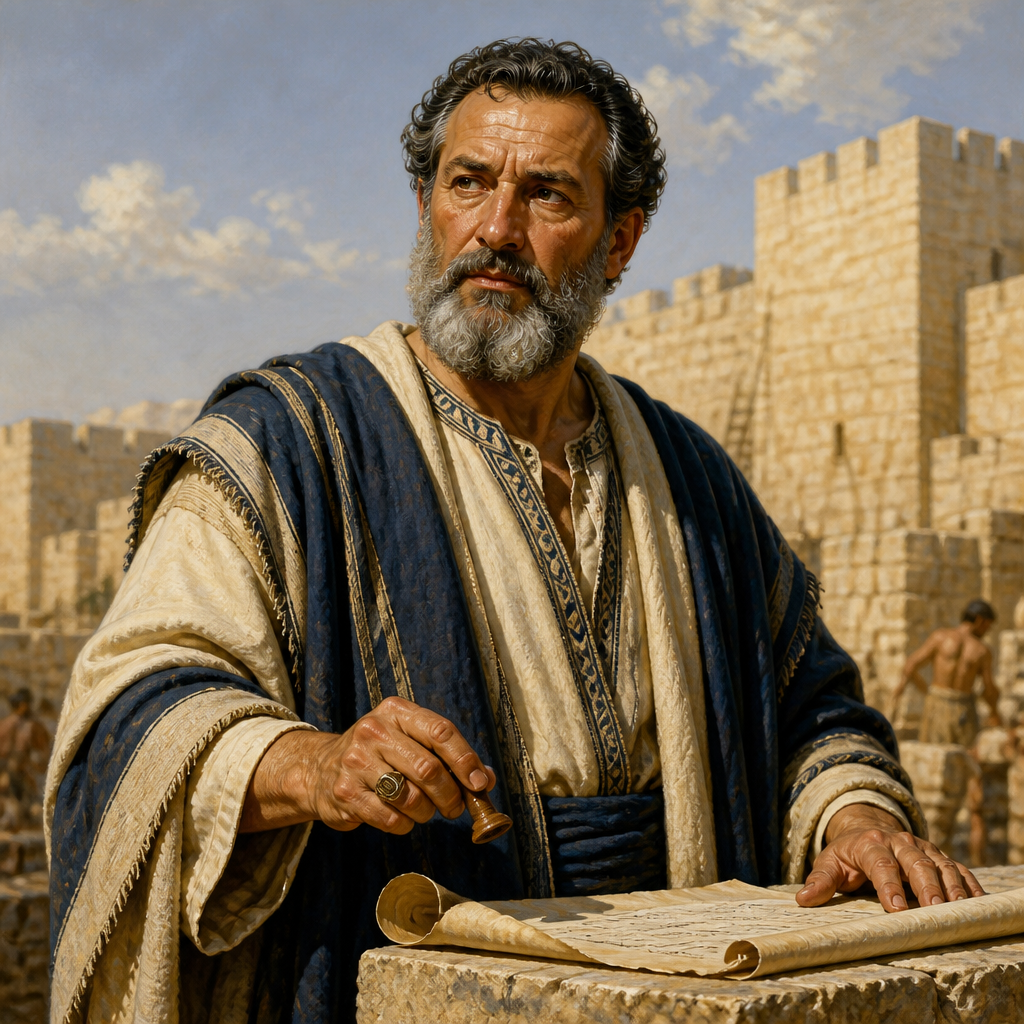
Hallohesh was a prominent Jewish leader who lived during the 5th century BC, following the return of the Jewish exiles from Babylon. His role in the restoration of Jerusalem was multi-faceted, involving both physical labor and civic leadership. As a representative of his family or clan, he held a significant enough social position to influence the political and spiritual trajectory of the community during the time of Nehemiah's reforms.
While his personal lineage is not detailed in the biblical text, his legacy is preserved through the actions of his son, Shallum, and his own commitment to the religious reforms established after the exile. Hallohesh appears in the historical records of the wall reconstruction and the signing of the solemn covenant, marking him as a key figure in the survival and reorganization of the Jewish state under Persian rule.
Background and Family
Hallohesh emerged as a figure of importance during the Post-Exilic Period, specifically during the governorship of Nehemiah (c. 445 BC). The name Hallohesh (or Ha-lohesh) literally translates from Hebrew as "the whisperer" or "the enchanter." In the context of ancient Near Eastern nomenclature, such a name might have originally referred to a professional guild or a specific family trait, though by the time of Nehemiah, it served as a proper family name or patronymic for a Judean clan.
Hallohesh is identified as the father of Shallum. The text highlights a unique social standing for this family, as Shallum is described as the "ruler of the other half-district of Jerusalem" (Nehemiah 3:12). This indicates that Hallohesh’s family held significant administrative authority within the province of Yehud under the Persian Empire.
Major Life Events
The Reconstruction of the Wall
In Nehemiah 3, the chronicler lists the various groups and individuals who participated in the rapid rebuilding of Jerusalem’s fortifications. Hallohesh’s influence is seen through the work of his son, Shallum. The record states:
"And next to them, Shallum son of Hallohesh, ruler of the other half-district of Jerusalem, made repairs, with the help of his daughters." (Nehemiah 3:12)
This mention is notable for two reasons. First, it places the family of Hallohesh at the center of the civic effort, managing the labor of a specific district. Second, it highlights the participation of Shallum’s daughters, a rare mention of women in the physical labor of the wall's reconstruction, suggesting that the household of Hallohesh was fully committed to the national cause.
The Signing of the Covenant
Later, during the spiritual revival led by Ezra and Nehemiah, the leaders of Israel gathered to sign a formal "binding agreement" to walk in God's Law. In Nehemiah 10, Hallohesh is listed by name among the "heads of the people" who set their seal to the document (Nehemiah 10:24). This act was a public commitment to avoid intermarriage with foreign nations, observe the Sabbath, and support the Temple through tithes and offerings. By signing this document, Hallohesh represented his entire paternal house, pledging their loyalty to the Mosaic Law.
Relationship to Other Biblical Figures
Hallohesh’s primary biblical relationship is with his son, Shallum. As a ruler of a half-district, Shallum carried out the administrative duties that the family status demanded. The collaboration between Hallohesh and the governor Nehemiah is also evident; Hallohesh was one of the political pillars upon whom Nehemiah relied to execute both the physical defense of the city and the spiritual reformation of the people.
Spiritual Significance
Hallohesh represents the dedicated remnant of Israel that returned from Babylon with a focus on restoration. His inclusion in the list of seal-bearers in Nehemiah 10 signifies his role as a spiritual gatekeeper for his family. He demonstrates the transition from the old monarchical system to a community governed by the written Law. His legacy is one of active participation—both in the sweat of manual labor (through his children) and in the formal, legal commitment to the service of God.
Hallohesh serves as an example of the collaborative leadership required to rebuild a nation after a period of judgment and exile. His significance lies in his dual contribution: providing the civic leadership necessary to rebuild Jerusalem's infrastructure and providing the spiritual leadership necessary to recommit the nation to its covenantal obligations. His name is preserved as a testament to those who prioritized the restoration of the Holy City over their own comfort.
The inclusion of his family in the work of Nehemiah highlights the principle of household faithfulness. By leading his son and daughters to participate in the wall's construction and by signing the covenant himself, Hallohesh ensured that his entire house was aligned with the redemptive purposes of God during a critical juncture in Israel's history.
Frequently Asked Questions
What does the name Hallohesh mean?
The name is derived from the Hebrew word for 'whisperer' or 'enchanter,' likely functioning as a family or clan name by the post-exilic period.
What role did Hallohesh's son play in Jerusalem?
His son, Shallum, was a ruler of half the district of Jerusalem and led the repair of a section of the city wall.
Did Hallohesh personally work on the walls of Jerusalem?
The text specifically mentions his son Shallum and his daughters performing the repairs, while Hallohesh is listed as a leader who signed the covenant.
Why is Hallohesh listed in Nehemiah chapter 10?
He is listed as one of the 'heads of the people' who signed a formal covenant to follow the Law of Moses and support the Temple.
What was the 'other half-district' mentioned in relation to his family?
Jerusalem was divided into administrative districts for the purpose of the rebuilding project; his family was responsible for one of these specific sections.
Family & Relationships
 HalloheshThis page
Children
 Shallum, Son of HalloheshSonNehemiah 3:12Stated
Connected Figures
Family
Son · Nehemiah 3:12
A district ruler in Jerusalem who assisted Nehemiah in rebuilding the city walls alongside his daughters during the post-exilic return.
Exile and ReturnFirst: Nehemiah 3:121 versesDistrict Ruler
Categories
Mentions by Book
- Nehemiah2
Scripture References
All 2 indexed verses, in canonical order, from the Berean Standard Bible.
Nehemiah · 2
- Nehemiah 3:12
And next to them, Shallum son of Hallohesh, ruler of the other half-district of Jerusalem, made repairs, with the help of his daughters.
- Nehemiah 10:24
Hallohesh, Pilha, Shobek,