Ahisamach
Who was Ahisamach in the Bible?
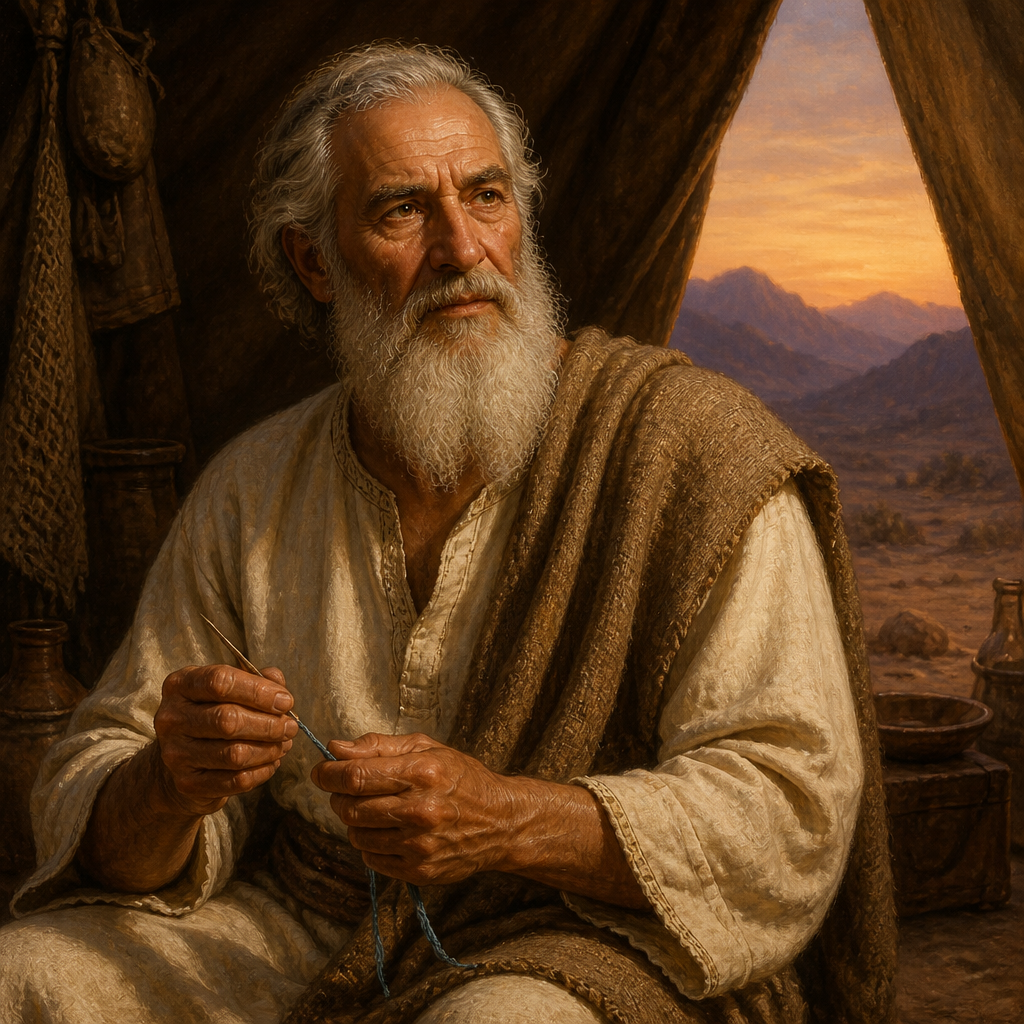
Ahisamach was a member of the tribe of Dan and the father of Oholiab, a chief artisan chosen by God to construct the Tabernacle.
Ahisamach is a figure mentioned in the Book of Exodus during the period of the Israelite wanderings in the wilderness. While he is not depicted as performing the manual labor of the Tabernacle himself, his identity is preserved in the biblical record as the father of Oholiab, one of the two primary craftsmen appointed by Yahweh to oversee the construction of the sacred tent and its furnishings.
His name, which translates roughly to "my brother has supported" or "brother of support," reflects a common Hebrew naming convention of the era. As a member of the tribe of Dan, Ahisamach represents a lineage that contributed significant artistic and structural expertise to the central sanctuary of the Hebrew faith during the formative years following the Exodus from Egypt.
Background and Family
Ahisamach was an Israelite of the tribe of Dan who lived during the 15th or 13th century BC (depending on the scholarly dating of the Exodus). The biblical record provides no specific details regarding his personal life, birth, or death, focusing instead on his role as the progenitor of Oholiab. As a member of the Danites, Ahisamach belonged to a tribe that would later be associated with both physical strength and specialized craftsmanship. The inclusion of his name in the genealogical snippets of Exodus suggests he was a man of recognized standing within his tribal unit, sufficient for his son to be identified by his patronymic in the national record.
The Tabernacle Commission
The primary significance of Ahisamach in the biblical narrative is his relationship to the construction of the Tabernacle. In Exodus 31:6, God speaks to Moses, identifying Oholiab, son of Ahisamach, as the designated assistant to Bezalel of the tribe of Judah. This appointment was not merely a matter of human selection but was described as a divine endowment of skill and wisdom.
While Bezalel was the lead architect, Oholiab—and by extension the house of Ahisamach—was responsible for the intricate work of engraving, designing, and embroidering. The text emphasizes that Oholiab was gifted with the ability to teach others (Exodus 35:34), a trait that likely reflected the disciplined upbringing and heritage provided by Ahisamach. The work involved handling precious materials such as blue, purple, and scarlet yarn, as well as fine linen, requiring a high degree of technical proficiency that would have been nurtured within the family structure.
Relationship to Other Biblical Figures
Ahisamach is inextricably linked to Oholiab. In every instance where Ahisamach is mentioned (Exodus 31:6, 35:34, 38:23), he is identified specifically as Oholiab’s father. This constant pairing serves to validate Oholiab’s credentials and tribal heritage. Within the broader context of the Exodus, Ahisamach’s family worked in close proximity to Moses and Bezalel, forming the core administrative and creative leadership for the Tabernacle project.
Spiritual Significance
Though Ahisamach himself remains in the background, his presence in the text underscores the importance of lineage and the passing of skills within the covenant community. The biblical narrative often highlights the parents of those who perform great service for God, suggesting that the faithfulness or provision of the father contributed to the readiness of the son. By providing the tribe of Dan with a place of honor in the Tabernacle’s construction, the account shows that God utilized the diverse talents of all the tribes, regardless of their status or size, to build His dwelling place among men.
Ahisamach represents the quiet but essential foundation of family and tribal identity that supports monumental acts of service. His theological importance lies in his role as the father of a 'divinely inspired' artisan, showing that the preparation for sacred work often begins in the previous generation.
Furthermore, his inclusion ensures that the tribe of Dan is recorded as having a vital role in the Exodus. It highlights the biblical theme that God chooses specific individuals from specific families to fulfill His purposes, ensuring that every contribution to the community—even that of a father whose son does the visible work—is memorialized in the sacred text.
Frequently Asked Questions
What does the name Ahisamach mean?
The name Ahisamach (אֲחִיסָמָךְ) means 'my brother has supported' or 'brother of support' in Hebrew.
Which tribe did Ahisamach belong to?
Ahisamach was a member of the tribe of Dan.
Who was Ahisamach's son?
His son was Oholiab, one of the two chief craftsmen of the Tabernacle.
Did Ahisamach help build the Tabernacle?
The Bible does not explicitly state that Ahisamach worked on the Tabernacle; rather, it emphasizes that his son Oholiab was the one endowed by God with the skill to do so.
How many times is Ahisamach mentioned in the Bible?
Ahisamach is mentioned three times, all within the Book of Exodus (chapters 31, 35, and 38).
Family & Relationships
 AhisamachThis page
Children
 OholiabSonExodus 31:6Stated
Connected Figures
Family
Son · Exodus 31:6
A skilled artisan from the tribe of Dan appointed by God to help construct the Tabernacle and its sacred furnishings during the Exodus.
Egypt and WildernessFirst: Exodus 31:65 versesArtisan, engraver, and embroidererDan
Categories
Mentions by Book
- Exodus3
Scripture References
All 3 indexed verses, in canonical order, from the Berean Standard Bible.
Exodus · 3
- Exodus 31:6
Moreover, I have selected Oholiab son of Ahisamach, of the tribe of Dan, as his assistant. I have also given skill to all the craftsmen, that they may fashion all that I have commanded you:
- Exodus 35:34
And the LORD has given both him and Oholiab son of Ahisamach, of the tribe of Dan, the ability to teach others.
- Exodus 38:23
With him was Oholiab son of Ahisamach, of the tribe of Dan, an engraver, designer, and embroiderer in blue, purple, and scarlet yarn and fine linen.