Malchiah
Who was Malchiah in the Bible?
A member of the Judean royal house during the reign of King Zedekiah, best known for owning the muddy cistern into which the prophet Jeremiah was cast.
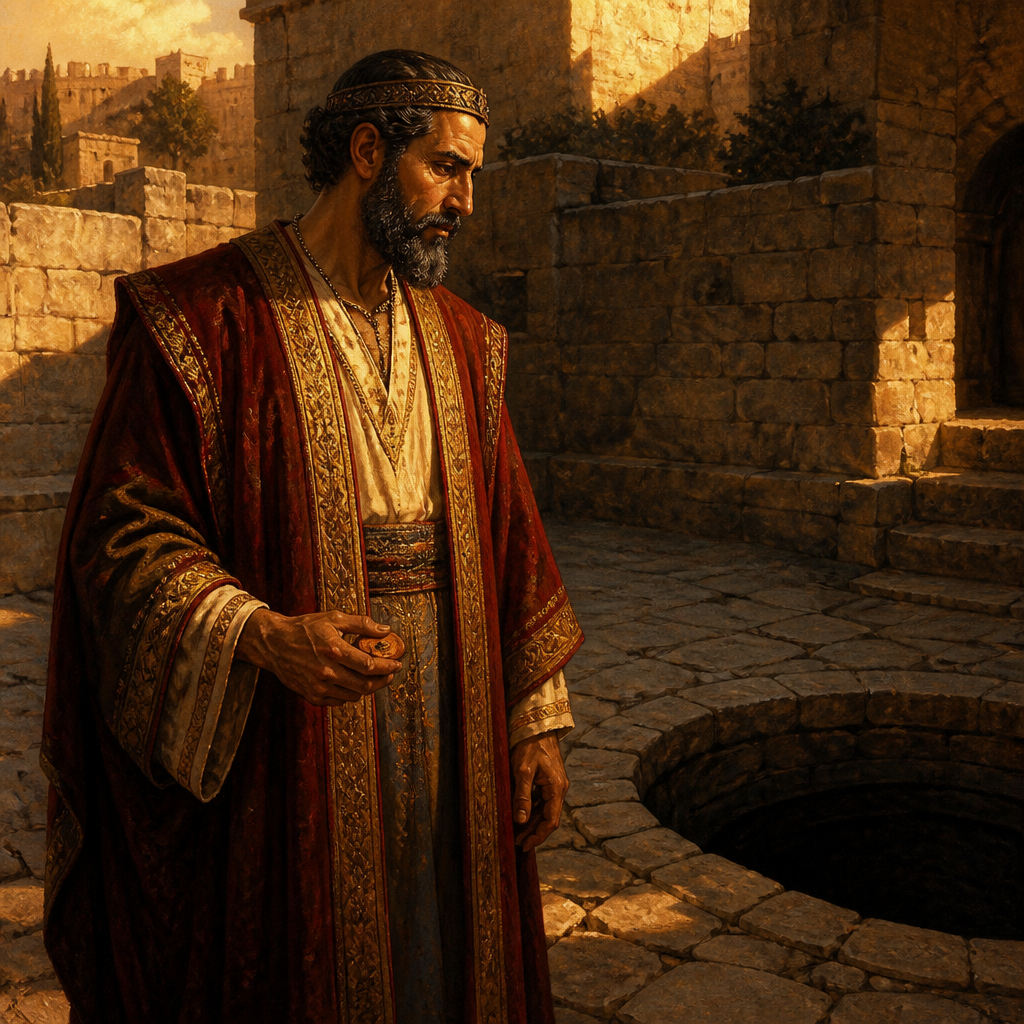
Malchiah (also rendered as Malchijah) was a figure of significant social and political standing in the final years of the Kingdom of Judah. Identified specifically as "the king’s son," he operated within the inner circles of the royal court in Jerusalem during the tumultuous reign of King Zedekiah. His presence in the biblical narrative is inextricably linked to the persecution of the prophet Jeremiah, who was accused of undermining the city's defense against the Babylonian siege.
While Malchiah's personal actions are not detailed extensively, his status as a property owner within the royal precinct—specifically owning a cistern in the courtyard of the guard—places him at the center of the Judean resistance against Jeremiah’s message of surrender. His son, Pashhur, also served as a high-ranking official who actively sought the prophet's death, suggesting a family alignment with the pro-war faction in Jerusalem before its fall in 586 BC.
Background and Family
Malchiah was a contemporary of the prophet Jeremiah during the late 7th and early 6th centuries BC. The biblical text identifies him as the father of Pashhur, a prominent official in the court of King Zedekiah. More notably, Jeremiah 38:6 identifies Malchiah as the "king’s son." In the context of the Divided Monarchy, this title often referred to a member of the royal family or a prince of the blood, though it could occasionally denote a specific administrative rank within the palace hierarchy. Given his ownership of property within the royal "courtyard of the guard," it is highly probable he was a direct member of the Davidic line.
Major Life Events
Malchiah’s primary appearance in the biblical record occurs during the siege of Jerusalem by Nebuchadnezzar II. The city was in a state of political and military crisis. Jeremiah had been prophesying that the city would fall and that those who stayed would perish, while those who surrendered to the Chaldeans would live. This message was viewed as treasonous by the Judean princes.
Although the text does not record Malchiah’s specific words, it highlights his involvement through his resources and his son. His son, Pashhur, was one of the four officials who petitioned King Zedekiah to put Jeremiah to death. When the king surrendered Jeremiah into their hands, the officials chose Malchiah’s cistern as the instrument of the prophet's execution.
"So they took Jeremiah and dropped him into the cistern of Malchiah, the king’s son, which was in the courtyard of the guard. They lowered Jeremiah with ropes into the cistern, which had no water but only mud, and Jeremiah sank down into the mud." (Jeremiah 38:6)
This cistern was located in a secure area where the king’s guards were stationed, indicating Malchiah’s proximity to the seat of power. The intention was for Jeremiah to die of starvation or exposure in the mire, a fate he narrowly escaped through the intervention of Ebed-Melech the Ethiopian.
Relationship to Other Biblical Figures
Malchiah’s relationship with the royal house is confirmed by King Zedekiah’s reliance on Malchiah’s family. In Jeremiah 21:1, the king sent Pashhur, the son of Malchiah, to Jeremiah to inquire of the Lord during the initial stages of the Babylonian advance. This suggests that while Malchiah’s family held positions of trust, they remained spiritually conflicted—seeking the prophet’s counsel in times of terror while attempting to silence him when his words contradicted their political goals.
Spiritual Significance
In the broader context of the Book of Jeremiah, Malchiah represents the institutional opposition to the Word of God. As a "king’s son," he embodies the failure of the Davidic leadership to protect the righteous and listen to divine warnings. His cistern, intended for water storage but filled only with life-threatening mud, serves as a literary and historical symbol of the spiritual state of Jerusalem: a place where life-giving truth had been replaced by stagnant, suffocating opposition to God's will.
Malchiah serves as a representative of the Judean aristocracy that resisted the prophetic warnings of the Exile. His significance lies primarily in his role as a provider of the means of Jeremiah's suffering; his cistern becomes a symbol of the depths of the prophet's trials. Historically, he illustrates the high social standing of those who pressured King Zedekiah to reject Jeremiah's counsel, showing that the opposition to the prophet was rooted in the highest levels of the royal family.
Theological reflection on Malchiah often focuses on the irony of a 'king’s son' using his inheritance to persecute God’s messenger. While he possesses the status and property of the covenant line of David, he uses those assets to silence the very word that could have preserved the city.
Frequently Asked Questions
Was Malchiah actually the biological son of King Zedekiah?
The Bible identifies him as 'the king's son' (Jeremiah 38:6). While this could mean he was a son of Zedekiah, the term was often used for any male member of the royal family or a specific official title. Because he had a grown son (Pashhur) active in politics, he may have been a son of a previous king, such as Josiah or Jehoiakim.
What was the purpose of the cistern belonging to Malchiah?
Cisterns were typically underground reservoirs for storing rainwater. By the time Jeremiah was cast into it, the water was depleted, leaving only a deep layer of thick mud at the bottom.
Did Malchiah personally throw Jeremiah into the pit?
The text states that the princes (including Malchiah’s son Pashhur) took Jeremiah and lowered him into Malchiah’s cistern. It does not explicitly state that Malchiah himself was present, but it was his private property within the guard's courtyard.
What happened to Malchiah after the fall of Jerusalem?
The Bible does not record the fate of Malchiah specifically. However, given his status as a royal and the father of a high official, he likely faced the same fate as the rest of the Judean nobility: execution by the Babylonians at Riblah or deportation to Babylon.
How many times is Malchiah mentioned in the Bible?
This specific Malchiah is mentioned three times in the Book of Jeremiah (Jeremiah 21:1, 38:1, and 38:6).
Family & Relationships
 MalchiahThis page
Children
 Pashhur, Official Son of MalchijahSonJeremiah 21:1Stated
Connected Figures
Family
Son · Jeremiah 21:1
A prominent official under King Zedekiah who served as a royal messenger and later advocated for the execution of the prophet Jeremiah.
Divided MonarchyFirst: Jeremiah 21:13 versesRoyal official and messengerBenjamin
Categories
Mentions by Book
- Jeremiah3
Scripture References
All 3 indexed verses, in canonical order, from the Berean Standard Bible.
Jeremiah · 3
- Jeremiah 21:1
This is the word that came to Jeremiah from the LORD when King Zedekiah sent to him Pashhur son of Malchijah and the priest Zephaniah son of Maaseiah. They said,
- Jeremiah 38:1
Now Shephatiah son of Mattan, Gedaliah son of Pashhur, Jucal son of Shelemiah, and Pashhur son of Malchijah heard that Jeremiah had been telling all the people:
- Jeremiah 38:6
So they took Jeremiah and dropped him into the cistern of Malchiah, the king’s son, which was in the courtyard of the guard. They lowered Jeremiah with ropes into the cistern, which had no water but only mud, and Jeremiah sank down into the mud.