Lo-ruhamah
Who was Lo-ruhamah in the Bible?
The daughter of the prophet Hosea and Gomer, whose name symbolically represented God's withdrawal of compassion from the northern kingdom of Israel.
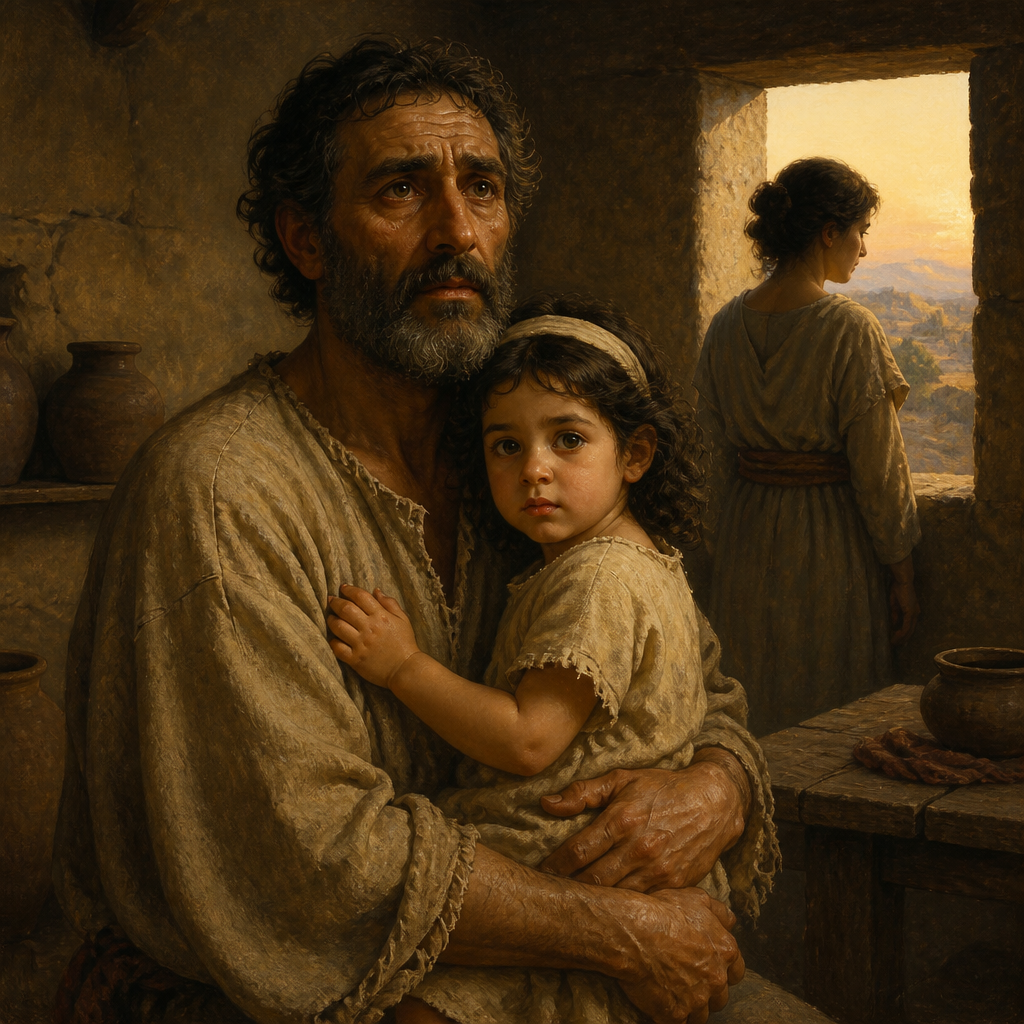
Lo-ruhamah was the second child and only daughter born to the prophet Hosea and his wife, Gomer. Her birth occurred during the period of the Divided Monarchy, specifically during the decline of the northern kingdom of Israel. Like her siblings, her life and name served as a living prophecy, a visible sign to the people of Israel regarding their fractured relationship with Yahweh.
Her name, meaning "Not Pitied" or "No Mercy," was commanded by God to signify a pivotal shift in His dealings with the house of Israel. While her individual life is not detailed in the biblical narrative beyond her birth and weaning, her existence remains one of the most poignant symbols of judgment in the Old Testament prophetic tradition.
Background and Family
Lo-ruhamah was born into a household defined by prophetic symbolism. Her father was Hosea, a prophet in the northern kingdom of Israel, and her mother was Gomer, daughter of Diblaim. The marriage between her parents was itself a divine command, intended to mirror the spiritual adultery of the nation. Lo-ruhamah was the middle child of three; she had an older brother named Jezreel and a younger brother named Lo-ammi.
Unlike many biblical figures, the record of Lo-ruhamah is strictly limited to her role as a sign. The text of Hosea 1:6 identifies her specifically as a daughter, and verse 8 notes the timeframe of her infancy by mentioning her weaning. In ancient Israelite culture, weaning typically occurred between the ages of two and three, suggesting a brief interval of time between the prophetic messages delivered through her and her younger brother.
Major Life Events
The primary event associated with Lo-ruhamah is her naming ceremony. According to Hosea 1:6, after Gomer gave birth, the LORD instructed Hosea: “Name her Lo-ruhamah, for I will no longer have compassion on the house of Israel, that I should ever forgive them.” This naming served as a public declaration of divine intent.
The only other biographical detail provided is found in Hosea 1:8, which states that after Gomer had weaned Lo-ruhamah, she conceived again and gave birth to a son. This detail functions primarily as a chronological marker within the prophetic narrative of Hosea’s family life, indicating that the prophetic warnings were unfolding over several years.
Relationship to Other Biblical Figures
Lo-ruhamah’s identity is entirely defined by her relationship to her parents and siblings. As the daughter of Hosea, she was part of a “prophetic family.” Her siblings, Jezreel and Lo-ammi, shared her burden of carrying symbolic names. While Jezreel’s name pointed to historical judgment at a specific location, Lo-ruhamah’s name addressed the emotional and spiritual state of the covenant—the exhaustion of God’s mercy. Her mother, Gomer, is portrayed as a woman whose unfaithfulness symbolized Israel’s idolatry, casting Lo-ruhamah as a child born into a metaphor of national crisis.
Spiritual Significance
The theological weight of Lo-ruhamah lies in the meaning of her name: Lo (not) Ruhamah (pitied/loved/shown mercy). The root word racham refers to a deep, visceral compassion, often associated with the womb. By naming a child "Not Pitied," God communicated that the northern kingdom had reached a point where the natural divine inclination toward mercy was being withheld due to persistent unfaithfulness.
However, within the broader context of Hosea’s prophecy, Lo-ruhamah also represents the hope of future restoration. Though her name originally signaled a loss of compassion, later passages in Hosea (such as Hosea 2:23) promise a time when God will say to "Not Pitied," "You are my pitied one." Thus, she stands as a witness to both the severity of God’s judgment and the eventual persistence of His redeeming love.
Lo-ruhamah serves as one of the most direct symbols of the Broken Covenant in the Old Testament. Her name was a divine decree that God’s patience with the northern kingdom of Israel had reached its limit, signifying the end of the special protection and forgiveness they had previously enjoyed. She is a 'sign-child,' a figure whose very existence was a sermon to a rebellious nation.
Theologically, she represents the transition from the period of divine forbearance to the period of Assyrian exile. Her mention in the text is brief, yet it provides the essential bridge between the political judgment represented by her brother Jezreel and the relational rejection represented by her brother Lo-ammi.
Frequently Asked Questions
What does the name Lo-ruhamah mean?
The name means 'Not Pitied' or 'No Mercy,' signifying that God would no longer show compassion to the house of Israel.
Who were Lo-ruhamah's parents?
Her father was the prophet Hosea and her mother was Gomer, the daughter of Diblaim.
Did Lo-ruhamah have any siblings?
Yes, she had an older brother named Jezreel and a younger brother named Lo-ammi.
Why did God tell Hosea to give his daughter this name?
The name was intended as a living prophecy to the people of Israel, indicating that because of their sins, God would no longer forgive the northern kingdom.
In which book of the Bible is Lo-ruhamah mentioned?
She is mentioned exclusively in the first chapter of the Book of Hosea.
Family & Relationships
Parents
 Gomer, Daughter of DiblaimMotherHosea 1:6Stated
 HoseaFatherHosea 1:3
Inferred
Hosea 1:6 names Hosea and Lo-ruhamah in the same verse but does not state a daughter tie between them; the link rests on the surrounding narrative.Evidence: Hosea 1:3; Hosea 1:6
 Lo-ruhamahThis page
 Jezreel, Son of HoseaBrotherHosea 1:3–6Stated
 Lo-ammiBrotherHosea 1:6–9Stated
Connected Figures
Family
Mother · Hosea 1:6
The daughter of Diblaim and wife of the prophet Hosea during the Divided Monarchy, whose marriage served as a living metaphor for God's relationship with Israel.
Divided MonarchyFirst: Hosea 1:35 versesWife of the Prophet Hosea
Father · Hosea 1:3
A prophet in the Northern Kingdom of Israel during the 8th century BC, known for his symbolic marriage to Gomer and his message of God's enduring love for a faithless people.
Brother · Hosea 1:3–6
The firstborn son of the prophet Hosea and Gomer, whose name served as a prophetic sign of judgment against the house of Jehu and the kingdom of Israel.
Divided MonarchyFirst: Hosea 1:47 versesProphetic sign/child
Brother · Hosea 1:6–9
The third child of the prophet Hosea and Gomer, whose name symbolizes God's rejection of Israel during the Divided Monarchy.
Divided MonarchyFirst: Hosea 1:97 versesSymbolic prophetic figure
Categories
Mentions by Book
- Hosea7
Scripture References
All 7 indexed verses, in canonical order, from the Berean Standard Bible.
Hosea · 7
- Hosea 1:3Partial
So Hosea went and married Gomer daughter of Diblaim, and she conceived and bore him a son.
Cited as evidence on a family card; added so References, Key Verses and Mentions by Book share one index.
- Hosea 1:4Partial
Then the LORD said to Hosea, “Name him Jezreel, for soon I will bring the bloodshed of Jezreel upon the house of Jehu, and I will put an end to the kingdom of Israel.
Cited as evidence on a family card; added so References, Key Verses and Mentions by Book share one index.
- Hosea 1:5Partial
And on that day I will break the bow of Israel in the Valley of Jezreel.”
Cited as evidence on a family card; added so References, Key Verses and Mentions by Book share one index.
- Hosea 1:6
Gomer again conceived and gave birth to a daughter, and the LORD said to Hosea, “Name her Lo-ruhamah, for I will no longer have compassion on the house of Israel, that I should ever forgive them.
- Hosea 1:7Partial
Yet I will have compassion on the house of Judah, and I will save them—not by bow or sword or war, not by horses and cavalry, but by the LORD their God.”
Cited as evidence on a family card; added so References, Key Verses and Mentions by Book share one index.
- Hosea 1:8
After she had weaned Lo-ruhamah, Gomer conceived and gave birth to a son.
- Hosea 1:9Partial
And the LORD said, “Name him Lo-ammi, for you are not My people, and I am not your God.
Cited as evidence on a family card; added so References, Key Verses and Mentions by Book share one index.