Lo-ammi
Who was Lo-ammi in the Bible?
The third child of the prophet Hosea and Gomer, whose name symbolizes God's rejection of Israel during the Divided Monarchy.
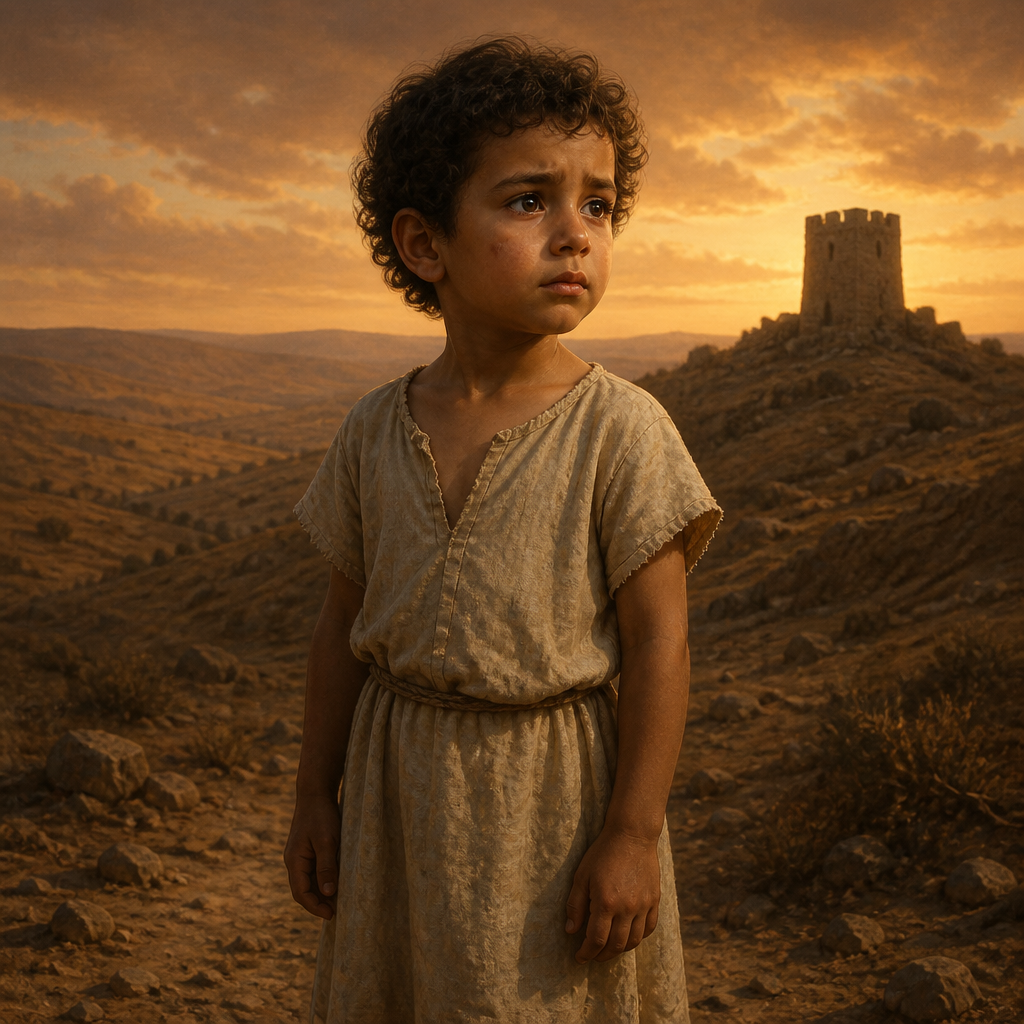
Lo-ammi was the third child born to the prophet Hosea and his wife, Gomer, daughter of Diblaim, during the era of the Divided Monarchy. His name is a symbolic designation given by God to reflect the broken covenantal relationship between Yahweh and the Northern Kingdom of Israel.
Appearing in the prophetic record of Hosea, Lo-ammi's identity is defined entirely by his role as a living sign. Unlike his siblings, his name represents the final stage of divine judgment communicated through Hosea’s family structure, signaling a formal, though not permanent, severance of the relationship between God and His people.
Background and Family
Lo-ammi was born into a family defined by prophetic symbolism. His father was Hosea, a prophet to the Northern Kingdom, and his mother was Gomer, a woman identified as a 'wife of whoredom' (Hosea 1:2). Lo-ammi had two older siblings: a brother named Jezreel and a sister named Lo-ruhamah. The biblical record explicitly identifies him as the child Gomer bore after weaning Lo-ruhamah, placing his birth late in the sequence of Hosea's early prophetic actions during the Divided Monarchy.
Major Life Events
The only recorded event in the life of Lo-ammi is his birth and subsequent naming. The naming was not a parental choice but a divine command. According to Hosea 1:9, the LORD instructed Hosea on the specific name to be given to the boy. The text records the command: "Name him Lo-ammi, for you are not My people, and I am not your God."
There are no further historical details regarding Lo-ammi’s adulthood, occupation, or eventual death. He remains, in the biblical narrative, a child whose very existence served as a public indictment of Israel's spiritual adultery. His life was framed by the political instability and moral decline of the Northern Kingdom before its eventual fall to Assyria.
Relationship to Other Biblical Figures
Lo-ammi is strictly defined by his immediate family unit. He is the son of Hosea and Gomer. His relationship to his siblings, Jezreel and Lo-ruhamah, is purely chronological within the narrative of Hosea’s symbolic marriage. While he is a member of the covenant community by birth, his name specifically denotes his exclusion from the benefits of that covenant as a representative of the nation at large.
Spiritual Significance
The name Lo-ammi carries immense theological weight. In Hebrew, Lo signifies a negation ('not'), and Ammi means 'my people.' By naming the child 'Not My People,' God utilized the boy as a visual and linguistic metaphor for the status of Israel. This was the ultimate reversal of the Sinai covenant formula, where God had promised, 'I will be your God, and you shall be my people.'
Lo-ammi represents the climax of the three symbolic children. While Jezreel signaled judgment and Lo-ruhamah signaled the withdrawal of mercy, Lo-ammi signaled the total dissolution of the relational bond. However, the context of Hosea suggests that this rejection was a disciplinary measure intended to lead to future restoration, as the book later promises that those called 'Not My People' would eventually be called 'Sons of the living God.'
Lo-ammi serves as one of the most stark examples of 'sign-acts' in the Old Testament, where a person’s life and identity are subsumed by a prophetic message. His name represents the legal and spiritual divorce between God and Israel due to the nation's idolatry.
The theological importance of Lo-ammi lies in the gravity of the name's meaning. It demonstrates that the covenant relationship was not a mechanical guarantee but a relational bond that could be severed by persistent unfaithfulness. His existence reminded the people of the Divided Monarchy that their status as the chosen people was at risk.
Frequently Asked Questions
What does the name Lo-ammi mean?
The name Lo-ammi means 'Not My People' in Hebrew.
Who were Lo-ammi's parents?
He was the son of the prophet Hosea and Gomer, the daughter of Diblaim.
Did Lo-ammi have any siblings?
Yes, he had an older brother named Jezreel and an older sister named Lo-ruhamah.
Why did God tell Hosea to name his son Lo-ammi?
God used the name as a symbol to tell the people of Israel that because of their unfaithfulness, they were no longer acting as His people, and He was not acting as their God.
In which book of the Bible is Lo-ammi mentioned?
Lo-ammi is mentioned only in the book of Hosea, specifically in chapter 1, verse 9.
Family & Relationships
Parents
 Gomer, Daughter of DiblaimMotherHosea 1:8–9Stated
 HoseaFatherHosea 1:3
Inferred
No verse names Lo-ammi and Hosea together; the father link is carried from the surrounding genealogy and is not stated in Scripture.Evidence: Hosea 1:3; Hosea 1:8; Hosea 1:9
 Lo-ammiThis page
 Jezreel, Son of HoseaBrotherHosea 1:3–9Stated
 Lo-ruhamahSisterHosea 1:6–9Stated
Connected Figures
Family
Mother · Hosea 1:8–9
The daughter of Diblaim and wife of the prophet Hosea during the Divided Monarchy, whose marriage served as a living metaphor for God's relationship with Israel.
Divided MonarchyFirst: Hosea 1:35 versesWife of the Prophet Hosea
Father · Hosea 1:3
A prophet in the Northern Kingdom of Israel during the 8th century BC, known for his symbolic marriage to Gomer and his message of God's enduring love for a faithless people.
Brother · Hosea 1:3–9
The firstborn son of the prophet Hosea and Gomer, whose name served as a prophetic sign of judgment against the house of Jehu and the kingdom of Israel.
Divided MonarchyFirst: Hosea 1:47 versesProphetic sign/child
Sister · Hosea 1:6–9
The daughter of the prophet Hosea and Gomer, whose name symbolically represented God's withdrawal of compassion from the northern kingdom of Israel.
Divided MonarchyFirst: Hosea 1:67 versesSymbolic prophetic figure
Categories
Mentions by Book
- Hosea7
Scripture References
All 7 indexed verses, in canonical order, from the Berean Standard Bible.
Hosea · 7
- Hosea 1:3Partial
So Hosea went and married Gomer daughter of Diblaim, and she conceived and bore him a son.
Cited as evidence on a family card; added so References, Key Verses and Mentions by Book share one index.
- Hosea 1:4Partial
Then the LORD said to Hosea, “Name him Jezreel, for soon I will bring the bloodshed of Jezreel upon the house of Jehu, and I will put an end to the kingdom of Israel.
Cited as evidence on a family card; added so References, Key Verses and Mentions by Book share one index.
- Hosea 1:5Partial
And on that day I will break the bow of Israel in the Valley of Jezreel.”
Cited as evidence on a family card; added so References, Key Verses and Mentions by Book share one index.
- Hosea 1:6Partial
Gomer again conceived and gave birth to a daughter, and the LORD said to Hosea, “Name her Lo-ruhamah, for I will no longer have compassion on the house of Israel, that I should ever forgive them.
Cited as evidence on a family card; added so References, Key Verses and Mentions by Book share one index.
- Hosea 1:7Partial
Yet I will have compassion on the house of Judah, and I will save them—not by bow or sword or war, not by horses and cavalry, but by the LORD their God.”
Cited as evidence on a family card; added so References, Key Verses and Mentions by Book share one index.
- Hosea 1:8Partial
After she had weaned Lo-ruhamah, Gomer conceived and gave birth to a son.
Cited as evidence on a family card; added so References, Key Verses and Mentions by Book share one index.
- Hosea 1:9
And the LORD said, “Name him Lo-ammi, for you are not My people, and I am not your God.