Eshton
Who was Eshton in the Bible?
A descendant of Judah through the lineage of Chelub, identified as the father of Beth-rapha, Paseah, and Tehinnah.
Eshton is a figure mentioned in the genealogical records of the tribe of Judah, specifically within the post-exilic documentation found in 1 Chronicles. His placement in the biblical text serves to establish the lineage of various families and clans that settled or inhabited specific regions during the Divided Monarchy and earlier. He is identified as the son of Mehir and the grandson of Chelub.
While the biblical record regarding Eshton is brief, it provides essential links between the primary tribal patriarchs and specific localized groups known as the 'men of Recah.' Through his three named sons—Beth-rapha, Paseah, and Tehinnah—Eshton’s lineage is connected to the establishment of certain towns or family guilds within the territory of Judah.
Background and Family
Eshton appears in the records of 1 Chronicles 4, a chapter dedicated to the complex and sprawling genealogy of the tribe of Judah. The text identifies Eshton as part of the lineage of Chelub (the brother of Shuhah). According to 1 Chronicles 4:11, Chelub fathered Mehir, who in turn fathered Eshton.
This specific branch of Judah's family tree is distinct from the more prominent Davidic line, focusing instead on the clans that populated the southern and central regions of the Promised Land. The genealogical structure highlights Eshton as a pivotal generational link between the earlier descendants of Judah and the specific families that would come to be known as the 'men of Recah.'
Major Life Events
As is common with many figures in the Chronicler’s genealogies, there are no specific biographical narratives or historical events recorded for Eshton. His presence in the Bible is defined entirely by his ancestry and his progeny. The Chronicler notes in 1 Chronicles 4:12 that Eshton was the father of three sons: Beth-rapha, Paseah, and Tehinnah.
The text further notes that Tehinnah was the father of Ir-nahash (which translates to 'City of the Serpent'). The inclusion of these names suggests that Eshton was the progenitor of families that held significant influence over specific geographical locations or perhaps specialized trades within the Judean tribal territory.
Relationship to Other Biblical Figures
Eshton’s primary relationship is to his father, Mehir, and his grandfather, Chelub. Within the context of the Divided Monarchy’s administrative and genealogical record-keeping, these names served to validate the land claims and heritage of the Judean people.
His sons represent the continuation of this heritage. Paseah, one of Eshton's sons, bears a name that reappears in later biblical history (such as the 'sons of Paseah' who returned from the Babylonian exile in Ezra 2:49), though the text does not explicitly confirm if these are the same lineage. Furthermore, the closing remark of his genealogical entry, 'These were the men of Recah,' suggests a close communal or fraternal bond between Eshton’s descendants and the inhabitants of a place or group called Recah.
Spiritual Significance
The mention of Eshton, though brief, underscores the biblical emphasis on the preservation of heritage and the importance of every individual within the covenant community. In the post-exilic period when 1 Chronicles was compiled, such lists were vital for the restoration of the nation’s identity. Eshton represents the quiet continuity of the tribe of Judah, ensuring that the legacy of the patriarchs was carried forward through the centuries of the Divided Monarchy and beyond.
Eshton’s inclusion in the Chronicler's genealogy highlights the importance of tribal continuity and the meticulous preservation of family records in Israel. Though he is not a central protagonist in the biblical narrative, his name serves as a link in the chain of the tribe of Judah, which was central to the theological and national identity of the Southern Kingdom during the Divided Monarchy.
His sons' names—associated with specific locations like Ir-nahash and the group known as the men of Recah—demonstrate how the biblical text grounds spiritual history in physical geography and tangible family units. For the original readers, Eshton would have been a recognizable ancestor whose descendants maintained the social and religious fabric of the Judean territory.
Frequently Asked Questions
Which tribe did Eshton belong to?
Eshton was a member of the tribe of Judah, as evidenced by his inclusion in the Judean genealogical records in 1 Chronicles 4.
Who were the sons of Eshton?
According to 1 Chronicles 4:12, Eshton was the father of Beth-rapha, Paseah, and Tehinnah.
Who was Eshton's father?
Eshton was the son of Mehir, who was the son of Chelub.
What is the meaning of the phrase 'men of Recah' in relation to Eshton?
The 'men of Recah' refers to the group or community formed by the descendants of Eshton, indicating a specific clan or geographical settlement associated with his family.
Where is Eshton mentioned in the Bible?
Eshton is mentioned in 1 Chronicles 4:11 and 1 Chronicles 4:12.
Family & Relationships
Parents
 MehirFather1 Chronicles 4:11Stated
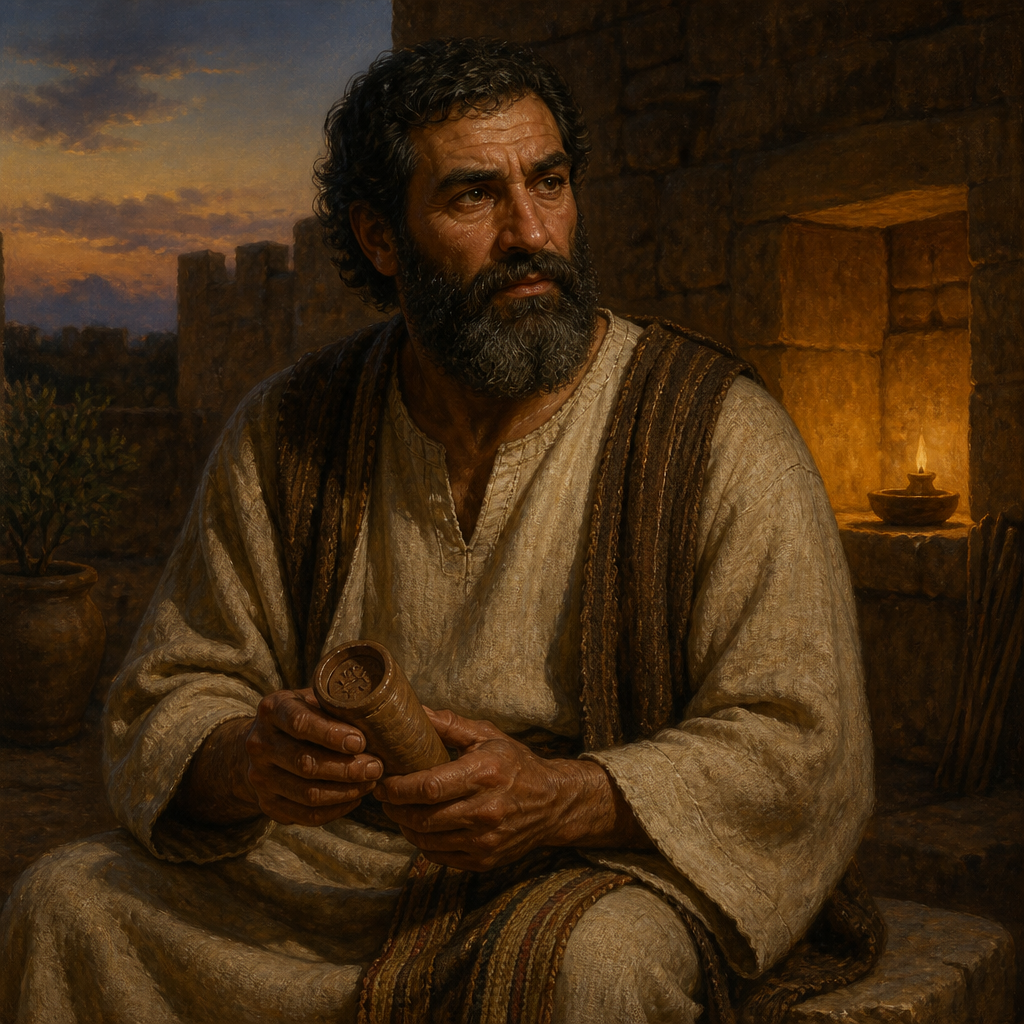 EshtonThis page
Children
 Beth-raphaSon1 Chronicles 4:12Stated
 Paseah of JudahSon1 Chronicles 4:12Stated
 TehinnahSon1 Chronicles 4:12Stated
Extended family
 Chelub, Brother of ShuhahGrandfather1 Chronicles 4:11
Inferred
1 Chronicles 4:11 names Chelub and Eshton in the same verse but does not state a grandson tie between them; the link rests on the surrounding narrative.Evidence: 1 Chronicles 4:11
 ShuhahRelative1 Chronicles 4:11
Inferred
1 Chronicles 4:11 names Shuhah and Eshton in the same verse but does not state a relative tie between them; the link rests on the surrounding narrative.Evidence: 1 Chronicles 4:11
Connected Figures
Family
Father · 1 Chronicles 4:11
Mehir was a member of the tribe of Judah during the Divided Monarchy, identified as the son of Chelub and the father of Eshton.
Son · 1 Chronicles 4:12
A member of the tribe of Judah and a descendant of Chelub, identified as the son of Eshton within the genealogical records of 1 Chronicles.
Divided MonarchyFirst: 1 Chronicles 4:121 versesTribal leader or landownerJudah
Son · 1 Chronicles 4:12
A descendant of Judah through the lineage of Chelub, identified as a son of Eshton and a resident of Recah during the Divided Monarchy.
Son · 1 Chronicles 4:12
Tehinnah was a member of the tribe of Judah, the son of Eshton, and the founder of the city of Ir-nahash.
Divided MonarchyFirst: 1 Chronicles 4:121 versesFounder of Ir-nahashJudah
Grandfather · 1 Chronicles 4:11
A descendant of Judah through the clan of Caleb, known for being the brother of Shuhah and the father of Mehir during the Divided Monarchy.
Relative · 1 Chronicles 4:11
Shuhah was a member of the tribe of Judah, specifically noted in the post-exilic genealogies as the brother of Chelub.
Categories
Mentions by Book
- 1 Chronicles2
Scripture References
All 2 indexed verses, in canonical order, from the Berean Standard Bible.
1 Chronicles · 2
- 1 Chronicles 4:11
Chelub the brother of Shuhah was the father of Mehir, who was the father of Eshton.
- 1 Chronicles 4:12
Eshton was the father of Beth-rapha, of Paseah, and of Tehinnah the father of Ir-nahash. These were the men of Recah.